
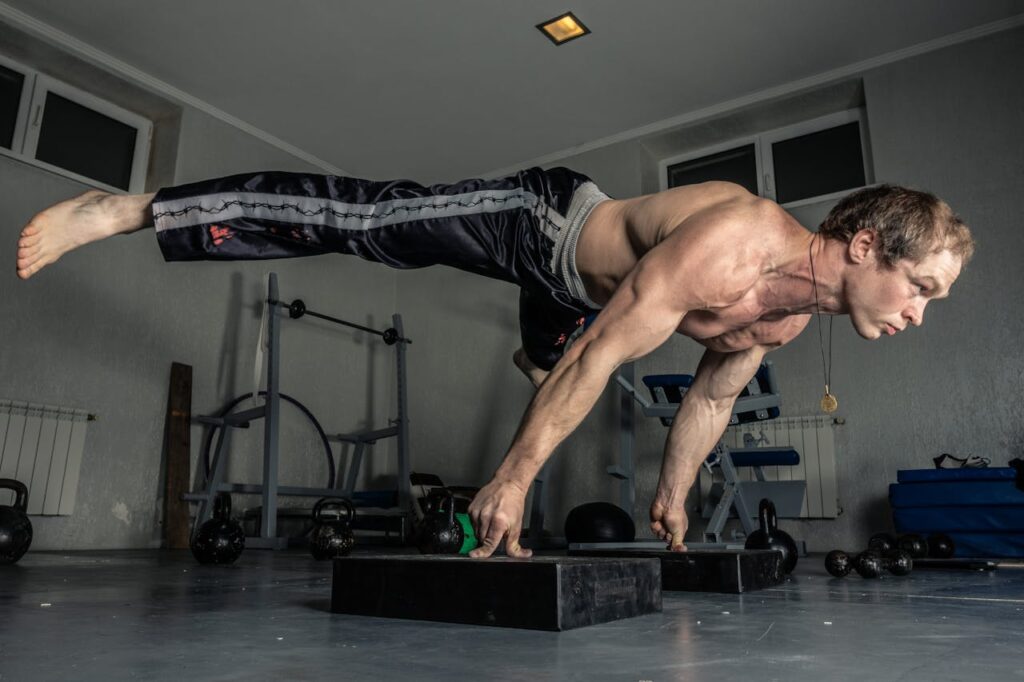
The single-leg hip thrust has emerged as one of the most effective unilateral exercises for building powerful glutes, improving hip stability, and enhancing athletic performance. This bodyweight movement offers a perfect blend of strength training and functional movement patterns that benefit everyone from fitness beginners to elite athletes.
Unlike traditional bilateral exercises, the single-leg hip thrust forces each glute to work independently, addressing muscle imbalances while developing the kind of unilateral strength that translates directly to real-world activities and sports performance. Whether you’re looking to build a stronger posterior chain, improve your athletic performance, or simply want to master one of the most effective glute exercises available, this comprehensive guide will teach you everything you need to know.
What Makes the Single-Leg Hip Thrust So Effective?
The single-leg hip thrust stands out from other glute exercises because it combines several training benefits into one powerful movement. This exercise targets hip extension—the primary function of your glutes—while simultaneously challenging your core stability, balance, and coordination.
Research shows that hip thrust variations produce some of the highest levels of glute activation compared to other popular exercises like squats and deadlifts. The single-leg variation takes this a step further by eliminating compensation patterns and forcing each glute to work at maximum capacity.
The Science Behind Glute Activation
When you perform a single-leg hip thrust, your gluteus maximus—the largest muscle in your body—becomes the primary driver of the movement. This muscle is responsible for hip extension, which is crucial for activities like running, jumping, climbing stairs, and getting up from a seated position.
The unilateral nature of this exercise also activates your gluteus medius and minimus, which are essential for hip stability and preventing knee valgus (inward knee collapse) during dynamic movements.
How to Perform the Single-Leg Hip Thrust: Step-by-Step Guide
Mastering proper form is crucial for maximizing the benefits of the single-leg hip thrust while minimizing injury risk. Follow this detailed breakdown to ensure you’re performing the exercise correctly.
Equipment You’ll Need
The beauty of the single-leg hip thrust lies in its simplicity. You only need:
- A sturdy bench, couch, or elevated surface (12-16 inches high)
- Optional: A yoga mat for comfort
- Optional: Weight (dumbbell, kettlebell, or weight plate) for progression
Step-by-Step Instructions
- Setup Position: Sit on the floor with your upper back resting against a bench or sturdy surface. The bench should hit just below your shoulder blades.
- Foot Placement: Plant one foot firmly on the ground, about 12-18 inches from your glutes. Your shin should be vertical at the top of the movement.
- Leg Position: Extend your non-working leg straight out in front of you, keeping it elevated throughout the movement.
- Core Engagement: Brace your core as if someone were about to punch you in the stomach. This creates stability throughout your torso.
- The Thrust: Drive through your planted heel and squeeze your glute to lift your hips up. Focus on pushing the floor away rather than lifting your hips up.
- Peak Contraction: At the top, your body should form a straight line from your knee to your shoulder. Hold this position for 1-2 seconds while maximizing your glute squeeze.
- Controlled Descent: Lower your hips back down with control, maintaining tension in your glute throughout the entire range of motion.
- Repeat and Switch: Complete all reps on one side before switching to the other leg.
Pro Tips for Perfect Form
- Keep your chin tucked and eyes looking straight ahead
- Avoid pushing through your toes—drive through your heel
- Don’t let your knee cave inward during the movement
- Focus on the glute doing the work, not your lower back
- Breathe out forcefully at the top of each rep to enhance core stability
Benefits of the Single-Leg Hip Thrust
The single-leg hip thrust offers a comprehensive range of benefits that extend far beyond just building bigger glutes. Here’s why this exercise deserves a place in every fitness routine.
Enhanced Hip Extension Strength
Hip extension is one of the most important movement patterns for athletic performance and daily activities. The single-leg hip thrust specifically targets this movement, helping you develop the power needed for sprinting, jumping, and explosive movements.
Studies have shown that hip thrust exercises can improve hip extension strength by up to 32% in just 6 weeks of consistent training.
Improved Sports Performance
Athletes across all sports can benefit from the single-leg hip thrust. The unilateral nature of the exercise closely mimics the demands of running, where you’re essentially hopping from one leg to the other.
Research indicates that athletes who incorporate single-leg hip thrusts into their training see improvements in:
- Sprint speed and acceleration
- Vertical jump height
- Change of direction ability
- Overall lower body power output
Injury Prevention and Rehabilitation
The single-leg hip thrust is particularly valuable for injury prevention, especially for common issues like:
- Lower back pain
- Knee injuries
- Hip impingement
- IT band syndrome
By strengthening the glutes and improving hip stability, this exercise helps maintain proper movement mechanics and reduces compensatory patterns that often lead to injury.
Correcting Muscle Imbalances
Most people have strength imbalances between their left and right sides. The single-leg hip thrust forces each side to work independently, helping identify and correct these imbalances before they become problematic.
Core Stability Enhancement
Maintaining balance during a single-leg hip thrust requires significant core activation. This makes it an excellent exercise for developing functional core strength that transfers to other activities.
Muscles Worked in the Single-Leg Hip Thrust
Understanding which muscles are working during the single-leg hip thrust can help you better connect with the movement and maximize its effectiveness.
Primary Muscles
Gluteus Maximus: The star of the show, responsible for the powerful hip extension movement. This is where you should feel the majority of the work.
Gluteus Medius and Minimus: These smaller glute muscles work to stabilize your pelvis and prevent your hip from dropping during the movement.
Supporting Muscles
Hamstrings: Assist with hip extension and help stabilize your knee throughout the movement.
Core Muscles: Your entire core works overtime to maintain stability and prevent rotation during the single-leg position.
Hip Flexors: The hip flexors of your extended leg work isometrically to keep your leg elevated.
Erector Spinae: These deep back muscles help maintain a neutral spine position throughout the movement.
Single-Leg Hip Thrust Variations and Progressions
One of the greatest advantages of the single-leg hip thrust is its scalability. Whether you’re a complete beginner or an advanced athlete, there’s a variation that will challenge you appropriately.
Beginner Progressions
Floor Single-Leg Hip Thrust: Start on the floor without elevation to reduce the range of motion and make the exercise more manageable.
Assisted Single-Leg Hip Thrust: Use your non-working leg to provide slight assistance by keeping your toe on the ground.
Shortened Range of Motion: Don’t go all the way down initially—work within a comfortable range and gradually increase it.
Intermediate Variations
Weighted Single-Leg Hip Thrust: Add a dumbbell, kettlebell, or weight plate across your hips to increase resistance.
Banded Single-Leg Hip Thrust: Place a resistance band around your knees to add lateral resistance and increase glute medius activation.
Pause Single-Leg Hip Thrust: Hold the top position for 3-5 seconds to increase time under tension.
Advanced Progressions
Deficit Single-Leg Hip Thrust: Elevate your foot on a platform to increase the range of motion.
Single-Leg Hip Thrust with Leg Extension: At the top of the movement, extend your elevated leg even higher for an additional challenge.
Landmine Single-Leg Hip Thrust: Use a landmine setup with a barbell for variable resistance throughout the range of motion.
Programming the Single-Leg Hip Thrust
How you program the single-leg hip thrust depends on your specific goals and current fitness level. Here are evidence-based recommendations for different objectives.
For Strength Development
- Sets: 3-4
- Reps: 6-8 per leg
- Rest: 2-3 minutes between sets
- Progression: Add weight when you can complete all sets with perfect form
For Muscle Building (Hypertrophy)
- Sets: 3-4
- Reps: 8-12 per leg
- Rest: 60-90 seconds between sets
- Progression: Increase reps, then add weight
For Endurance and Activation
- Sets: 2-3
- Reps: 15-20 per leg
- Rest: 30-60 seconds between sets
- Progression: Increase reps or add time under tension
For Rehabilitation
- Sets: 2-3
- Reps: 10-15 per leg
- Rest: As needed
- Progression: Focus on form and gradually increase range of motion
Integrating Single-Leg Hip Thrusts Into Your Workout Routine
The versatility of the single-leg hip thrust makes it suitable for various parts of your workout routine.
As a Warm-Up Exercise
Perform 2 sets of 10-12 reps per leg with bodyweight only to activate your glutes before your main workout.
As a Primary Exercise
Include it as one of your main lower body exercises, typically after compound movements like squats or deadlifts.
As an Accessory Movement
Use it to target glutes specifically after completing your primary exercises.
For Active Recovery
Light, high-rep sets can promote blood flow and aid recovery on rest days.
Common Mistakes and How to Fix Them
Even though the single-leg hip thrust appears straightforward, several common mistakes can reduce its effectiveness or increase injury risk.
Hyperextending the Lower Back
The Problem: Arching your back excessively at the top of the movement shifts the work from your glutes to your lower back.
The Fix: Focus on posterior pelvic tilt at the top. Think about tucking your tailbone under and maintaining a neutral spine.
Using the Wrong Muscles
The Problem: Feeling the exercise primarily in your hamstrings or lower back instead of your glutes.
The Fix: Focus on the mind-muscle connection. Consciously squeeze your glute at the top of each rep and ensure you’re driving through your heel.
Inadequate Range of Motion
The Problem: Not going through the full range of motion limits the exercise’s effectiveness.
The Fix: Lower your hips until you feel a stretch in your hip flexors, then drive up until your body forms a straight line.
Poor Foot Placement
The Problem: Placing your foot too close or too far from your body changes the exercise mechanics.
The Fix: Your shin should be vertical at the top of the movement. Adjust your foot position accordingly.
Rushing Through Reps
The Problem: Performing the exercise too quickly reduces time under tension and glute activation.
The Fix: Use a controlled tempo—2 seconds up, 1-second pause, 2 seconds down.
Troubleshooting: When You Can’t Feel Your Glutes Working
Many people struggle with glute activation, especially when starting out. Here are strategies to help you better connect with your glutes during the single-leg hip thrust.
Pre-Activation Techniques
Before performing single-leg hip thrusts, try these activation exercises:
- Clamshells with resistance band
- Glute bridges with 5-second holds
- Side-lying leg lifts
- Wall sits with glute squeezes
Visualization Techniques
- Imagine trying to crack a walnut between your glute cheeks at the top of the movement
- Think about pushing the floor away with your heel rather than lifting your hips up
- Visualize your glute as the primary driver of the movement
Tempo Modifications
- Slow down the eccentric (lowering) portion to 3-4 seconds
- Add a 2-3 second pause at the top of each rep
- Focus on the squeeze rather than the speed
Who Should Avoid Single-Leg Hip Thrusts?
While the single-leg hip thrust is generally safe for most people, certain conditions may require modifications or avoidance:
Acute Lower Back Injury
If you’re experiencing acute lower back pain, consult with a healthcare provider before performing this exercise.
Hip Impingement
Those with hip impingement may need to modify the range of motion or avoid the exercise entirely.
Recent Hip or Knee Surgery
Always get clearance from your surgeon or physical therapist before returning to exercise after surgery.
Balance Issues
If you have significant balance problems, start with bilateral hip thrusts or use assistance until your stability improves.
Take Your Glute Training to the Next Level
The single-leg hip thrust is more than just another glute exercise—it’s a powerful tool for building functional strength, preventing injuries, and enhancing athletic performance. By mastering this movement and progressively challenging yourself with variations, you’ll develop the kind of glute strength and hip stability that benefits every aspect of your physical performance.
Remember, consistency is key. Start with bodyweight versions, focus on perfect form, and gradually progress to more challenging variations as your strength and stability improve. Your glutes—and your overall performance—will thank you for it.
Ready to transform your glute training? Start incorporating single-leg hip thrusts into your routine today and experience the difference that targeted, unilateral training can make.
Frequently Asked Questions
Q: How often should I do single-leg hip thrusts?
A: You can perform single-leg hip thrusts 2-3 times per week, allowing at least 48 hours of rest between sessions for optimal recovery and adaptation.
Q: Can I do single-leg hip thrusts every day?
A: While bodyweight versions can be done daily as part of a warm-up or activation routine, weighted versions should be limited to 2-3 times per week to allow for proper recovery.
Q: Why don’t I feel my glutes working during single-leg hip thrusts?
A: This is common and usually indicates poor glute activation. Try pre-activation exercises, slow down your tempo, and focus on the mind-muscle connection. Consider working with a qualified trainer if the problem persists.
Q: How do I know when to add weight to my single-leg hip thrusts?
A: Add weight when you can complete all prescribed sets and reps with perfect form and still feel like you could do 2-3 more reps. Start with light weight (5-10 pounds) and progress gradually.
Q: Can single-leg hip thrusts replace regular hip thrusts?
A: While single-leg hip thrusts are excellent, they complement rather than replace bilateral hip thrusts. Both have unique benefits and should ideally be included in a well-rounded program.
Q: What’s the difference between single-leg hip thrusts and single-leg glute bridges?
A: Single-leg hip thrusts are performed with your back elevated on a bench, allowing for greater range of motion and typically higher levels of glute activation compared to floor-based glute bridges.