
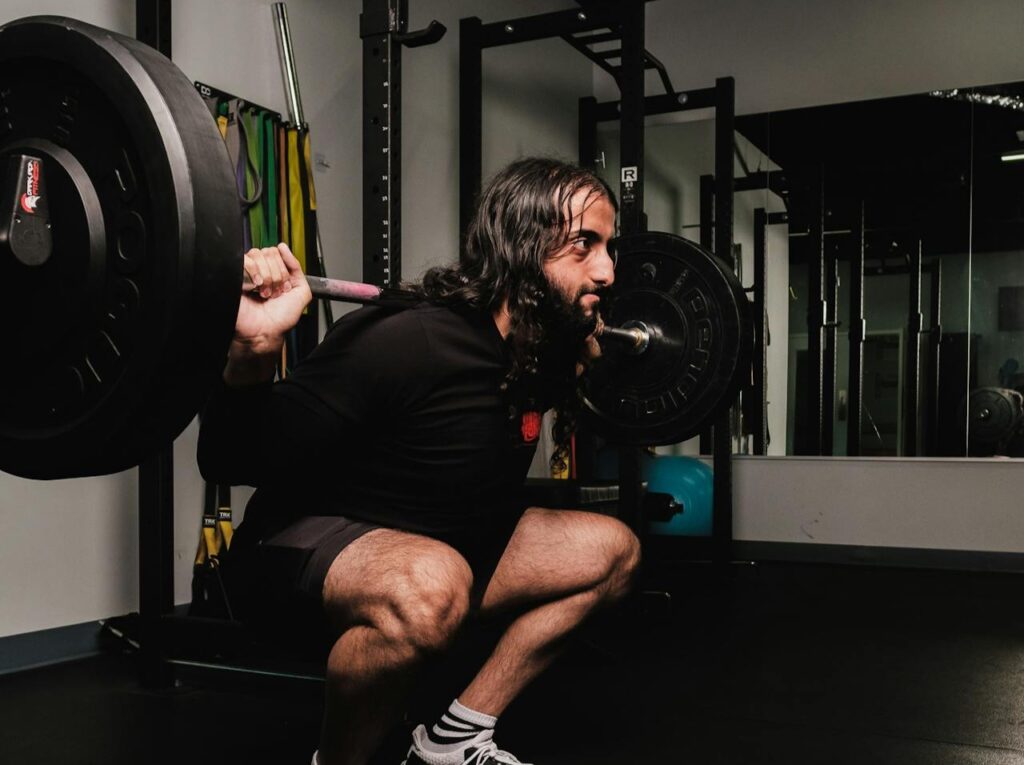
The bent over row stands as one of the most effective compound exercises for building a powerful, well-developed back. Whether you’re a beginner looking to establish proper form or an experienced lifter seeking to refine your technique, mastering this fundamental movement will transform your back training and overall physique.
This comprehensive guide will teach you everything you need to know about the bent over row, from perfect form execution to advanced variations that will challenge even the most seasoned athletes.
What Muscles Does the Bent Over Row Work?
The bent over row is a compound movement that targets multiple muscle groups simultaneously, making it incredibly efficient for building upper body strength and mass.
Primary Muscles Worked
- Latissimus Dorsi: The large, wing-like muscles that create the coveted V-taper
- Trapezius: Both middle and lower portions for improved posture and stability
- Rhomboids: Essential for retracting the shoulder blades and maintaining proper posture
- Posterior Deltoids: The rear portion of your shoulders for balanced development
Secondary Muscles Worked
- Biceps: Assist in the pulling motion and receive significant stimulation
- Core Muscles: Provide stability throughout the movement
- Glutes and Hamstrings: Help maintain the hip hinge position
- Erector Spinae: Support spinal alignment during the exercise
This comprehensive muscle activation makes the bent over row an invaluable addition to any strength training program.
Benefits of Bent Over Rows
Incorporating bent over rows into your training routine offers numerous advantages that extend beyond simple muscle building:
Improved Posture
Regular bent over row training strengthens the muscles responsible for pulling your shoulders back and maintaining proper spinal alignment. This is particularly beneficial for individuals who spend long hours at desks or computers.
Enhanced Back Strength and Size
The bent over row allows for progressive overload with heavy weights, making it ideal for building both strength and muscle mass in the posterior chain.
Better Athletic Performance
The pulling motion translates directly to improved performance in sports requiring pulling strength, such as rowing, climbing, and martial arts.
Injury Prevention
Strengthening the posterior chain helps balance the anterior muscles (chest and front deltoids), reducing the risk of shoulder impingement and other common upper body injuries.
Functional Strength
The movement pattern mimics real-world activities like lifting objects from the ground, making it highly functional for daily life.
How to Perform the Bent Over Row with Perfect Form
Proper form is crucial for maximizing benefits and preventing injury. Follow this step-by-step guide to master the bent over row technique:
Step 1: The Setup
- Stand with feet shoulder-width apart, toes pointing slightly outward
- Position the barbell over your mid-foot (if using a barbell from the floor)
- Bend at the hips and knees to grip the bar with an overhand grip, hands slightly wider than shoulder-width
- Keep your chest up and maintain a neutral spine
Step 2: The Starting Position
- Lift the bar to a standing position using proper deadlift mechanics
- Hinge at the hips, pushing your glutes back while keeping your chest up
- Lower your torso until it’s approximately 45-60 degrees from vertical
- Allow your arms to hang naturally with a slight bend in the elbows
- Engage your core and maintain a neutral spine throughout
Step 3: The Pull
- Initiate the movement by retracting your shoulder blades
- Pull the bar toward your lower chest/upper abdomen
- Keep your elbows close to your body, not flared out wide
- Squeeze your shoulder blades together at the top of the movement
- Focus on pulling with your back muscles, not just your arms
Step 4: The Descent
- Slowly lower the bar back to the starting position
- Maintain control throughout the entire range of motion
- Don’t allow the weight to drop or bounce
- Keep tension in your back muscles even at the bottom
Step 5: Breathing Pattern
- Inhale at the top before beginning the pull
- Hold your breath during the pulling motion (Valsalva maneuver)
- Exhale after completing the rep or at the top of the movement
Common Mistakes and How to Fix Them
Even experienced lifters can fall into bad habits with the bent over row. Here are the most common mistakes and their solutions:
Mistake 1: Rounding the Back
Problem: Allowing the spine to round puts excessive stress on the lower back and reduces exercise effectiveness.
Solution: Focus on maintaining a neutral spine by keeping your chest up and engaging your core throughout the movement.
Mistake 2: Using Too Much Momentum
Problem: Swinging or using body English reduces muscle activation and increases injury risk.
Solution: Use a controlled tempo and focus on muscle contraction rather than moving heavy weight.
Mistake 3: Incorrect Torso Angle
Problem: Standing too upright reduces lat activation, while going too horizontal stresses the lower back.
Solution: Maintain a 45-60 degree torso angle for optimal muscle activation and safety.
Mistake 4: Flaring the Elbows
Problem: Wide elbows shift emphasis away from the lats and can cause shoulder impingement.
Solution: Keep elbows close to your body, pulling them back rather than out to the sides.
Mobility Requirements for Proper Execution
Before attempting bent over rows, ensure you have adequate mobility in these key areas:
Hip Flexibility
Tight hip flexors can prevent proper hip hinge mechanics. Incorporate hip flexor stretches and mobility work into your warm-up routine.
Thoracic Spine Mobility
Limited thoracic extension can force compensation in the lower back. Practice thoracic spine extensions and cat-cow stretches.
Shoulder Mobility
Adequate shoulder flexion and internal rotation are necessary for proper bar path. Include shoulder dislocations and wall slides in your preparation.
Bent Over Row Variations
Diversifying your bent over row training with different variations can help target muscles from different angles and accommodate various equipment availability.
Dumbbell Bent Over Row
Benefits: Allows for unilateral training, greater range of motion, and accommodates different body types.
Execution: Follow the same form cues as the barbell version, but use dumbbells instead. This variation allows for a more natural hand position and can help identify and correct strength imbalances.
Underhand Bent Over Row (Yates Row)
Benefits: Increases bicep activation and allows for heavier loading due to stronger grip position.
Execution: Use an underhand (supinated) grip with hands closer together. This variation was popularized by bodybuilding legend Dorian Yates and allows for a slightly more upright torso position.
Single-Arm Dumbbell Row
Benefits: Eliminates bilateral deficits, allows for core rotation, and provides unilateral strength development.
Execution: Support yourself with one hand on a bench while rowing with the opposite arm. This variation allows for the greatest range of motion and individual muscle focus.
T-Bar Row
Benefits: Provides a more stable platform and allows for neutral grip positioning.
Execution: Use a T-bar apparatus or landmine setup. The fixed pivot point provides stability while still allowing for heavy loading.
Chest-Supported Row
Benefits: Eliminates lower back stress and allows for pure back muscle isolation.
Execution: Use an incline bench set to 45 degrees or a dedicated chest-supported row machine. This variation is excellent for those with lower back issues.
Resistance Band Bent Over Row
Benefits: Provides variable resistance and is perfect for home workouts or travel.
Execution: Stand on a resistance band and perform the rowing motion. The resistance increases throughout the range of motion, providing a unique training stimulus.
Programming Guidelines for Different Experience Levels
Beginner Programming
- Frequency: 2-3 times per week
- Sets: 3-4 sets
- Reps: 8-12 reps
- Load: Start with bodyweight or light dumbbells
- Focus: Master form before adding weight
Intermediate Programming
- Frequency: 2-3 times per week
- Sets: 4-5 sets
- Reps: 6-10 reps
- Load: Moderate to heavy weight
- Focus: Progressive overload and variation
Advanced Programming
- Frequency: 2-4 times per week (depending on specialization)
- Sets: 4-6 sets
- Reps: 4-8 reps (strength) or 8-15 reps (hypertrophy)
- Load: Heavy weight with perfect form
- Focus: Periodization and advanced techniques
Equipment Alternatives for Home Workouts
Don’t have access to a gym? Here are effective alternatives for performing bent over rows at home:
Resistance Bands
Provide variable resistance and are highly portable. Anchor the band under your feet or to a sturdy object.
Gallon Water Jugs
Fill with water or sand for adjustable weight. Perfect for beginners or high-rep training.
Backpack with Books
Load a backpack with books or other heavy objects. Wear it on your chest and perform the rowing motion.
Suspension Trainer
Allows for bodyweight rows with adjustable difficulty by changing body angle.
When to Progress and How
Knowing when and how to progress is crucial for continued improvement:
Signs You’re Ready to Progress
- You can complete all sets and reps with perfect form
- The weight feels significantly easier than when you started
- You have 2-3 reps left in the tank at the end of each set
Progression Methods
- Increase Weight: Add 2.5-5 pounds when you can complete all sets with 2+ reps in reserve
- Increase Volume: Add an extra set or increase reps within your target range
- Improve Range of Motion: Focus on getting a deeper stretch and stronger contraction
- Vary Tempo: Slow down the eccentric (lowering) portion for increased difficulty
The Bottom Line
The bent over row is an indispensable exercise for building a strong, well-developed back. By mastering proper form, understanding the muscles worked, and incorporating appropriate variations, you’ll be well on your way to achieving your strength and physique goals.
Remember that consistency and progressive overload are key to long-term success. Start with lighter weights to master the movement pattern, then gradually increase the load as your strength and confidence improve.
Whether your goal is improved posture, increased muscle mass, or enhanced athletic performance, the bent over row deserves a prominent place in your training program. Master this fundamental movement, and watch your back development reach new heights.
Frequently Asked Questions
Q: How often should I perform bent over rows?
A: For most people, 2-3 times per week is optimal. This allows for adequate recovery while providing enough stimulus for strength and muscle growth.
Q: Should I touch my chest with the bar during bent over rows?
A: Aim to pull the bar to your lower chest or upper abdomen. The exact contact point may vary based on your torso angle and arm length, but focus on achieving a full range of motion with proper form.
Q: Can I do bent over rows if I have lower back problems?
A: If you have lower back issues, consider chest-supported variations or consult with a healthcare professional before performing bent over rows. The hip hinge position can be challenging for those with lower back problems.
Q: What’s the difference between bent over rows and upright rows?
A: Bent over rows target the posterior chain (back muscles) while upright rows primarily target the shoulders and traps. The movement patterns and muscle activation are quite different.
Q: How much weight should I use for bent over rows?
A: Start with a weight that allows you to complete 8-12 reps with perfect form while leaving 2-3 reps in reserve. For most beginners, this might be 50-70% of their body weight, but individual strength levels vary significantly.
Ready to transform your back training? Start incorporating bent over rows into your routine today and experience the difference this powerful exercise can make in your strength and physique development.