
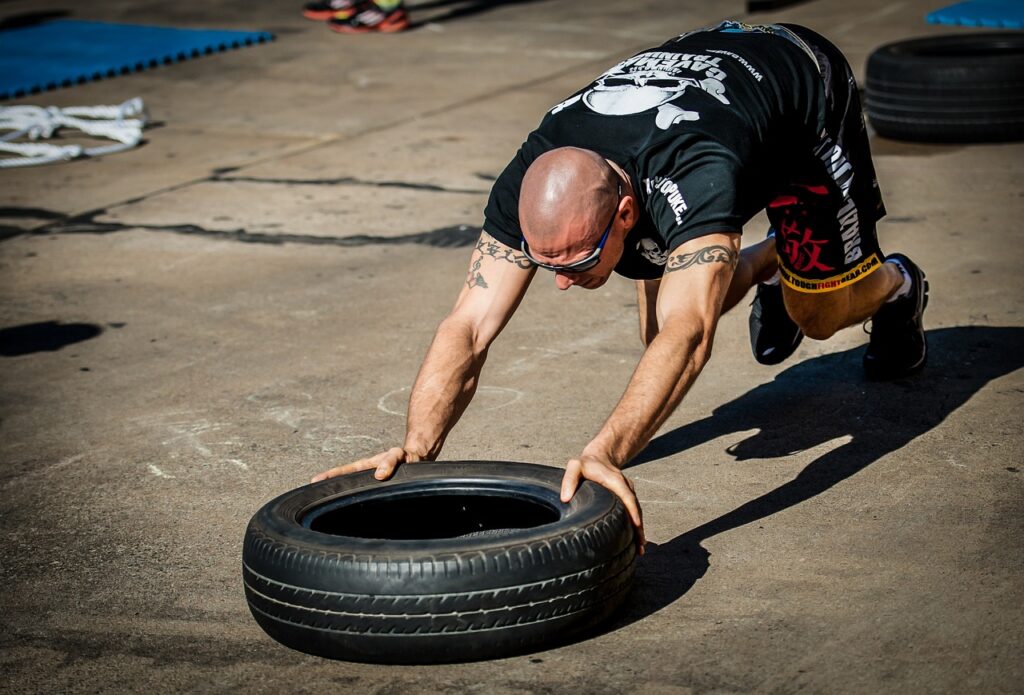
The sled push has emerged as one of the most versatile and effective training tools in modern strength and conditioning. Whether you’re an elite athlete looking to shave seconds off your sprint time or a fitness enthusiast seeking a challenging full-body workout, mastering the sled push can transform your training results. This comprehensive guide will show you exactly how to harness the power of sled training to build explosive power, lightning-fast speed, and bulletproof endurance.
What Makes Sled Push Training So Effective?
Sled push training stands out from traditional exercises because it provides variable resistance that adapts to your force output. Unlike fixed weights that remain constant throughout the movement, the sled’s resistance increases with the speed and power you apply, making it an ideal tool for developing multiple athletic qualities simultaneously.
The Science Behind Sled Training
Research published in the Journal of Strength and Conditioning Research demonstrates that heavy sled loads produce the greatest improvements in sprint performance, while lighter loads enhance speed-endurance capabilities. This adaptability makes sled training uniquely effective for targeting specific training adaptations based on load selection and training protocols.
Benefits of Sled Push Training
Full-Body Muscle Engagement
The sled push is a compound movement that simultaneously targets multiple muscle groups:
- Lower body: Quadriceps, glutes, hamstrings, and calves provide the primary driving force
- Core: Deep stabilizing muscles maintain posture and transfer power
- Upper body: Chest, triceps, and shoulders assist in pushing and stabilization
- Posterior chain: Erector spinae and rhomboids maintain proper body position
Functional Training Benefits
Unlike isolation exercises, sled push movements mirror real-world activities and athletic demands. The horizontal force production required for sled pushing directly translates to improved acceleration, sprinting mechanics, and everyday functional strength.
Adaptability for All Fitness Levels
Sled training can be scaled from beginner-friendly conditioning workouts to elite-level power development protocols. The ability to adjust load, distance, and rest intervals makes it suitable for athletes across all sports and fitness enthusiasts at every level.
Enhanced Calorie Burn and Conditioning
The high-intensity, full-body nature of sled training creates significant metabolic demands, leading to elevated calorie burn both during and after exercise. This makes it an excellent choice for body composition goals and cardiovascular conditioning.
How to Use Sled Push for Speed Development
Speed training with the sled focuses on developing explosive acceleration and maintaining proper sprint mechanics under resistance.
Load Recommendations for Speed
- Beginner: 15-25% of body weight
- Intermediate: 25-35% of body weight
- Advanced: 35-50% of body weight
Speed Training Protocol
Distance: 10-20 yards per repetition
Sets: 4-6 sets
Rest: 45-60 seconds between sets
Focus: Maximum velocity and explosive starts
Technique Cues for Speed Development
- Body position: Maintain a 45-degree forward lean with straight back
- Foot contact: Quick, powerful steps with minimal ground contact time
- Arm action: Drive arms in opposition to legs, maintaining sprint mechanics
- Breathing: Short, controlled breaths to maintain oxygen delivery
How to Use Sled Push for Power Training
Power development requires finding the optimal balance between load and velocity to maximize force production at high speeds.
Load Recommendations for Power
- Beginner: 50-70% of body weight
- Intermediate: 70-85% of body weight
- Advanced: 85-100% of body weight
Power Training Protocol
Distance: 10-25 yards per repetition
Sets: 4-6 sets
Rest: 60-90 seconds between sets
Focus: Explosive force production with controlled technique
Power Development Strategies
- Progressive overload: Gradually increase load while maintaining movement quality
- Contrast training: Alternate between heavy sled pushes and unloaded sprints
- Plyometric integration: Combine sled pushes with jump training for enhanced power transfer
How to Use Sled Push for Strength Training
Strength-focused sled training emphasizes maximum force production against heavy resistance, building raw pushing power and muscular endurance.
Load Recommendations for Strength
- Beginner: 100-125% of body weight
- Intermediate: 125-175% of body weight
- Advanced: 175-200%+ of body weight
Strength Training Protocol
Distance: 25-50 yards per repetition
Sets: 4-6 sets
Rest: 90-120 seconds between sets
Focus: Maximum force production and muscular endurance
How to Use Sled Push for Endurance Training
Endurance protocols focus on maintaining consistent power output over extended periods, building both muscular and cardiovascular endurance.
Endurance Training Approaches
Interval Method
- Load: 25-40% of body weight
- Work: 30-60 seconds of continuous pushing
- Rest: 30-90 seconds between intervals
- Sets: 6-12 intervals
Distance Method
- Load: 20-35% of body weight
- Distance: 100-400 yards continuous
- Sets: 3-5 rounds
- Rest: 2-3 minutes between rounds
Advanced Sled Training Variations
Single-Leg Sled Push
Targets unilateral strength and addresses muscle imbalances while challenging stability and coordination.
Reverse Sled Drag
Develops posterior chain strength and provides a different movement pattern for balanced development.
Lateral Sled Push
Enhances lateral movement capabilities and targets often-neglected frontal plane movement patterns.
Sled Push to Sprint Transition
Combines resisted acceleration with unloaded sprinting for enhanced speed development.
Equipment Alternatives and Home Solutions
DIY Sled Options
- Tire dragging: Attach ropes to a large tire for similar resistance training
- Weighted backpack walks: Use a heavy backpack for uphill walking or stair climbing
- Resistance band sprints: Partner-assisted or anchor-point resistance training
Commercial Alternatives
- Prowler sleds: Versatile commercial options with multiple grip positions
- Weight plates on towels: Simple indoor alternative using smooth surfaces
- Resistance parachutes: For outdoor speed training without equipment transport
Injury Prevention and Safety Considerations
Proper Warm-Up Protocol
- Dynamic stretching: 5-10 minutes of movement preparation
- Progressive loading: Start with bodyweight movements before adding resistance
- Movement rehearsal: Practice sled push technique with minimal load
Common Form Mistakes to Avoid
- Excessive forward lean: Maintain controlled body angle to prevent falling
- Heel striking: Focus on forefoot contact for optimal force transfer
- Rounded back: Keep spine neutral throughout the movement
- Holding breath: Maintain rhythmic breathing pattern
Contraindications and Precautions
- Lower back issues: Consult healthcare providers before beginning sled training
- Knee problems: Start with lighter loads and shorter distances
- Cardiovascular concerns: Monitor heart rate and intensity levels
Programming and Periodization Strategies
Beginner Progression (Weeks 1-4)
- Week 1-2: Focus on technique with 15-25% body weight
- Week 3-4: Increase load to 25-35% body weight
- Frequency: 2-3 sessions per week
Intermediate Development (Weeks 5-8)
- Load progression: 35-50% body weight for speed, up to 100% for strength
- Volume increase: Add sets and vary distances
- Frequency: 3-4 sessions per week
Advanced Training (Weeks 9-12)
- Specialized protocols: Focus on specific adaptations (speed, power, or strength)
- Competition preparation: Taper volume while maintaining intensity
- Integration: Combine with sport-specific training demands
Sport-Specific Applications
Football and Rugby
Focus on explosive starts and collision preparation with heavy loads and short distances.
Track and Field
Emphasize acceleration development with moderate loads and sprint-specific distances.
Combat Sports
Combine strength and endurance protocols for well-rounded conditioning.
Team Sports
Integrate directional changes and sport-specific movement patterns.
Recovery and Nutrition Considerations
Post-Training Recovery
- Cool-down: 10-15 minutes of light movement and stretching
- Hydration: Replace fluids lost during high-intensity training
- Sleep: Prioritize 7-9 hours of quality sleep for adaptation
Nutritional Support
- Pre-training: Consume easily digestible carbohydrates 30-60 minutes before training
- Post-training: Combine protein and carbohydrates within 30 minutes of completion
- Daily nutrition: Maintain adequate protein intake (0.8-1.2g per pound of body weight)
Frequently Asked Questions
How often should I include sled push training in my routine?
For most athletes and fitness enthusiasts, 2-3 sled training sessions per week provide optimal results while allowing adequate recovery. Advanced athletes may train up to 4-5 times per week during specific training phases.
Can sled push training replace traditional cardio?
While sled training provides excellent cardiovascular benefits, it should complement rather than completely replace traditional cardio. The high-intensity nature makes it ideal for HIIT-style conditioning, but longer, steady-state cardio still has its place in a well-rounded program.
What’s the best surface for sled training?
Natural grass provides the ideal surface for sled training, offering consistent resistance and joint-friendly impact. Artificial turf works well as an alternative, while concrete and asphalt should be avoided due to excessive friction and joint stress.
How do I know if I’m using the right weight?
The appropriate load depends on your training goal. For speed work, you should be able to maintain near-maximal velocity. For power training, focus on explosive movement quality. For strength training, the load should challenge you while maintaining proper form throughout the set.
Can beginners start with sled push training?
Absolutely! Sled training is highly scalable and can be adapted for any fitness level. Beginners should start with lighter loads (15-25% body weight) and focus on mastering proper technique before progressing to heavier resistances.
Take Your Training to the Next Level
The sled push represents one of the most effective tools available for developing power, speed, and endurance simultaneously. By following the protocols outlined in this guide and progressively challenging yourself with appropriate loads and distances, you’ll unlock new levels of athletic performance and functional strength.
Start with the beginner protocols, master the fundamental techniques, and gradually progress through the advanced variations. Remember that consistency and proper form trump heavy loads every time. Whether your goal is to dominate on the athletic field or simply build a stronger, more resilient body, the sled push will deliver the results you’re seeking.
Ready to transform your training? Grab a sled, apply these evidence-based protocols, and experience the power of this game-changing exercise for yourself. Your future self will thank you for making this investment in your athletic development and overall fitness.