
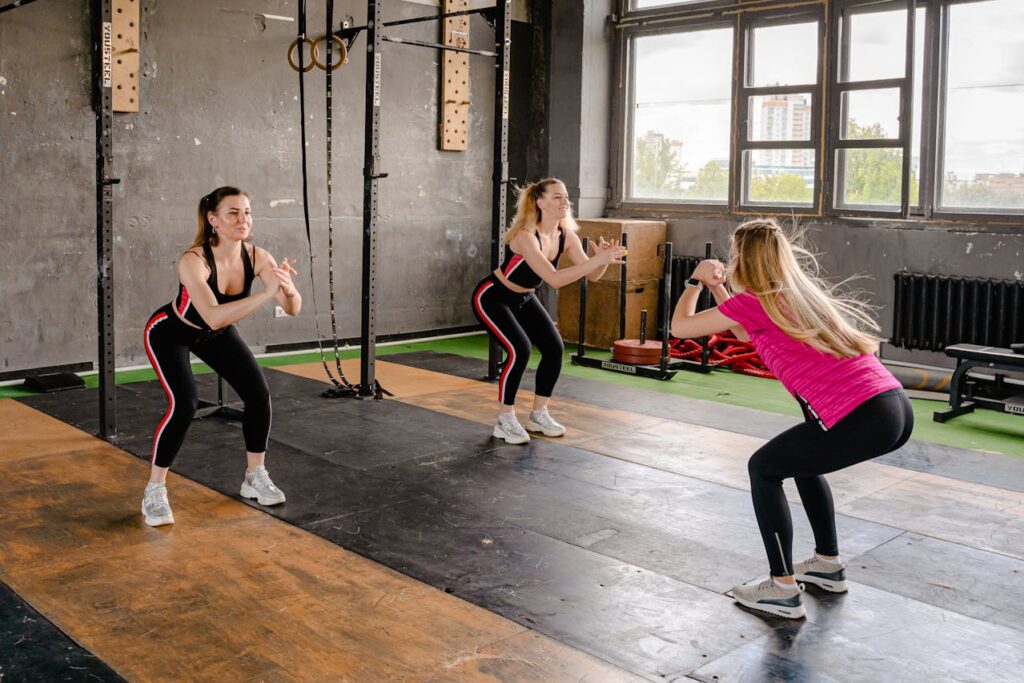
Hindu squats have been a cornerstone of traditional Indian wrestling training for centuries, yet they remain one of the most underutilized bodyweight exercises in modern fitness. This ancient movement, practiced by legendary wrestlers like The Great Gama who reportedly performed 5,000 daily, offers unique benefits that conventional squats simply can’t match.
Unlike regular squats that keep your heels planted, Hindu squats involve rising onto your toes while incorporating a flowing arm movement and rhythmic breathing pattern. This creates a dynamic, full-body exercise that builds strength, improves cardiovascular endurance, and enhances mobility simultaneously.
What Are Hindu Squats?
Hindu squats, also known as “baithak” in Hindi, are a traditional bodyweight exercise that originated in India as part of wrestling and martial arts training. The movement differs significantly from conventional squats in several key ways:
- Heel elevation: You rise onto the balls of your feet during the descent
- Arm movement: Arms sweep forward and back in coordination with the squat
- Breathing pattern: Specific inhalation and exhalation timing
- High repetition focus: Typically performed for 50-500+ repetitions
- Continuous flow: No pausing at the bottom or top of the movement
The exercise gained international recognition through combat sports and has been adopted by fitness enthusiasts worldwide for its unique combination of strength, cardio, and mobility benefits.
The Science-Backed Benefits of Hindu Squats
Cardiovascular and Metabolic Benefits
Hindu squats provide exceptional cardiovascular conditioning due to their high-repetition nature and continuous movement pattern. Research on high-intensity bodyweight exercises shows that movements like Hindu squats can:
- Elevate heart rate to 70-85% of maximum within minutes
- Improve VO2 max and aerobic capacity
- Enhance metabolic rate for hours post-exercise
- Burn 8-12 calories per minute during performance
Strength and Muscle Development
While Hindu squats use only bodyweight resistance, their unique movement pattern targets multiple muscle groups simultaneously:
Primary Muscles Targeted:
- Quadriceps (front thighs)
- Glutes (buttocks)
- Calves and soleus muscles
- Hip flexors
Secondary Muscles Engaged:
- Core stabilizers
- Shoulders and deltoids
- Hamstrings
- Ankle stabilizers
- Forearms (from arm swing)
Functional Movement and Mobility
The heel-elevated position and flowing movement pattern of Hindu squats offer several mobility advantages:
- Ankle mobility: Improves dorsiflexion and plantarflexion range
- Hip flexibility: Enhances hip flexor and glute activation
- Knee health: Strengthens muscles around the knee joint
- Balance and coordination: Develops proprioception and stability
Mental and Meditative Benefits
The rhythmic, repetitive nature of Hindu squats creates a meditative state similar to other traditional practices. Practitioners often report:
- Improved focus and mental clarity
- Stress reduction through rhythmic breathing
- Enhanced mind-muscle connection
- Increased mental toughness and discipline
How to Perform Hindu Squats: Step-by-Step Technique
Basic Hindu Squat Form
Starting Position:
- Stand with feet shoulder-width apart
- Extend arms straight out in front of your chest
- Keep your core engaged and spine neutral
- Look straight ahead
The Movement:
- Descent Phase:
- Begin squatting down while simultaneously sweeping your arms back
- Rise onto the balls of your feet as you descend
- Lower until your thighs are parallel to the floor (or as low as comfortable)
- Keep your knees tracking over your toes
- Ascent Phase:
- Drive through the balls of your feet to return to standing
- Sweep your arms forward and up as you rise
- Return to the starting position with arms extended forward
- Maintain the toe-elevated position throughout
Breathing Pattern
Proper breathing is crucial for maximizing the benefits of Hindu squats:
- Inhale during the descent phase
- Exhale forcefully during the ascent phase
- Maintain a steady, rhythmic breathing pattern
- Focus on deep diaphragmatic breathing rather than shallow chest breathing
Common Mistakes to Avoid
Technical Errors:
- Allowing knees to cave inward
- Losing balance due to improper weight distribution
- Rushing the movement without proper form
- Neglecting the arm swing component
- Holding breath or irregular breathing patterns
Programming Mistakes:
- Starting with too many repetitions
- Ignoring proper warm-up
- Performing Hindu squats when experiencing knee pain
- Neglecting progression and variation
Programming Hindu Squats: From Beginner to Advanced
Beginner Protocol (Weeks 1-4)
Week 1-2:
- 3 sets of 25-50 repetitions
- 60-90 seconds rest between sets
- Focus on form over speed
- Perform 3 times per week
Week 3-4:
- 3 sets of 50-75 repetitions
- 45-60 seconds rest between sets
- Begin incorporating breathing rhythm
- Increase to 4 times per week
Intermediate Protocol (Weeks 5-12)
Target Goals:
- Single set of 100-200 repetitions
- Complete 100 reps in under 3 minutes
- Maintain proper form throughout
- Perform 4-5 times per week
Progression Strategy:
- Add 10-25 reps per week
- Gradually reduce rest periods
- Focus on smooth, continuous movement
- Introduce time-based challenges
Advanced Protocol (3+ Months)
Elite Targets:
- 300-500 repetitions in a single set
- Complete 500 reps in 15-20 minutes
- Incorporate single-leg variations
- Daily practice with active recovery days
Hindu Squats vs. Regular Squats: A Detailed Comparison
| Aspect | Hindu Squats | Regular Squats |
| Heel Position | Elevated on toes | Flat on ground |
| Repetition Range | 50-500+ | 8-20 |
| Primary Focus | Endurance/Cardio | Strength/Power |
| Equipment Needed | None | Often requires weights |
| Joint Impact | Lower impact | Higher impact potential |
| Learning Curve | Moderate | Easier initially |
| Cardiovascular Benefit | High | Moderate |
| Strength Building | Moderate | High |
Addressing Safety Concerns: Are Hindu Squats Bad for Your Knees?
One of the most common concerns about Hindu squats relates to knee safety. However, research and practical experience suggest that when performed correctly, Hindu squats can actually benefit knee health:
The Evidence for Knee Safety
Biomechanical Advantages:
- The heel-elevated position reduces stress on the knee joint
- Continuous movement prevents excessive loading at any single point
- Strengthens muscles that support and stabilize the knee
- Improves knee tracking and movement patterns
Research Findings:
- Studies on similar heel-elevated movements show reduced patellofemoral stress
- Traditional practitioners with decades of experience report fewer knee issues
- The movement pattern mimics natural human locomotion patterns
Who Should Exercise Caution
While Hindu squats are generally safe, certain individuals should consult healthcare providers before beginning:
- People with existing knee injuries or chronic pain
- Individuals with severe ankle mobility restrictions
- Those with balance disorders or vestibular issues
- Anyone recovering from lower extremity surgery
Advanced Variations and Progressions
Single-Leg Hindu Squats
Once you’ve mastered bilateral Hindu squats, single-leg variations provide increased challenge:
Technique:
- Perform the same movement pattern on one leg
- Use the non-working leg for light balance assistance
- Start with 10-20 repetitions per leg
- Focus on controlled movement and stability
Weighted Hindu Squats
For advanced practitioners seeking additional resistance:
- Hold a light dumbbell or kettlebell at chest level
- Use a weighted vest for distributed resistance
- Start with 10-20% of bodyweight
- Maintain proper form and breathing pattern
Speed and Endurance Challenges
Time-Based Goals:
- 100 reps in under 2 minutes
- 300 reps in under 10 minutes
- 500 reps in under 20 minutes
Endurance Protocols:
- Pyramid sets: 50-100-150-100-50
- Ladder sets: 10-20-30-40-50-40-30-20-10
- EMOM (Every Minute on the Minute): 25 reps per minute for 10-20 minutes
Integrating Hindu Squats into Your Training Program
As a Warm-Up
Hindu squats make an excellent dynamic warm-up:
- 50-100 repetitions before strength training
- Activates major muscle groups
- Elevates heart rate and body temperature
- Improves joint mobility and movement quality
As Cardio Conditioning
Replace traditional cardio with Hindu squat protocols:
- 10-15 minute high-intensity sessions
- Interval training: 2 minutes work, 1 minute rest
- Circuit training component
- Active recovery between strength exercises
As Strength Endurance Training
Develop muscular endurance with structured protocols:
- High-volume sets (200-500 reps)
- Time-based challenges
- Progressive overload through increased repetitions
- Combination with other bodyweight exercises
Troubleshooting Common Issues
Balance Problems
Solutions:
- Start with hands on hips instead of arm swing
- Practice near a wall for support
- Focus on slower, controlled movements
- Strengthen ankle stabilizers with specific exercises
Calf Cramping
Prevention and Treatment:
- Ensure adequate warm-up
- Stay hydrated during training
- Stretch calves before and after sessions
- Gradually increase training volume
Knee Discomfort
Immediate Actions:
- Stop exercise if sharp pain occurs
- Check form and technique
- Reduce range of motion initially
- Consult healthcare provider if pain persists
Frequently Asked Questions
How many Hindu squats should a beginner do?
Beginners should start with 25-50 repetitions per set, focusing on proper form rather than quantity. Gradually increase by 10-25 reps per week as technique and conditioning improve.
Can Hindu squats replace regular squats entirely?
While Hindu squats offer unique benefits, they shouldn’t completely replace weighted squats if your goal is maximum strength development. They excel at endurance, mobility, and cardiovascular conditioning but provide limited progressive overload for pure strength gains.
How often should I do Hindu squats?
Most practitioners benefit from 3-5 sessions per week, allowing at least one day of rest between intense sessions. Advanced practitioners may perform them daily with varying intensities.
Are Hindu squats suitable for weight loss?
Yes, Hindu squats are excellent for weight loss due to their high caloric burn rate and metabolic benefits. A 20-minute session can burn 150-250 calories while building lean muscle mass.
What’s the difference between Hindu squats and jump squats?
Hindu squats focus on continuous, flowing movement with heel elevation and arm coordination, while jump squats emphasize explosive power with both feet leaving the ground. Hindu squats are generally lower impact and more sustainable for high repetitions.
Conclusion: Embrace This Ancient Practice for Modern Fitness
Hindu squats represent a perfect fusion of traditional wisdom and modern fitness science. This time-tested exercise offers a unique combination of strength, cardiovascular conditioning, mobility, and mental benefits that few other movements can match.
Whether you’re a beginner looking to improve your fitness foundation or an advanced athlete seeking new challenges, Hindu squats deserve a place in your training arsenal. Start with proper form, progress gradually, and listen to your body as you explore this ancient practice.
The journey of mastering Hindu squats extends beyond physical fitness—it’s an opportunity to connect with centuries of training wisdom while building the strength, endurance, and mental fortitude that define true athletic development.
Ready to begin your Hindu squat journey? Start with 3 sets of 25-50 repetitions, focus on perfect form, and gradually build your capacity over the coming weeks. Your body—and mind—will thank you for embracing this powerful, traditional exercise.