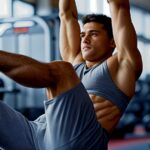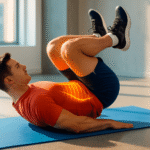

Hanging knee raises are one of the most effective core-strengthening exercises you can perform, yet they’re often overlooked in favor of traditional floor-based ab workouts. This compound movement not only targets your abdominal muscles but also builds functional strength throughout your entire core while improving grip strength and shoulder stability.
Whether you’re a beginner looking to build foundational core strength or an advanced athlete seeking to develop that coveted six-pack definition, hanging knee raises offer a scalable challenge that grows with your fitness level. In this comprehensive guide, we’ll explore everything you need to know about this powerful exercise, from proper technique to advanced variations.
How to Perform Hanging Knee Raises: Step-by-Step Guide
Mastering the hanging knee raise requires attention to detail and proper progression. Here’s how to execute this exercise with perfect form:
Basic Setup and Starting Position
- Grip the bar: Use an overhand grip slightly wider than shoulder-width apart on a pull-up bar or captain’s chair handles
- Establish your hang: Allow your body to hang freely with arms fully extended, shoulders engaged and pulled down
- Neutral spine: Maintain a neutral spine position with your core lightly engaged
- Foot position: Keep your feet together and legs straight initially
Execution Steps
- Initiate the movement: Begin by engaging your core and drawing your knees toward your chest
- Control the lift: Lift your knees until your thighs are parallel to the ground or higher, focusing on using your abs rather than momentum
- Pause at the top: Hold the contracted position for 1-2 seconds to maximize muscle activation
- Controlled descent: Slowly lower your legs back to the starting position, maintaining tension throughout the movement
- Avoid swinging: Keep your torso as stable as possible throughout the entire range of motion
Breathing Pattern
- Exhale as you lift your knees toward your chest
- Inhale as you lower your legs back to the starting position
- Maintain steady breathing throughout the set to ensure proper oxygen delivery to working muscles
Benefits of Hanging Knee Raises
The hanging knee raise offers numerous advantages that extend far beyond simple abdominal strengthening:
Core Strength and Stability
Hanging knee raises provide exceptional core strengthening benefits by requiring your entire midsection to work as a stabilizing unit. Unlike isolation exercises that target individual muscles, this compound movement engages multiple muscle groups simultaneously, leading to improved functional strength and better transfer to daily activities and athletic performance.
Six-Pack Development and Muscle Hypertrophy
The rectus abdominis, commonly known as the “six-pack” muscles, receives intense stimulation during hanging knee raises. The exercise particularly targets the lower portion of the rectus abdominis, which is often difficult to activate with traditional crunches and sit-ups.
Improved Grip Strength and Forearm Development
Hanging from a bar for extended periods naturally develops grip strength and forearm endurance. This improved grip strength translates to better performance in pulling exercises like pull-ups, rows, and deadlifts.
Enhanced Shoulder Stability and Overhead Mobility
The hanging position requires significant shoulder stability and can help improve overhead mobility. Regular practice of hanging exercises can contribute to better shoulder health and reduced risk of impingement issues.
Functional Strength Applications
The hanging knee raise mimics many real-world movement patterns and athletic activities. The core strength developed through this exercise translates to improved performance in sports requiring rotational power, jumping, and dynamic stability.
Spinal Decompression Benefits
Hanging exercises provide gentle spinal decompression, which can help alleviate pressure on the vertebrae and potentially reduce lower back discomfort when performed correctly.
Muscles Worked in Hanging Knee Raises
Understanding which muscles are activated during hanging knee raises helps you maximize the exercise’s effectiveness and ensure proper muscle recruitment.
Primary Muscles Worked
Rectus Abdominis: The main target muscle, particularly the lower fibers, responsible for flexing the spine and bringing the knees toward the chest.
Hip Flexors: Including the iliopsoas, rectus femoris, and tensor fasciae latae, these muscles initiate the knee-lifting motion and work synergistically with the abdominals.
Secondary Muscles Worked
External and Internal Obliques: These muscles provide rotational stability and prevent unwanted side-to-side movement during the exercise.
Transverse Abdominis: The deepest abdominal muscle acts as a natural weight belt, providing core stability throughout the movement.
Forearm Muscles: The flexor and extensor muscles of the forearms work isometrically to maintain grip on the bar.
Latissimus Dorsi and Rhomboids: These back muscles help stabilize the shoulder girdle and maintain proper hanging position.
Serratus Anterior: This muscle helps stabilize the shoulder blades and maintain proper shoulder positioning.
Common Mistakes and How to Avoid Them
Avoiding these common errors will help you maximize the effectiveness of hanging knee raises while reducing injury risk:
Arching the Lower Back
The Problem: Excessive lower back arch reduces abdominal activation and can lead to lower back strain.
The Solution: Focus on maintaining a neutral spine position and think about tilting your pelvis slightly forward as you lift your knees.
Using Momentum and Swinging
The Problem: Swinging your legs uses momentum rather than muscle strength, reducing the exercise’s effectiveness.
The Solution: Perform the movement slowly and controlled, pausing at the top of each repetition to eliminate momentum.
Incomplete Range of Motion
The Problem: Not lifting the knees high enough limits muscle activation and reduces exercise benefits.
The Solution: Aim to bring your knees at least to hip level, or higher if your flexibility allows.
Neglecting the Eccentric Phase
The Problem: Dropping the legs quickly misses the strengthening benefits of the lowering portion.
The Solution: Take 2-3 seconds to lower your legs back to the starting position with control.
Inadequate Grip Preparation
The Problem: Poor grip strength limits the number of repetitions you can perform.
The Solution: Develop grip strength through dead hangs and consider using lifting straps if grip becomes the limiting factor.
Exercise Variations and Progressions
Beginner-Friendly Alternatives
Supine Knee-to-Chest: Lie on your back and bring your knees toward your chest to build initial core strength.
Captain’s Chair Knee Raises: Use a captain’s chair apparatus for additional back support while learning the movement pattern.
Assisted Hanging Knee Raises: Use resistance bands or have a partner provide slight assistance to help you complete the full range of motion.
Intermediate Progressions
Hanging Straight-Leg Raises: Keep your legs straight throughout the movement for increased difficulty and hip flexor engagement.
L-Sit Holds: Hold your legs parallel to the ground for time to build isometric strength.
Alternating Knee Raises: Alternate bringing each knee up individually to add variety and unilateral strength development.
Advanced Variations
Weighted Hanging Knee Raises: Add ankle weights or hold a dumbbell between your feet for increased resistance.
Toes-to-Bar: Bring your toes all the way up to touch the bar for maximum range of motion and difficulty.
Hanging Windshield Wipers: Add rotational movement by moving your knees from side to side at the top of the movement.
Dragon Flags: An extremely advanced variation that requires exceptional core strength and control.
Programming Recommendations and Sets/Reps
For Beginners (0-6 months of training)
- Sets: 2-3 sets
- Reps: 5-8 repetitions
- Rest: 60-90 seconds between sets
- Frequency: 2-3 times per week
For Intermediate Trainees (6-18 months of training)
- Sets: 3-4 sets
- Reps: 8-12 repetitions
- Rest: 45-60 seconds between sets
- Frequency: 3-4 times per week
For Advanced Athletes (18+ months of training)
- Sets: 4-5 sets
- Reps: 12-20 repetitions or add weight
- Rest: 30-45 seconds between sets
- Frequency: 4-5 times per week
Injury Prevention and Safety Considerations
Pre-Exercise Preparation
Always warm up thoroughly before attempting hanging knee raises. Include dynamic stretching for the shoulders, hip flexors, and core muscles. Start with dead hangs to prepare your grip and shoulders for the exercise demands.
Contraindications
Individuals with the following conditions should consult a healthcare provider before performing hanging knee raises:
- Recent shoulder injuries or impingement
- Lower back pain or disc issues
- Severe grip strength limitations
- Pregnancy (especially in later stages)
Progressive Loading
Don’t rush into advanced variations. Build a solid foundation with basic hanging knee raises before progressing to more challenging versions. Allow adequate recovery time between sessions to prevent overuse injuries.
Equipment Alternatives for Home Workouts
Pull-Up Bar Options
- Doorway pull-up bars
- Wall-mounted pull-up bars
- Power towers or squat racks with pull-up attachments
Alternative Equipment
- TRX suspension trainers for modified knee raises
- Resistance bands for assisted variations
- Roman chairs or captain’s chairs for supported versions
Integration with Full Workout Programs
Hanging knee raises work exceptionally well when integrated into comprehensive training programs:
As Part of Core-Focused Workouts
Combine with planks, Russian twists, and dead bugs for complete core development.
In Upper Body Training Sessions
Include after pull-ups and rows to maximize time spent hanging from the bar.
During Full-Body Circuits
Use as a challenging core exercise in metabolic conditioning workouts.
Frequently Asked Questions
How often should I do hanging knee raises?
For most people, 2-3 times per week is optimal, allowing adequate recovery between sessions while providing sufficient stimulus for strength gains.
Can hanging knee raises replace other ab exercises?
While hanging knee raises are highly effective, a well-rounded core program should include exercises in multiple planes of movement. Combine them with planks, rotational exercises, and anti-extension movements for complete core development.
What if I can’t hang from a bar long enough?
Start with dead hangs to build grip strength, use lifting straps for assistance, or begin with captain’s chair knee raises until your grip strength improves.
Are hanging knee raises safe for people with lower back issues?
If performed with proper form, hanging knee raises can actually be beneficial for spinal health due to the decompression effect. However, individuals with existing back problems should consult a healthcare provider first.
How do I know if I’m doing them correctly?
Focus on feeling the movement primarily in your abdominal muscles rather than your hip flexors. You should feel a strong contraction in your core, and the movement should be controlled without swinging.
Conclusion and Next Steps
Hanging knee raises represent one of the most effective exercises for developing functional core strength, improving grip strength, and building impressive abdominal definition. By following proper technique, avoiding common mistakes, and progressing systematically through variations, you can harness the full potential of this powerful movement.
Start with the basic version, focus on perfect form, and gradually progress to more challenging variations as your strength improves. Remember that consistency is key – regular practice with proper technique will yield far better results than sporadic attempts at advanced variations.
Ready to transform your core training? Begin incorporating hanging knee raises into your workout routine today, starting with 2-3 sets of 5-8 repetitions and building from there. Your core strength, grip strength, and overall functional fitness will thank you for making this exercise a staple in your training program.