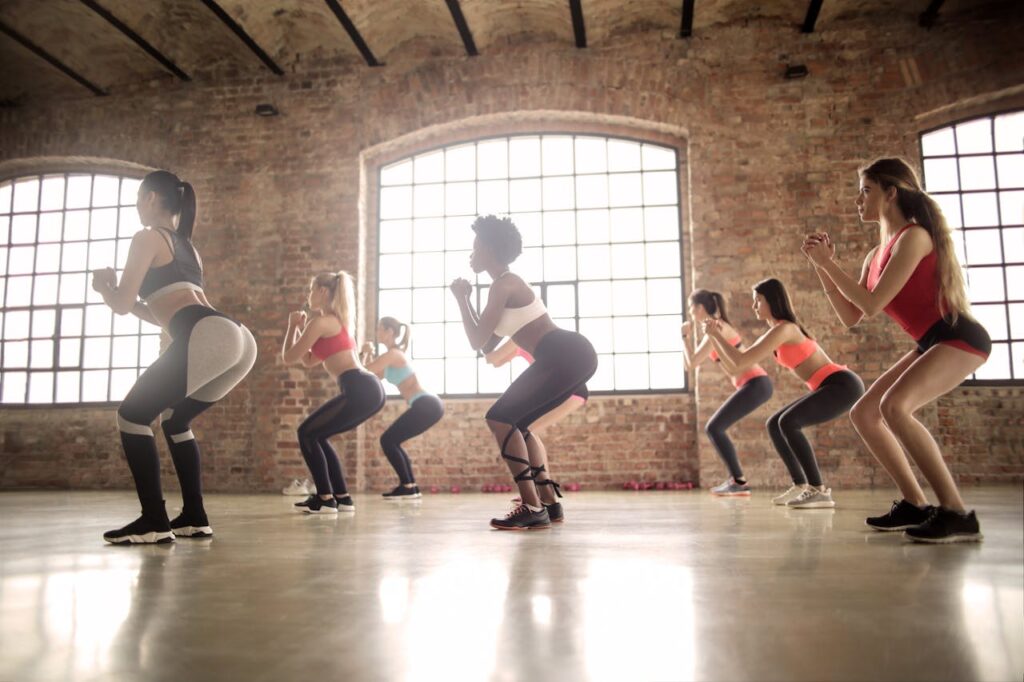
Squats are the cornerstone of functional fitness, targeting multiple muscle groups while building real-world strength that translates to everyday activities. Whether you’re a beginner looking to master the basics or an advanced athlete seeking new challenges, this comprehensive guide to 45 squat variations will revolutionize your lower body training and keep your workouts fresh and engaging.
From bodyweight movements you can do anywhere to advanced weighted variations that push your limits, these squat exercises will help you build stronger glutes, quadriceps, hamstrings, and core muscles while improving your balance, mobility, and athletic performance.
Why Squats Should Be Your Go-To Exercise
Before diving into the variations, let’s understand why squats deserve a permanent place in your fitness routine. As compound movements, squats engage multiple muscle groups simultaneously, making them incredibly efficient for building strength and burning calories.
Primary muscles targeted:
- Quadriceps (front of thighs)
- Glutes (buttocks)
- Hamstrings (back of thighs)
- Core muscles
- Calves and stabilizing muscles
Key benefits include:
- Enhanced functional strength for daily activities
- Improved bone density and joint health
- Better balance and coordination
- Increased metabolic rate
- Enhanced athletic performance
- Injury prevention through stronger stabilizing muscles
Bodyweight Squat Variations (15 Exercises)
Start your squat journey with these equipment-free variations that you can perform anywhere, anytime.
Basic Foundation Squats
1. Air Squat (Basic Squat)
Stand with feet shoulder-width apart, toes slightly turned out. Lower your hips back and down as if sitting in a chair, keeping your chest up and knees tracking over your toes. Descend until thighs are parallel to the floor, then drive through your heels to return to standing.
2. Wall Squat
Perfect for beginners, place your back against a wall and slide down into a squat position. Hold for 30-60 seconds to build endurance and proper form.
3. Prisoner Squat
Place hands behind your head with elbows wide. This variation challenges your core stability and prevents you from using momentum.
Wide Stance Variations
4. Sumo Squat
Take a wide stance with toes turned out 45 degrees. This variation emphasizes the inner thighs and glutes while reducing stress on the knees.
5. Plie Squat
Similar to sumo squat but with an even wider stance and more pronounced toe turn-out, mimicking a ballet plie position.
6. Cossack Squat
Start in a wide stance, then shift your weight to one side, bending that knee while keeping the other leg straight. This unilateral movement improves hip mobility and single-leg strength.
Single-Leg Variations
7. Pistol Squat
The ultimate bodyweight squat challenge. Balance on one leg while extending the other forward, then squat down on the supporting leg. Requires exceptional strength, balance, and mobility.
8. Shrimp Squat
An advanced single-leg squat where you grab your non-working leg behind you, creating an intense challenge for balance and flexibility.
9. Single-Leg Box Squat
Use a box or bench to assist with single-leg squats, gradually lowering the height as you build strength.
Plyometric and Dynamic Variations
10. Jump Squat
Perform a regular squat, then explode upward into a jump. Land softly and immediately descend into the next rep. Builds explosive power and cardiovascular fitness.
11. Squat Jack
Combine jumping jacks with squats by jumping your feet wide into a squat position, then jumping back to standing with feet together.
12. 180-Degree Jump Squat
Add a half-turn to your jump squats for increased coordination and core engagement.
Isometric and Tempo Variations
13. Pause Squat
Hold the bottom position of your squat for 2-5 seconds before standing. This builds strength in the most challenging part of the movement.
14. Pulse Squat
Perform small pulses at the bottom of your squat range of motion to increase time under tension.
15. Hindu Squat
A flowing movement that combines a squat with a calf raise, popular in traditional Indian wrestling training.
Weighted Squat Variations (12 Exercises)
Add resistance to increase strength and muscle-building potential with these weighted variations.
Dumbbell Squat Variations
16. Goblet Squat
Hold a dumbbell or kettlebell at chest level with both hands. This front-loaded position helps maintain proper posture and is excellent for beginners learning squat mechanics.
17. Dumbbell Front Squat
Hold dumbbells at shoulder height with palms facing forward. This variation emphasizes the quadriceps and core.
18. Dumbbell Sumo Squat
Perform a sumo squat while holding a single dumbbell between your legs, allowing for a deeper range of motion.
19. Overhead Squat (Dumbbell)
Hold dumbbells overhead throughout the entire squat movement. This challenges your shoulder stability and core strength.
Kettlebell Variations
20. Kettlebell Goblet Squat
Similar to the dumbbell version but using a kettlebell held by the horns at chest level.
21. Double Kettlebell Front Squat
Hold two kettlebells in the rack position (resting on your forearms) for increased loading and core challenge.
22. Kettlebell Suitcase Squat
Hold a kettlebell in one hand at your side like a suitcase, creating an anti-lateral flexion challenge for your core.
Barbell Variations
23. Back Squat (High Bar)
The classic barbell squat with the bar positioned on your upper trapezius muscles. This is the foundation of powerlifting and strength training.
24. Back Squat (Low Bar)
Position the bar lower on your rear deltoids for a more hip-dominant movement pattern, allowing for heavier loads.
25. Front Squat
Hold the barbell across your front deltoids and clavicles. This variation emphasizes the quadriceps and requires excellent thoracic spine mobility.
26. Zercher Squat
Hold the barbell in the crook of your elbows. This unique position challenges your core and upper back while allowing for a natural squat pattern.
27. Overhead Squat (Barbell)
Hold a barbell overhead with a wide grip throughout the entire movement. This is one of the most challenging squat variations, requiring exceptional mobility and stability.
Equipment-Based Squat Variations (10 Exercises)
Utilize gym equipment to add variety and target muscles from different angles.
Machine Variations
28. Smith Machine Squat
The guided bar path of the Smith machine allows you to focus on form and handle heavier weights safely.
29. Hack Squat Machine
This machine variation allows for heavy loading while supporting your back, making it excellent for quadriceps development.
30. Leg Press (Squat Variation)
While technically not a squat, the leg press mimics the squat movement pattern and allows for very heavy loading.
Suspension and Stability Variations
31. TRX Squat
Use suspension straps to assist with balance and allow for a deeper range of motion, perfect for beginners or those with mobility limitations.
32. Bosu Ball Squat
Perform squats on an unstable surface to challenge your proprioception and stabilizing muscles.
33. Resistance Band Squat
Add resistance bands around your thighs or use them for assistance to modify the difficulty level.
Split Squat Variations
34. Bulgarian Split Squat
Elevate your rear foot on a bench or box while performing a single-leg squat. This unilateral exercise builds strength and addresses imbalances.
35. Reverse Lunge to Squat
Combine a reverse lunge with a squat for a dynamic movement that challenges multiple planes of motion.
36. Lateral Squat
Step to one side and squat down on that leg while keeping the other leg straight, targeting the frontal plane of movement.
37. Curtsy Squat
Step one leg behind and across your body into a curtsy position, then squat down. This targets the glutes from a unique angle.
Advanced and Specialty Variations (8 Exercises)
Challenge yourself with these advanced movements that require exceptional strength, mobility, and coordination.
Olympic Lifting Variations
38. Overhead Squat (Snatch Grip)
Use an extra-wide grip to mimic the receiving position of an Olympic snatch. This requires extreme shoulder and hip mobility.
39. Front Squat (Clean Grip)
Hold the barbell with a clean grip (fingers under the bar) to mimic the receiving position of an Olympic clean.
Unilateral Challenges
40. Archer Squat
Similar to a Cossack squat but with one leg extended to the side while squatting down on the other leg.
41. Dragon Squat
An extremely advanced single-leg squat where you wrap one leg around the other while squatting down.
Combination Movements
42. Squat to Press
Combine a squat with an overhead press for a full-body compound movement.
43. Squat to Calf Raise
Add a calf raise at the top of each squat to target the lower legs.
44. Burpee Squat
Combine a squat with a burpee for an intense cardiovascular and strength challenge.
45. Squat to Broad Jump
Perform a squat, then explode forward into a broad jump, combining strength with power development.
Programming Your Squat Training
To maximize the benefits of these squat variations, consider these programming guidelines:
For Beginners:
- Start with bodyweight variations
- Focus on 2-3 exercises per session
- Perform 2-3 sets of 8-12 repetitions
- Progress gradually by adding reps before adding weight
For Intermediate Trainees:
- Incorporate 3-4 variations per session
- Mix bodyweight and weighted exercises
- Use 3-4 sets of 6-10 repetitions for strength
- Include plyometric variations 1-2 times per week
For Advanced Athletes:
- Utilize periodization with different phases
- Include 4-6 variations per session
- Focus on specific adaptations (strength, power, endurance)
- Incorporate advanced single-leg and combination movements
Mobility and Injury Prevention
Before diving into advanced squat variations, ensure you have adequate mobility in these key areas:
Essential mobility requirements:
- Ankle dorsiflexion (ability to bring shins forward)
- Hip flexion and external rotation
- Thoracic spine extension
- Shoulder flexion (for overhead variations)
Recommended warm-up routine:
- Leg swings (forward/back and side to side)
- Hip circles
- Ankle circles
- Cat-cow stretches
- Arm circles and shoulder dislocations
Frequently Asked Questions
Q: How often should I do squats?
A: Most people can safely perform squats 2-3 times per week, allowing at least one day of rest between intense squat sessions. Listen to your body and adjust frequency based on recovery.
Q: Which squat variation is best for beginners?
A: Start with the basic air squat and wall squat to master proper form. Once you can perform 20 consecutive air squats with perfect form, progress to weighted variations like the goblet squat.
Q: Can I do squats if I have knee problems?
A: Many people with knee issues can still perform squats, but it’s essential to start with limited range of motion and focus on proper form. Consult with a healthcare provider or qualified trainer for personalized guidance.
Q: How deep should I squat?
A: Aim to squat until your hip crease is just below your knee cap (parallel or slightly below). However, only go as deep as your mobility allows while maintaining proper form.
Q: Should I do squats every day?
A: While daily light squatting can be beneficial for mobility and movement quality, intense squat training should be limited to 2-4 times per week to allow for proper recovery and adaptation.
Take Your Squat Game to the Next Level
With 45 squat variations at your disposal, you’ll never run out of ways to challenge your lower body and keep your workouts exciting. Start with the basics, master proper form, and gradually progress to more advanced variations as your strength and mobility improve.
Remember, consistency is key to seeing results. Choose 3-5 variations that match your current fitness level and goals, then gradually introduce new challenges as you progress. Whether you’re training at home with bodyweight exercises or in the gym with heavy barbells, these squat variations will help you build the strong, functional lower body you’ve always wanted.
Ready to transform your training? Pick your first three squat variations from this guide and start incorporating them into your next workout. Your glutes, quads, and overall fitness will thank you!