
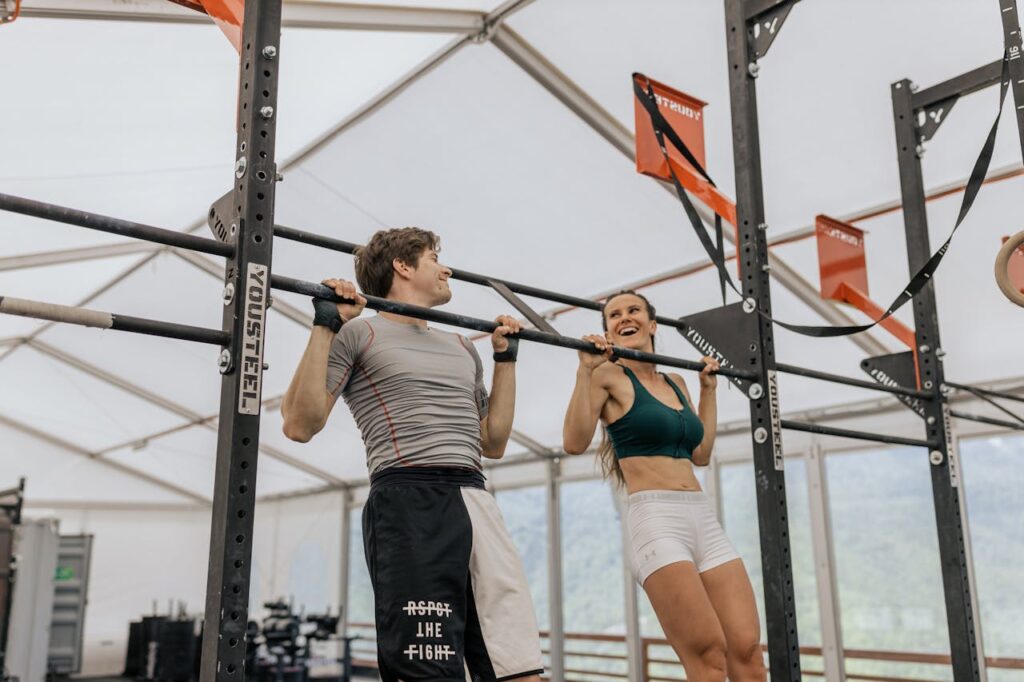
When it comes to upper body strength training, few exercises are as effective—or as confusing—as pull-ups and chin-ups. While these movements might look similar to the untrained eye, the subtle differences between them can significantly impact your workout results. Understanding these distinctions is crucial for anyone looking to build a stronger, more muscular upper body.
Whether you’re a beginner struggling with your first rep or an advanced athlete looking to optimize your training, this comprehensive guide will break down everything you need to know about pull-ups versus chin-ups, helping you make informed decisions about which exercise to prioritize in your routine.
The Fundamental Difference Between Pull-ups and Chin-ups
The primary difference between pull-ups and chin-ups lies in your grip position, which may seem minor but creates significant changes in muscle activation and movement patterns.
Pull-up Grip and Position
Pull-ups use a pronated grip (also called an overhand grip), where your palms face away from your body. Your hands are typically positioned slightly wider than shoulder-width apart on the bar. This grip position naturally engages your back muscles more prominently and requires greater lat activation to complete the movement.
Chin-up Grip and Position
Chin-ups employ a supinated grip (underhand grip), with your palms facing toward your body. The hand placement is usually closer together, around shoulder-width or slightly narrower. This grip allows for greater bicep involvement and often feels more natural for beginners.
Why Grip Matters
The grip difference isn’t just about comfort—it fundamentally changes the biomechanics of the movement. The supinated grip in chin-ups allows your biceps to work in their strongest position, while the pronated grip in pull-ups forces your back muscles to take on more of the workload.
Muscles Worked: Understanding the Activation Patterns
Both exercises are compound movements that work multiple muscle groups simultaneously, but they emphasize different areas of your upper body.
Primary Muscles in Pull-ups
- Latissimus dorsi (lats): The large back muscles that create the V-shaped torso
- Rhomboids and middle trapezius: Muscles between your shoulder blades
- Posterior deltoids: Rear shoulder muscles
- Lower trapezius: Lower portion of the trap muscles
Primary Muscles in Chin-ups
- Biceps brachii: Front arm muscles (significantly more activation than pull-ups)
- Latissimus dorsi: Still heavily involved but with different emphasis
- Pectoralis major: Chest muscles (more activation than in pull-ups)
- Anterior deltoids: Front shoulder muscles
Secondary Muscles (Both Exercises)
- Core muscles: For stability and control
- Forearms and grip muscles: For holding onto the bar
- Serratus anterior: For shoulder blade movement
- Erector spinae: For spinal stability
Proper Form and Technique
Mastering proper form is essential for both safety and effectiveness. Poor technique not only limits your progress but also increases injury risk.
How to Perform Pull-ups
- Starting Position: Hang from the bar with a pronated grip, hands slightly wider than shoulder-width
- Body Position: Keep your body straight with a slight forward lean, engage your core
- The Pull: Initiate the movement by pulling your shoulder blades down and back
- Ascent: Pull your body up until your chin clears the bar, focusing on driving your elbows down and back
- Descent: Lower yourself with control, maintaining tension throughout the movement
- Bottom Position: Return to a full hang with arms extended but not completely relaxed
How to Perform Chin-ups
- Starting Position: Hang from the bar with a supinated grip, hands about shoulder-width apart
- Body Position: Maintain a straight body line with engaged core muscles
- The Pull: Begin by pulling your shoulder blades down while simultaneously flexing your elbows
- Ascent: Pull up until your chin passes the bar, allowing your biceps to drive the movement
- Descent: Lower with control, resisting gravity throughout the entire range of motion
- Bottom Position: Return to full arm extension while maintaining muscle tension
Common Form Mistakes to Avoid
- Kipping or swinging: Using momentum reduces muscle activation and increases injury risk
- Partial range of motion: Not achieving full extension at the bottom or full chin clearance at the top
- Forward head posture: Craning your neck to reach the bar instead of pulling your body up
- Shoulder shrugging: Allowing shoulders to rise toward your ears during the movement
- Rushed tempo: Moving too quickly through the eccentric (lowering) portion
Exercise Variations and Progressions
Both pull-ups and chin-ups offer numerous variations to accommodate different fitness levels and training goals.
Beginner Progressions
Assisted Variations:
- Resistance band assistance: Loop a band around the bar and place your feet or knees in it
- Partner assistance: Have someone support your legs or hips during the movement
- Machine-assisted pull-ups: Use gym equipment designed for assisted bodyweight movements
Preparatory Exercises:
- Dead hangs: Simply hang from the bar to build grip strength and shoulder stability
- Scapular pull-ups: Focus on pulling shoulder blades down without bending elbows
- Negative reps: Jump or step up to the top position and lower yourself slowly
Intermediate Variations
- Neutral grip pull-ups: Palms face each other, reducing wrist stress
- Wide grip pull-ups: Hands positioned wider than normal for increased lat emphasis
- Close grip chin-ups: Hands closer together for greater bicep activation
- Commando pull-ups: Alternate pulling to each side of the bar
Advanced Progressions
- Weighted pull-ups/chin-ups: Add external weight via belt, vest, or dumbbell
- One-arm progressions: Work toward the ultimate bodyweight challenge
- Muscle-ups: Transition from pull-up to dip position above the bar
- Archer pull-ups: Shift weight to one arm while keeping the other straight
Programming and Periodization Strategies
Effective programming is crucial for long-term progress and avoiding plateaus.
Beginner Programming (0-5 reps)
- Frequency: 3-4 times per week
- Volume: 3-5 sets of assisted reps or negatives
- Focus: Building base strength and perfecting form
- Progression: Gradually reduce assistance or increase negative duration
Intermediate Programming (5-12 reps)
- Frequency: 3 times per week
- Volume: 3-4 sets of 5-8 reps
- Focus: Increasing rep count and exploring variations
- Progression: Add 1 rep per week or introduce new variations
Advanced Programming (12+ reps)
- Frequency: 2-3 times per week
- Volume: 4-5 sets with varied rep ranges
- Focus: Adding weight, advanced variations, or sport-specific applications
- Progression: Periodize between strength, hypertrophy, and endurance phases
Equipment Considerations and Home Setup
You don’t need a fancy gym to master these exercises. Here are your options:
Home Equipment Options
- Doorway pull-up bars: Affordable and convenient for most homes
- Wall-mounted bars: More stable option requiring permanent installation
- Power towers: Standalone equipment offering multiple exercise options
- Resistance bands: For assistance and alternative exercises
Gym Equipment
- Standard pull-up bars: Found in most gyms with various grip options
- Assisted pull-up machines: Helpful for beginners and rehabilitation
- Cable machines: For lat pulldowns as supplementary exercises
Mobility and Flexibility Requirements
Adequate mobility is often overlooked but essential for proper execution.
Key Mobility Areas
- Shoulder flexibility: Overhead mobility for full range of motion
- Thoracic spine: Upper back extension for proper positioning
- Lat flexibility: Prevents compensation patterns
- Wrist mobility: Especially important for chin-ups
Recommended Stretches
- Hanging stretches: Passive hanging to improve shoulder mobility
- Doorway chest stretches: Counter tight pectoral muscles
- Cat-cow stretches: Improve thoracic spine mobility
- Wrist circles: Prepare wrists for gripping demands
Integration into Your Workout Routine
Both exercises can fit into various training programs depending on your goals.
Upper Body Days
- Use as primary pulling movements
- Pair with pushing exercises for balance
- Perform early in workout when fresh
Full Body Routines
- Include 2-3 times per week
- Balance with lower body and core work
- Adjust volume based on recovery
Specialized Programs
- Strength focus: Lower reps, higher intensity
- Hypertrophy focus: Moderate reps, multiple sets
- Endurance focus: Higher reps, shorter rest periods
Which Exercise Should You Choose?
The choice between pull-ups and chin-ups depends on your goals, current ability, and preferences.
Choose Chin-ups If:
- You’re a beginner looking to build initial strength
- You want to emphasize bicep development
- You have shoulder mobility limitations
- You’re working on your first unassisted rep
Choose Pull-ups If:
- You want to maximize back muscle development
- You’re training for specific sports or activities
- You have good shoulder mobility
- You’re looking for a greater challenge
The Best Approach: Do Both
Rather than choosing one over the other, most people benefit from incorporating both exercises into their routine. Consider alternating between them in 8-10 week cycles or including both in the same workout with different rep ranges.
Troubleshooting Common Issues
“I Can’t Do Even One Rep”
- Start with assisted variations using bands or machines
- Focus on negative reps to build eccentric strength
- Improve your dead hang time to build grip strength
- Work on lat pulldowns to build pulling strength
“I’m Stuck at the Same Rep Count”
- Try different rep schemes (cluster sets, rest-pause)
- Add weight for lower rep sets to build strength
- Focus on perfect form rather than just rep count
- Take a deload week to allow for recovery
“My Grip Gives Out First”
- Practice dead hangs to build grip endurance
- Use lifting straps occasionally to focus on pulling muscles
- Incorporate grip-specific training
- Ensure proper bar diameter for your hand size
Frequently Asked Questions
Q: Are chin-ups easier than pull-ups?
A: Generally yes, chin-ups are easier for most people because the supinated grip allows greater bicep involvement, and the biceps are typically stronger than the back muscles in untrained individuals.
Q: How often should I train pull-ups and chin-ups?
A: For beginners, 3-4 times per week with adequate rest between sessions. Advanced trainees can handle higher frequencies but should monitor recovery carefully.
Q: Can I build a complete back with just these exercises?
A: While pull-ups and chin-ups are excellent exercises, a complete back development program should include horizontal pulling movements (rows) and exercises targeting the lower back.
Q: Should I do pull-ups or chin-ups first in my workout?
A: Perform the exercise that aligns with your primary goal first when you’re freshest. If both are equally important, alternate which one you do first.
Q: How long does it take to progress from assisted to unassisted reps?
A: This varies greatly depending on starting strength, body weight, and training consistency. Most people can achieve their first unassisted rep within 2-6 months of consistent training.
The Bottom Line
Both pull-ups and chin-ups deserve a place in your training arsenal. While they share many similarities, their subtle differences make them complementary rather than competing exercises. The key to success lies in consistent practice, progressive overload, and patience with the process.
Start where you are, use proper form, and gradually progress toward more challenging variations. Whether your goal is building a wider back, stronger arms, or simply completing your first unassisted rep, these exercises will serve you well on your fitness journey.
Remember, the best exercise is the one you can perform consistently with proper form. Master the basics, stay consistent, and watch your upper body strength soar to new heights.