Pregnancy brings incredible changes to your body, and maintaining lower body strength becomes crucial for your comfort, health, and preparation for labor. The right buttocks, hip, and thigh exercises can significantly improve your pregnancy experience while keeping you and your baby safe.
Why Lower Body Exercise Matters During Pregnancy
Physical Benefits of Prenatal Lower Body Training
Strengthening your buttocks, hips, and thighs during pregnancy offers numerous advantages that extend far beyond simple fitness maintenance:
Pain Relief and Posture Support
- Reduces lower back pain by strengthening supporting muscles
- Counteracts the forward shift in your center of gravity
- Improves pelvic stability as your body changes
- Alleviates hip discomfort common in later trimesters
Enhanced Daily Function
- Makes walking and climbing stairs easier
- Improves balance and reduces fall risk
- Supports better sleep quality through reduced discomfort
- Increases overall energy levels throughout the day
Labor and Delivery Preparation
- Strengthens muscles used during pushing
- Improves endurance for labor demands
- Enhances pelvic floor coordination
- Facilitates faster postpartum recovery
Long-term Health Benefits
- Reduces risk of gestational diabetes
- Lowers chances of excessive weight gain
- Decreases preeclampsia risk
- Supports cardiovascular health
Essential Safety Guidelines for Pregnancy Exercise
Exercise Precautions by Trimester
First Trimester (Weeks 1-12)
- Continue your regular routine with minor modifications
- Avoid overheating and excessive intensity
- Stay well-hydrated throughout workouts
- Listen to your body’s changing needs
Second Trimester (Weeks 13-26)
- Modify balance-challenging exercises
- Avoid prolonged supine (lying on back) positions after 20 weeks
- Focus on controlled movements over speed
- Incorporate more stability-based variations
Third Trimester (Weeks 27-40)
- Emphasize seated and side-lying positions
- Reduce range of motion as needed
- Prioritize comfort over intensity
- Prepare for postpartum exercise transition
Warning Signs to Stop Exercising Immediately
Contact your healthcare provider if you experience:
- Vaginal bleeding or fluid leakage
- Chest pain or severe shortness of breath
- Dizziness, fainting, or severe headaches
- Calf pain, swelling, or muscle weakness
- Decreased fetal movement
- Preterm labor contractions
The 4 Best Buttocks, Hip, and Thigh Exercises for Pregnancy
1. Modified Glute Bridge
Target Areas: Glutes, hamstrings, core stability
Equipment Needed: Exercise mat, optional pillow for head support
Step-by-Step Instructions:
- Lie on your back with knees bent, feet flat on floor hip-width apart
- Place arms at your sides for stability
- Engage your core and squeeze your glutes
- Lift your hips up, creating a straight line from knees to shoulders
- Hold for 2-3 seconds at the top
- Lower slowly with control
- Complete 12-15 repetitions for 2-3 sets
Trimester Modifications:
- First/Second Trimester: Perform as described above
- Third Trimester: Elevate your upper body on pillows at a 45-degree angle, or perform single-leg variations while seated
Safety Tips:
- Avoid this exercise after 20 weeks if lying flat feels uncomfortable
- Keep movements slow and controlled
- Don’t hold your breath during the exercise
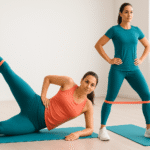
2. Side-Lying Leg Raises
Target Areas: Hip abductors, glutes, outer thighs
Equipment Needed: Exercise mat, optional resistance band
Step-by-Step Instructions:
- Lie on your left side with your head supported by your arm
- Keep your body in a straight line from head to feet
- Engage your core for stability
- Slowly lift your top leg 12-18 inches, keeping it straight
- Hold for 1-2 seconds at the top
- Lower with control, maintaining tension
- Complete 10-12 repetitions, then switch sides
- Perform 2-3 sets per side
Progression Options:
- Beginner: Start with smaller range of motion
- Intermediate: Add ankle weights or resistance band
- Advanced: Combine with small circles or pulses at the top
Form Cues:
- Keep your hips stacked and avoid rolling backward
- Maintain neutral spine alignment
- Focus on quality over quantity
3. Supported Wall Squats
Target Areas: Quadriceps, glutes, hamstrings, calves
Equipment Needed: Wall for support, optional exercise ball
Step-by-Step Instructions:
- Stand with your back against a wall, feet hip-width apart
- Walk your feet forward 12-18 inches from the wall
- Place hands on hips or cross over chest
- Slowly slide down the wall, bending knees to 90 degrees (or comfortable depth)
- Keep your knees aligned over your ankles
- Hold for 2-3 seconds at the bottom
- Press through your heels to return to starting position
- Complete 8-12 repetitions for 2-3 sets
Trimester Adaptations:
- All Trimesters: Adjust depth based on comfort and belly size
- Third Trimester: Use a wider stance and reduce depth as needed
- Balance Support: Keep one hand on wall throughout movement
Common Mistakes to Avoid:
- Knees caving inward
- Leaning too far forward
- Descending too quickly
4. Standing Hip Flexion
Target Areas: Hip flexors, quadriceps, core stability
Equipment Needed: Chair or wall for balance support
Step-by-Step Instructions:
- Stand tall with feet hip-width apart, holding chair back for support
- Engage your core and maintain good posture
- Slowly lift your right knee toward your chest
- Aim for a 90-degree angle at the hip (or comfortable height)
- Hold for 2-3 seconds while maintaining balance
- Lower your leg with control
- Complete 8-10 repetitions per leg for 2-3 sets
Balance Modifications:
- Beginner: Keep both hands on chair for support
- Intermediate: Use one hand for light support
- Advanced: Perform without support (if balance allows)
Functional Benefits:
- Improves walking mechanics
- Enhances stair climbing ability
- Prepares hip flexors for labor positioning
- Maintains hip mobility throughout pregnancy
Exercise Programming and Progression
Weekly Exercise Schedule
Recommended Frequency: 2-3 times per week with rest days between sessions
Sample Weekly Plan:
- Monday: Full lower body routine (all 4 exercises)
- Wednesday: Focus on glute bridges and wall squats
- Friday: Complete routine with emphasis on form
- Weekend: Light walking or prenatal yoga
Progression Guidelines by Trimester
First Trimester Progression:
- Week 1-2: Master basic form with bodyweight
- Week 3-4: Increase repetitions gradually
- Focus on establishing consistent routine
Second Trimester Progression:
- Add resistance bands or light weights if comfortable
- Increase hold times at peak positions
- Introduce single-limb variations for added challenge
Third Trimester Progression:
- Prioritize comfort and safety over intensity
- Reduce range of motion as needed
- Focus on maintaining strength rather than building
Equipment Alternatives for Home Workouts
No Equipment Options:
- Use wall support instead of exercise ball
- Substitute books or water bottles for light weights
- Utilize stairs for elevated positions
- Use towels for sliding movements
Budget-Friendly Equipment:
- Resistance bands ($10-15)
- Exercise mat ($20-30)
- Light dumbbells or ankle weights ($15-25)
- Stability ball ($15-20)
Postpartum Exercise Transition
Preparing for Recovery
The exercises you perform during pregnancy lay the foundation for your postpartum fitness journey. Maintaining lower body strength throughout pregnancy can:
- Reduce recovery time after delivery
- Improve functional movement patterns
- Support return to pre-pregnancy activities
- Enhance overall well-being during the fourth trimester
Gradual Return Guidelines
Weeks 1-6 Postpartum:
- Focus on gentle walking and breathing exercises
- Wait for medical clearance before resuming structured exercise
- Prioritize rest and recovery
Weeks 6-12 Postpartum:
- Gradually reintroduce pregnancy exercises
- Start with reduced intensity and duration
- Pay attention to any pelvic floor concerns
Frequently Asked Questions
Can I start these exercises if I wasn’t active before pregnancy?
Yes, these exercises are suitable for beginners. Start slowly with fewer repetitions and focus on proper form. Always consult your healthcare provider before beginning any new exercise program during pregnancy.
How do I know if I’m exercising too intensely?
Use the “talk test” – you should be able to carry on a conversation while exercising. If you’re too breathless to talk, reduce the intensity. Also, monitor your heart rate and avoid overheating.
What if I experience round ligament pain during exercise?
Round ligament pain is common during pregnancy. If you experience sharp pains in your lower abdomen or groin, stop the exercise and rest. Gentle stretching and slower movements often help. Consult your doctor if pain persists.
Can these exercises help with labor preparation?
Yes, strengthening your lower body muscles can improve endurance during labor and help with various labor positions. Strong glutes and hip muscles support better pelvic alignment and can facilitate the birthing process.
When should I stop doing glute bridges?
Most women can safely perform modified glute bridges throughout pregnancy. However, if lying on your back becomes uncomfortable (typically after 20 weeks), switch to inclined versions or alternative exercises like wall sits.
Your Path to a Stronger, More Comfortable Pregnancy
Incorporating these four essential buttocks, hip, and thigh exercises into your pregnancy routine can transform your experience, providing pain relief, improved function, and better preparation for labor and recovery. Remember that consistency matters more than intensity – even 15-20 minutes of focused exercise 2-3 times per week can yield significant benefits.
Always prioritize safety over performance, listen to your body’s signals, and maintain open communication with your healthcare provider throughout your fitness journey. Your body is doing incredible work growing your baby, and these exercises are simply supporting that amazing process.
Ready to get started? Begin with just one or two exercises today, focusing on proper form and comfort. As you build confidence and strength, gradually incorporate all four movements into your routine. Your body – and your baby – will thank you for this investment in your health and well-being.
Remember: This information is for educational purposes only and should not replace professional medical advice. Always consult with your healthcare provider before starting any exercise program during pregnancy.