Understanding anatomical planes and body movements is fundamental for anyone involved in fitness, physical therapy, or sports performance. Whether you’re a personal trainer designing exercise programs, a physical therapist developing rehabilitation protocols, or an athlete looking to optimize performance, mastering the three planes of motion will revolutionize how you approach human movement.
This comprehensive guide will explore the three anatomical planes, their specific movements, practical applications, and advanced concepts that will elevate your understanding of functional movement patterns.
What Are the Three Anatomical Planes of Motion?
The human body moves through three distinct planes of motion, each representing an imaginary flat surface that divides the body into specific sections. Think of these planes as invisible sheets of glass passing through your body, each allowing for different types of movement.
The Foundation: Anatomical Position
Before diving into the planes themselves, it’s crucial to understand anatomical position—the standard reference point for all anatomical descriptions. In anatomical position, a person stands upright with:
- Feet parallel and flat on the ground
- Arms at the sides with palms facing forward
- Head facing forward with eyes looking straight ahead
- Body erect and balanced
This position serves as the universal starting point for describing all body movements and directional terms.
The Sagittal Plane: Forward and Backward Motion
The sagittal plane divides the body into left and right halves, running from front to back. This plane allows for flexion and extension movements—the most common movements in daily life and exercise.
Primary Sagittal Plane Movements
Flexion: Decreasing the angle between two body parts
- Bicep curls (elbow flexion)
- Knee-to-chest movements (hip and knee flexion)
- Forward head nods (cervical flexion)
Extension: Increasing the angle between two body parts or returning from flexion
- Straightening the arm after a bicep curl
- Standing up from a squat (hip and knee extension)
- Arching the back (spinal extension)
Hyperextension: Extension beyond the anatomical position
- Leaning backward past neutral spine
- Lifting the leg behind the body past neutral
Essential Sagittal Plane Exercises
Lower Body Sagittal Movements:
- Squats and lunges (forward/reverse)
- Deadlifts and Romanian deadlifts
- Calf raises and heel walks
- Step-ups and box jumps
Upper Body Sagittal Movements:
- Push-ups and bench press
- Pull-ups and rows
- Overhead press and lat pulldowns
- Bicep curls and tricep extensions
Benefits of Sagittal Plane Training
Training in the sagittal plane develops:
- Fundamental strength patterns for daily activities
- Power for athletic movements like jumping and sprinting
- Postural stability and core strength
- Muscle coordination for lifting and carrying tasks
The Frontal (Coronal) Plane: Side-to-Side Motion
The frontal plane, also called the coronal plane, divides the body into front and back halves. This plane facilitates lateral movements that are often neglected in traditional training programs but are crucial for injury prevention and functional movement.
Primary Frontal Plane Movements
Abduction: Moving a limb away from the body’s midline
- Raising arms out to the sides (shoulder abduction)
- Stepping sideways (hip abduction)
- Spreading fingers apart
Adduction: Moving a limb toward the body’s midline
- Bringing arms back to the sides from an abducted position
- Crossing one leg in front of the other
- Squeezing fingers together
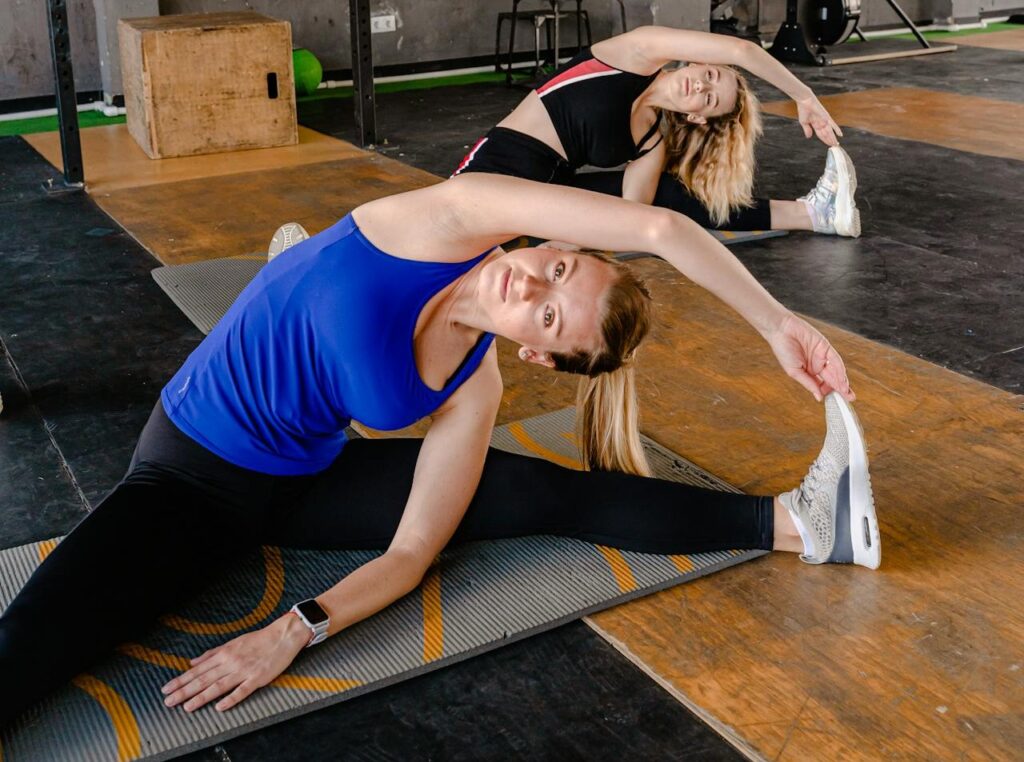
Lateral Flexion: Bending sideways at the spine
- Side bends at the waist
- Tilting the head to one side
Critical Frontal Plane Exercises
Lower Body Frontal Movements:
- Lateral lunges and side steps
- Cossack squats and lateral bounds
- Side-lying leg lifts and clamshells
- Lateral shuffles and side planks
Upper Body Frontal Movements:
- Lateral raises and reverse flies
- Side planks and lateral crawls
- Single-arm carries and unilateral loading
- Lateral pull-downs and side bends
The Importance of Frontal Plane Training
Frontal plane exercises are essential for:
- Injury prevention, especially knee and ankle injuries
- Improved balance and stability during multi-directional activities
- Enhanced athletic performance in sports requiring lateral movement
- Correcting muscle imbalances from sagittal-dominant training
- Developing hip stability and glute strength
The Transverse Plane: Rotational Motion
The transverse plane divides the body into upper and lower halves, allowing for rotational movements. This plane is crucial for athletic performance and functional activities that require twisting and turning motions.
Primary Transverse Plane Movements
Internal Rotation: Rotating toward the body’s midline
- Turning the palm downward (forearm pronation)
- Rotating the thigh inward at the hip
- Turning the head to look over the shoulder
External Rotation: Rotating away from the body’s midline
- Turning the palm upward (forearm supination)
- Rotating the thigh outward at the hip
- Opening the chest by rotating the shoulders back
Spinal Rotation: Twisting movements of the trunk
- Russian twists and wood chops
- Golf swings and tennis serves
- Looking over the shoulder while driving
Advanced Transverse Plane Exercises
Core and Spinal Rotation:
- Medicine ball throws and slams
- Cable wood chops and anti-rotation holds
- Turkish get-ups and windmills
- Pallof presses and dead bugs
Limb Rotation Exercises:
- Internal and external rotation exercises for shoulders and hips
- Pronation and supination exercises for forearms
- Multi-planar lunges with rotation
- Rotational jumping and landing drills
Benefits of Transverse Plane Training
Transverse plane movements develop:
- Rotational power for sports and daily activities
- Core stability and anti-rotation strength
- Improved coordination between upper and lower body
- Enhanced proprioception and body awareness
- Reduced risk of rotational injuries
Advanced Concepts: Multiplanar Movement Integration
Real-world movements rarely occur in a single plane. Most functional activities and athletic movements involve combinations of all three planes simultaneously. Understanding how to integrate multiplanar training is key to developing comprehensive movement competency.
Complex Movement Patterns
Gait and Walking: Combines sagittal plane hip and knee flexion/extension with frontal plane hip stabilization and transverse plane pelvic rotation.
Throwing Motions: Integrate sagittal plane shoulder flexion, frontal plane shoulder abduction, and transverse plane trunk and shoulder rotation.
Cutting and Changing Direction: Requires sagittal plane deceleration, frontal plane lateral movement, and transverse plane rotation for redirection.
Sport-Specific Applications
Different sports emphasize different planes of motion:
Sagittal-Dominant Sports:
- Running and cycling
- Powerlifting and Olympic lifting
- Swimming (freestyle and backstroke)
Frontal-Dominant Sports:
- Basketball and volleyball (lateral movements)
- Hockey and skating
- Martial arts with lateral stances
Transverse-Dominant Sports:
- Golf and baseball
- Tennis and racquet sports
- Discus and hammer throw
Rehabilitation and Corrective Exercise Applications
Understanding anatomical planes is crucial for rehabilitation professionals and corrective exercise specialists. Many injuries occur when the body is unprepared for forces in unfamiliar planes of motion.
Common Movement Dysfunctions
Sagittal Plane Dominance: Over-reliance on forward/backward movements leading to:
- Weak lateral stabilizers
- Increased injury risk during multi-directional activities
- Poor frontal and transverse plane movement quality
Frontal Plane Deficiencies: Weak lateral movement patterns causing:
- Knee valgus during squatting and landing
- Hip drop during single-leg activities
- Increased risk of ACL and ankle injuries
Transverse Plane Limitations: Poor rotational control resulting in:
- Low back pain during twisting activities
- Shoulder impingement during overhead rotation
- Reduced athletic performance in rotational sports
Assessment and Corrective Strategies
Movement Screening: Evaluate movement quality in all three planes through:
- Overhead squat assessment (multiplanar)
- Single-leg balance tests (frontal plane stability)
- Rotational movement screens (transverse plane control)
Progressive Corrective Exercise:
- Mobility: Address restrictions in each plane
- Stability: Develop control in isolated planes
- Integration: Combine planes in functional patterns
- Performance: Apply to sport-specific or activity-specific demands
Age and Population-Specific Considerations
Different populations require modified approaches to plane-of-motion training:
Youth and Adolescents
- Emphasize movement quality over intensity
- Focus on fundamental movement patterns in all planes
- Address growth-related imbalances and coordination challenges
- Incorporate play-based multiplanar activities
Older Adults
- Prioritize balance and fall prevention through frontal plane training
- Maintain rotational mobility for daily activities
- Progress gradually with supported multiplanar movements
- Focus on functional movement patterns for independence
Athletes
- Sport-specific plane emphasis while maintaining balance
- High-intensity multiplanar training for performance
- Injury prevention through comprehensive plane training
- Periodized approach based on competitive demands
Creating Effective Multiplanar Training Programs
Program Design Principles
Assessment First: Evaluate movement quality in all planes before designing programs.
Progressive Overload: Gradually increase complexity, load, and speed across all planes.
Specificity: Match training planes to activity or sport demands while maintaining balance.
Recovery: Allow adequate recovery between high-intensity multiplanar sessions.
Sample Weekly Structure
Day 1: Sagittal plane emphasis with frontal plane stability
Day 2: Transverse plane focus with multiplanar integration
Day 3: Frontal plane emphasis with sagittal plane power
Day 4: Multiplanar integration and sport-specific patterns
Conclusion: Mastering Movement for Optimal Performance
Understanding and applying the three anatomical planes of motion is essential for anyone serious about human movement, whether for fitness, rehabilitation, or athletic performance. By training in all three planes—sagittal, frontal, and transverse—you develop comprehensive movement competency that translates to better performance, reduced injury risk, and improved quality of life.
The key is not just understanding these planes intellectually, but integrating them into practical training programs that address individual needs, goals, and movement limitations. Start by assessing your current movement patterns, identify weaknesses in specific planes, and progressively build a more complete movement foundation.
Remember, the human body is designed to move in three dimensions. Your training should reflect this reality by incorporating exercises and movement patterns that challenge all planes of motion. This comprehensive approach will unlock your full movement potential and set the foundation for lifelong physical health and performance.
Frequently Asked Questions
Q: Which plane of motion is most important for daily activities?
A: While the sagittal plane dominates most daily activities like walking, sitting, and lifting, all three planes are important. Frontal and transverse plane movements become crucial for activities like reaching across the body, getting in and out of cars, and maintaining balance during unexpected movements.
Q: How often should I train each plane of motion?
A: Aim to include exercises from all three planes in each training session, or at minimum, ensure each plane is trained 2-3 times per week. The emphasis can vary based on your goals, sport, or movement limitations identified through assessment.
Q: Can I train multiple planes simultaneously?
A: Absolutely! Many functional exercises naturally combine multiple planes. Examples include walking lunges with rotation, lateral lunges with reaches, and multi-directional step-ups. These multiplanar exercises often provide the most functional benefit.
Q: What are the most common mistakes in plane-of-motion training?
A: The biggest mistake is sagittal plane dominance—focusing too heavily on forward/backward movements while neglecting lateral and rotational patterns. This creates imbalances and increases injury risk. Another common error is progressing too quickly to complex multiplanar movements without first establishing control in individual planes.
Q: How do anatomical planes relate to injury prevention?
A: Many injuries occur when the body encounters forces in planes it’s not prepared for. For example, ACL injuries often happen during uncontrolled frontal or transverse plane movements. Training in all planes prepares your body for the unpredictable demands of sports and daily life, significantly reducing injury risk.