Lateral flexion is one of the most fundamental yet overlooked movements of the human spine. This sideways bending motion plays a crucial role in everything from reaching for objects to athletic performance, yet many people don’t fully understand its importance or how to optimize it. Whether you’re dealing with limited spinal mobility, looking to enhance your core training, or simply want to move better in daily life, understanding lateral flexion is essential for maintaining a healthy, functional spine.
What Is Lateral Flexion?
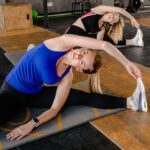
Lateral flexion refers to the sideways bending movement of the spine in the frontal plane. This motion involves tilting your torso to one side, creating a C-shaped curve along your spinal column. Unlike forward flexion (bending forward) or extension (bending backward), lateral flexion occurs when you bend directly to your left or right side.
The movement primarily occurs in three regions of your spine:
- Cervical spine (neck): Allows for head tilting to either side
- Thoracic spine (mid-back): Limited lateral movement due to rib cage constraints
- Lumbar spine (lower back): Primary contributor to trunk lateral flexion
Normal lateral flexion range of motion typically measures between 40-60 degrees in the lumbar spine when assessed with a goniometer. However, this range can vary significantly based on age, fitness level, and individual anatomical differences.
The Anatomy of Lateral Flexion
Spinal Structure and Mechanics
Understanding the anatomical foundation of lateral flexion helps explain why this movement is both essential and complex. Your spine consists of 24 movable vertebrae, each separated by intervertebral discs that act as shock absorbers and allow for movement.
During lateral flexion, several key structural changes occur:
- The vertebral bodies tilt toward the side of movement
- Intervertebral discs compress on the side you’re bending toward
- Facet joints on the opposite side separate slightly
- The spinal curve creates a temporary C-shape
Intervertebral Discs and Facet Joints
The intervertebral discs play a crucial role in lateral flexion by allowing controlled compression and deformation. When you bend to one side, the disc compresses on that side while expanding on the opposite side, creating a wedge-like shape. This mechanism distributes forces throughout the spine and prevents excessive stress on any single structure.
Facet joints, located at the back of each vertebra, guide and limit spinal movement. During lateral flexion, these joints work together to ensure smooth, controlled motion while preventing excessive or harmful movement patterns.
Key Muscles Involved in Lateral Flexion
Lateral flexion is a complex movement requiring coordination between multiple muscle groups. Understanding these muscles helps you target them effectively in training and rehabilitation.
Quadratus Lumborum
Often called the “hip hiker,” the quadratus lumborum is perhaps the most important muscle for lumbar lateral flexion. This deep muscle connects your lowest rib to your pelvis and is responsible for:
- Primary lateral flexion of the lumbar spine
- Stabilizing the pelvis during single-leg activities
- Assisting with breathing mechanics
- Maintaining proper posture during asymmetrical movements
Weakness or tightness in the quadratus lumborum can significantly impact your ability to perform lateral flexion and may contribute to lower back pain.
Internal and External Obliques
The oblique muscles form the sides of your core and are essential for both lateral flexion and rotational movements. These muscles work in different patterns:
- Same-side obliques contract to create lateral flexion
- Opposite-side obliques lengthen to allow the movement
- Both muscle groups work together to control and stabilize the movement
Strong, balanced obliques are crucial for functional lateral flexion and overall core stability.
Erector Spinae Group
While primarily known for spinal extension, the erector spinae muscles also contribute to lateral flexion through unilateral contraction. When muscles on one side of your spine contract while the opposite side lengthens, lateral flexion occurs. This muscle group includes:
- Iliocostalis: Connects ribs to pelvis
- Longissimus: Runs along the length of the spine
- Spinalis: Closest to the spine itself
Intercostal Muscles
Located between your ribs, the intercostal muscles assist with lateral flexion of the thoracic spine and play a crucial role in breathing mechanics during movement. These often-overlooked muscles contribute to:
- Rib cage mobility during lateral bending
- Respiratory function during exercise
- Overall thoracic spine flexibility
Functional Applications of Lateral Flexion
Daily Movement Patterns
Lateral flexion isn’t just an exercise—it’s a fundamental movement pattern you use throughout the day. Common activities requiring lateral flexion include:
- Reaching for objects on shelves or in cars
- Picking up items from the floor to one side
- Getting dressed and putting on shoes
- Carrying bags or groceries
- Gardening and household chores
Poor lateral flexion can make these everyday activities more difficult and potentially lead to compensatory movement patterns that increase injury risk.
Athletic Performance and Sports
Many sports and athletic activities rely heavily on lateral flexion for optimal performance:
- Tennis and racquet sports: Reaching for wide shots
- Golf: Creating proper spine angle and rotation
- Swimming: Efficient stroke mechanics
- Running: Natural gait patterns and stride efficiency
- Martial arts: Evasive movements and striking techniques
Athletes with limited lateral flexion may experience decreased performance and increased injury risk, particularly in the lower back and hips.
Age-Related Changes and Adaptations
As we age, several factors can impact lateral flexion capacity:
Structural Changes
- Disc degeneration: Reduces shock absorption and flexibility
- Facet joint arthritis: Limits smooth joint movement
- Ligament stiffening: Decreases overall spinal mobility
- Muscle mass loss: Reduces strength and control
Compensatory Patterns
Older adults often develop compensatory movement patterns when lateral flexion becomes limited:
- Increased hip hiking to reach objects
- Excessive trunk rotation instead of pure lateral bending
- Asymmetrical movement patterns favoring one side
Understanding these changes helps in developing age-appropriate exercise programs and movement strategies.
Evidence-Based Assessment and Measurement
Clinical Assessment Tools
Beyond basic goniometer measurements, several assessment tools can evaluate lateral flexion:
- Inclinometer measurements: More precise angle documentation
- Functional movement screens: Assess movement quality and compensation patterns
- Digital posture analysis: Provides detailed movement analysis
- Range of motion photography: Documents progress over time
Normative Values and Benchmarks
Research indicates normal lateral flexion ranges vary by age and gender:
- Young adults (20-30 years): 45-60 degrees
- Middle-aged adults (40-50 years): 35-50 degrees
- Older adults (60+ years): 25-40 degrees
These values serve as general guidelines, with individual variation being normal and expected.
Progressive Exercise Protocols for Lateral Flexion
Mobility and Flexibility Exercises
Standing Side Stretch
- Stand with feet hip-width apart
- Raise one arm overhead and lean to the opposite side
- Hold for 30 seconds, feeling the stretch along your side
- Repeat 3 times each direction
Seated Lateral Flexion Stretch
- Sit tall in a chair with feet flat on floor
- Place one hand on your hip for support
- Reach the opposite arm over your head and lean to the side
- Hold for 30 seconds and repeat
Strengthening Exercises
Dumbbell Side Bends with Hip Shift
- Hold a dumbbell in one hand at your side
- Shift your hips away from the weight
- Slowly bend to the weighted side, controlling the movement
- Return to starting position with control
- Perform 10-15 repetitions each side
Half-Kneeling Side Bend
- Kneel on one knee with the other foot planted
- Reach the arm on the kneeling side overhead
- Bend laterally toward the planted foot
- Focus on controlled movement and core engagement
- Perform 8-12 repetitions each side
Hanging Side Bends (Advanced)
- Hang from a pull-up bar with arms extended
- Slowly lift your knees to one side
- Control the movement back to center
- Alternate sides for 6-10 repetitions
Functional Integration Exercises
Lateral Lunge with Reach
- Step wide to one side into a lateral lunge
- Reach the opposite arm overhead and lean into the lunge
- Return to standing and repeat on the other side
- Perform 8-10 repetitions each direction
Injury Prevention and Safety Considerations
Common Contraindications
Certain conditions require modified approaches to lateral flexion training:
- Acute lower back pain: Avoid aggressive stretching
- Herniated discs: Limit end-range movements
- Spinal stenosis: Focus on neutral spine positions
- Recent spinal surgery: Follow medical guidelines
Safety Guidelines
- Always warm up before lateral flexion exercises
- Progress gradually in range of motion and resistance
- Avoid bouncing or ballistic movements
- Stop if you experience pain or discomfort
- Maintain proper breathing throughout exercises
Red Flags
Seek medical attention if you experience:
- Sharp, shooting pain during lateral flexion
- Numbness or tingling in arms or legs
- Significant asymmetry between sides
- Progressive loss of range of motion
Integration with Functional Movement Patterns
Lateral flexion doesn’t occur in isolation—it’s part of complex, three-dimensional movement patterns. Effective training should integrate lateral flexion with:
Multi-Planar Movements
- Lateral flexion with rotation: Mimics real-world activities
- Combined flexion patterns: Integrates forward and side bending
- Dynamic stability exercises: Challenges control in multiple planes
Core Training Integration
Modern core training recognizes lateral flexion as one of four primary spinal movements:
- Flexion: Forward bending
- Extension: Backward bending
- Lateral flexion: Side bending
- Rotation: Twisting
A comprehensive core program addresses all four movement patterns for optimal function and injury prevention.
Rehabilitation Protocols and Clinical Applications
Post-Injury Rehabilitation
Lateral flexion exercises play a crucial role in rehabilitation following:
- Lower back injuries: Gradual restoration of movement
- Hip injuries: Compensatory pattern correction
- Shoulder injuries: Maintaining trunk mobility
- Post-surgical recovery: Progressive movement restoration
Progressive Rehabilitation Phases
Phase 1: Pain Management and Gentle Mobility
- Gentle range of motion exercises
- Pain-free movement patterns
- Basic postural awareness
Phase 2: Strength and Stability
- Progressive resistance exercises
- Core stabilization training
- Movement pattern refinement
Phase 3: Functional Integration
- Sport-specific movements
- Complex movement patterns
- Return to full activity
Advanced Training Strategies
Periodization for Lateral Flexion
Advanced athletes and fitness enthusiasts can benefit from periodized lateral flexion training:
- Preparation phase: Focus on mobility and basic strength
- Development phase: Progressive overload and skill refinement
- Peak phase: Sport-specific integration and performance
- Recovery phase: Maintenance and injury prevention
Technology Integration
Modern technology can enhance lateral flexion training:
- Movement analysis apps: Provide real-time feedback
- Wearable sensors: Track movement quality and progress
- Virtual reality training: Gamify rehabilitation exercises
- Biofeedback devices: Improve movement awareness
Conclusion and Key Takeaways
Lateral flexion is a fundamental movement pattern that impacts everything from daily activities to athletic performance. Understanding its anatomy, function, and training applications is essential for maintaining optimal spinal health and movement quality throughout life.
Key points to remember:
- Lateral flexion involves complex coordination between multiple muscle groups
- Age-related changes are normal but can be addressed through appropriate exercise
- Progressive training should address both mobility and strength components
- Integration with other movement patterns enhances functional outcomes
- Safety considerations and contraindications must be respected
Whether you’re a healthcare professional, fitness enthusiast, or someone looking to improve your movement quality, incorporating lateral flexion training into your routine can lead to significant improvements in function, performance, and overall well-being.
Ready to improve your lateral flexion? Start with basic mobility exercises and gradually progress to more challenging movements. Remember to listen to your body, progress gradually, and consult with a healthcare professional if you have any concerns about your spinal health or movement limitations.
Frequently Asked Questions
Q: How often should I perform lateral flexion exercises?
A: For general fitness, 2-3 times per week is sufficient. If you’re addressing specific limitations or in rehabilitation, daily gentle movements may be appropriate under professional guidance.
Q: Can lateral flexion exercises help with lower back pain?
A: Gentle lateral flexion exercises can help improve mobility and reduce stiffness, but it’s important to consult with a healthcare provider to determine the underlying cause of your pain and appropriate treatment approach.
Q: What’s the difference between lateral flexion and lateral bending?
A: These terms are often used interchangeably. Lateral flexion is the more technical anatomical term, while lateral bending is more commonly used in fitness and general contexts.
Q: Is it normal to have different ranges of motion on each side?
A: Small differences between sides are normal, but significant asymmetries (more than 10-15 degrees) may indicate muscle imbalances or restrictions that could benefit from targeted intervention.
Q: Can I perform lateral flexion exercises if I have scoliosis?
A: People with scoliosis can often benefit from lateral flexion exercises, but the approach should be individualized based on the curve pattern and severity. Always consult with a healthcare provider familiar with scoliosis management.