
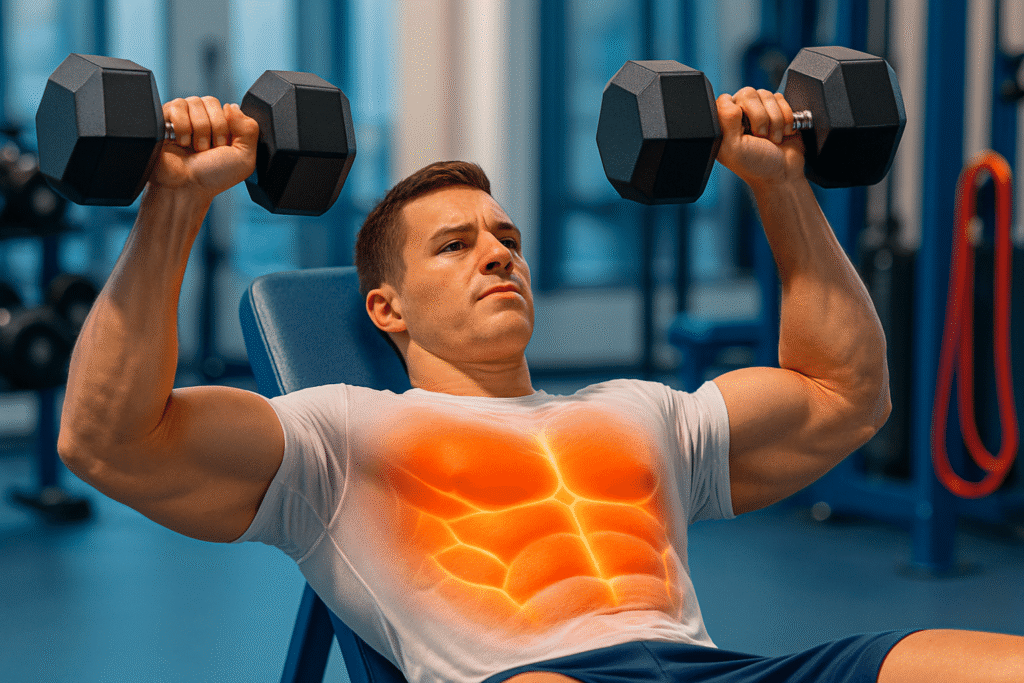
Pushups are undoubtedly one of the most popular bodyweight exercises, but they’re not for everyone. Whether you’re dealing with wrist pain, shoulder issues, or simply want to add variety to your workout routine, there are numerous effective alternatives that can help you build upper body strength and muscle definition.
This comprehensive guide explores the best pushup alternatives, from beginner-friendly modifications to advanced variations that will challenge even the most experienced fitness enthusiasts.
Why Look for Pushup Alternatives?
Before diving into the alternatives, it’s important to understand why someone might need or want to replace traditional pushups in their routine:
Common Issues with Traditional Pushups
- Wrist pain and discomfort from bearing weight on extended wrists
- Shoulder impingement or existing shoulder injuries
- Lower back strain from poor form or core weakness
- Lack of progression options for beginners or advanced trainees
- Muscle imbalances from repetitive movement patterns
- Boredom from doing the same exercise repeatedly
Benefits of Exercise Variation
Incorporating pushup alternatives offers several advantages:
- Reduced injury risk through varied movement patterns
- Improved muscle development by targeting muscles from different angles
- Enhanced motivation through exercise variety
- Better functional strength from diverse movement patterns
- Accommodation of limitations while maintaining training consistency
Muscles Worked by Pushups (and Their Alternatives)
Understanding the muscle groups targeted by pushups helps us select appropriate alternatives:
Primary Muscles
- Pectoralis major (chest muscles)
- Anterior deltoids (front shoulders)
- Triceps brachii (back of arms)
Secondary Muscles
- Core muscles (rectus abdominis, transverse abdominis)
- Serratus anterior (muscles along the ribs)
- Lower trapezius and rhomboids (upper back stabilizers)
12 Best Pushup Alternatives
1. Chest Press (Dumbbell or Barbell)
The chest press is perhaps the most direct alternative to pushups, allowing for precise load control and progression.
How to Perform:
- Lie on a bench with feet flat on the floor
- Hold dumbbells or a barbell at chest level
- Press the weight straight up until arms are extended
- Lower with control back to starting position
Benefits:
- Easy to adjust resistance
- Excellent for progressive overload
- Reduces wrist stress
- Allows for various grip positions
Programming: 3-4 sets of 8-12 repetitions
2. Incline Pushups
Perfect for beginners or those with wrist issues, incline pushups reduce the load while maintaining the movement pattern.
How to Perform:
- Place hands on an elevated surface (bench, step, or wall)
- Walk feet back to create an inclined plank position
- Perform pushup motion with proper form
- The higher the incline, the easier the exercise
Benefits:
- Scalable difficulty by adjusting incline height
- Maintains pushup movement pattern
- Reduces wrist pressure
- Great for building up to full pushups
Programming: 3 sets of 10-15 repetitions
3. Chest Dips
Chest dips provide an excellent alternative that emphasizes the lower chest and triceps.
How to Perform:
- Support yourself on parallel bars or dip station
- Lean slightly forward to emphasize chest muscles
- Lower your body until shoulders are below elbows
- Push back up to starting position
Benefits:
- Targets lower chest effectively
- Builds functional pushing strength
- Can be modified with assistance or added weight
- Excellent for tricep development
Programming: 3 sets of 6-10 repetitions
4. Resistance Band Chest Press
Ideal for home workouts or travel, resistance bands provide variable resistance throughout the movement.
How to Perform:
- Anchor resistance band at chest height
- Hold handles with arms extended forward
- Step away from anchor to create tension
- Press handles forward, squeezing chest muscles
- Return with control
Benefits:
- Portable and convenient
- Variable resistance curve
- Joint-friendly
- Multiple angle options
Programming: 3-4 sets of 12-15 repetitions
5. Floor Press
The floor press eliminates the bottom portion of the movement, making it shoulder-friendly while still building pressing strength.
How to Perform:
- Lie on the floor with knees bent
- Hold dumbbells or barbell at chest level
- Press weight up until arms are extended
- Lower until upper arms touch the floor
- Pause briefly, then press back up
Benefits:
- Reduces shoulder stress
- Eliminates excessive range of motion
- Great for those with shoulder issues
- Builds lockout strength
Programming: 3-4 sets of 8-10 repetitions
6. Cable Chest Fly
This isolation exercise targets the chest muscles through a different movement pattern than pressing exercises.
How to Perform:
- Set cables at chest height
- Hold handles with arms slightly bent
- Bring hands together in a hugging motion
- Squeeze chest muscles at the peak contraction
- Return with control
Benefits:
- Excellent chest isolation
- Smooth resistance curve
- Multiple angle options
- Great for muscle definition
Programming: 3 sets of 10-12 repetitions
7. Medicine Ball Chest Pass
This explosive alternative builds power while targeting the same muscle groups as pushups.
How to Perform:
- Stand facing a wall with medicine ball at chest level
- Explosively throw the ball against the wall
- Catch the ball on the rebound
- Immediately repeat for desired repetitions
Benefits:
- Develops explosive power
- Functional movement pattern
- Cardiovascular benefits
- Can be done solo or with a partner
Programming: 3-4 sets of 8-10 repetitions
8. Landmine Press
The landmine press offers a unique angle of resistance and is excellent for those with shoulder issues.
How to Perform:
- Set up a barbell in a landmine attachment or corner
- Hold the end of the barbell at chest level
- Press the bar up and away from your body
- Lower with control
Benefits:
- Shoulder-friendly pressing angle
- Core engagement
- Unilateral training option
- Functional movement pattern
Programming: 3 sets of 8-10 repetitions per arm
9. Pushup on Handles or Parallettes
Using pushup handles or parallettes maintains the pushup movement while reducing wrist stress.
How to Perform:
- Place pushup handles on the ground
- Grip handles and assume pushup position
- Perform pushups with neutral wrists
- Focus on full range of motion
Benefits:
- Maintains pushup movement pattern
- Eliminates wrist extension
- Allows for deeper range of motion
- Portable equipment option
Programming: 3 sets of 8-12 repetitions
10. Single-Arm Dumbbell Press
This unilateral exercise challenges stability while building pressing strength.
How to Perform:
- Lie on bench holding one dumbbell
- Press the weight straight up
- Lower with control
- Complete all reps before switching arms
Benefits:
- Addresses muscle imbalances
- Increased core activation
- Unilateral strength development
- Improved stability
Programming: 3 sets of 8-10 repetitions per arm
11. Isometric Wall Push
Perfect for beginners or those recovering from injury, this static exercise builds strength without joint stress.
How to Perform:
- Stand arm’s length from a wall
- Place palms flat against the wall at shoulder height
- Push against the wall as hard as possible
- Hold for the prescribed time
Benefits:
- No joint movement
- Builds isometric strength
- Great for rehabilitation
- Can be done anywhere
Programming: 3 sets of 20-30 second holds
12. TRX Chest Press
Suspension trainer exercises provide instability challenges while targeting the same muscle groups.
How to Perform:
- Hold TRX handles with arms extended
- Lean forward to create body angle
- Lower body by bending arms
- Push back to starting position
Benefits:
- Instability training
- Scalable difficulty
- Full-body engagement
- Portable equipment
Programming: 3 sets of 10-12 repetitions
Choosing the Right Alternative for Your Goals
For Beginners
Start with:
- Incline pushups
- Resistance band chest press
- Isometric wall push
- Light dumbbell chest press
For Muscle Building
Focus on:
- Dumbbell chest press
- Chest dips
- Cable chest fly
- Floor press
For Power Development
Incorporate:
- Medicine ball chest pass
- Explosive pushup variations
- Plyometric movements
For Injury Prevention/Rehabilitation
Consider:
- Floor press
- Landmine press
- Isometric exercises
- Pushup handles
Programming Your Pushup Alternatives
Frequency
Train chest and pushing muscles 2-3 times per week with at least 48 hours of recovery between sessions.
Progressive Overload
- Increase resistance (weight, band tension, or body angle)
- Add repetitions within your target rep range
- Increase sets as your capacity improves
- Improve time under tension with slower tempos
Sample Workout Routine
Beginner Routine:
- Incline Pushups: 3 sets × 10-12 reps
- Resistance Band Chest Press: 3 sets × 12-15 reps
- Isometric Wall Push: 3 sets × 20-30 seconds
Intermediate Routine:
- Dumbbell Chest Press: 4 sets × 8-10 reps
- Chest Dips: 3 sets × 6-8 reps
- Cable Chest Fly: 3 sets × 10-12 reps
Advanced Routine:
- Single-Arm Dumbbell Press: 4 sets × 6-8 reps per arm
- Medicine Ball Chest Pass: 3 sets × 8-10 reps
- TRX Chest Press: 3 sets × 10-12 reps
Common Mistakes to Avoid
Poor Form Over Heavy Weight
Always prioritize proper form over lifting heavy weights. Poor form increases injury risk and reduces exercise effectiveness.
Neglecting Progressive Overload
Continuously challenge your muscles by gradually increasing difficulty through weight, reps, or sets.
Ignoring Muscle Balance
Include pulling exercises (rows, pull-ups) to balance your pushing movements and prevent muscle imbalances.
Rushing Through Repetitions
Control both the lifting and lowering phases of each exercise for maximum muscle activation and growth.
Equipment Considerations
Home Gym Essentials
- Adjustable dumbbells
- Resistance bands
- Pushup handles
- Stability ball
Gym Equipment Options
- Cable machines
- Barbells and plates
- Dip station
- TRX or suspension trainer
Budget-Friendly Alternatives
- Resistance bands
- Water jugs or household items as weights
- Stairs or elevated surfaces for incline exercises
Conclusion
Pushup alternatives offer endless possibilities for building upper body strength, whether you’re dealing with limitations, seeking variety, or pursuing specific fitness goals. The key is selecting exercises that match your current fitness level and progressively challenging yourself over time.
Remember that the best exercise is the one you can perform consistently with proper form. Start with the alternatives that feel most comfortable and gradually progress to more challenging variations as your strength and confidence improve.
Don’t let wrist pain, shoulder issues, or boredom derail your fitness journey. With these 12 effective pushup alternatives, you can continue building upper body strength while keeping your workouts fresh and engaging.
Ready to transform your upper body training? Choose 2-3 alternatives that match your current fitness level and equipment availability, then gradually progress as you build strength and confidence.
Frequently Asked Questions
Q: Can pushup alternatives be as effective as traditional pushups?
A: Absolutely! Many alternatives, such as dumbbell chest press and chest dips, can be even more effective for building strength and muscle mass due to their ability to provide progressive overload.
Q: How do I know which alternative is right for me?
A: Consider your current fitness level, available equipment, and any physical limitations. Beginners should start with incline pushups or resistance bands, while more advanced trainees can try chest dips or single-arm variations.
Q: Should I completely replace pushups with alternatives?
A: Not necessarily. If you can perform pushups pain-free, they remain an excellent exercise. Alternatives are great for adding variety, addressing limitations, or targeting muscles from different angles.
Q: How often should I change my pushup alternatives?
A: Every 4-6 weeks is ideal for preventing adaptation and maintaining progress. However, master the basics before moving to more complex variations.
Q: Can I build significant muscle with just bodyweight alternatives?
A: Yes, especially when starting out. Exercises like chest dips and incline pushups can be quite challenging. However, for continued muscle growth, you’ll eventually need to add external resistance.