
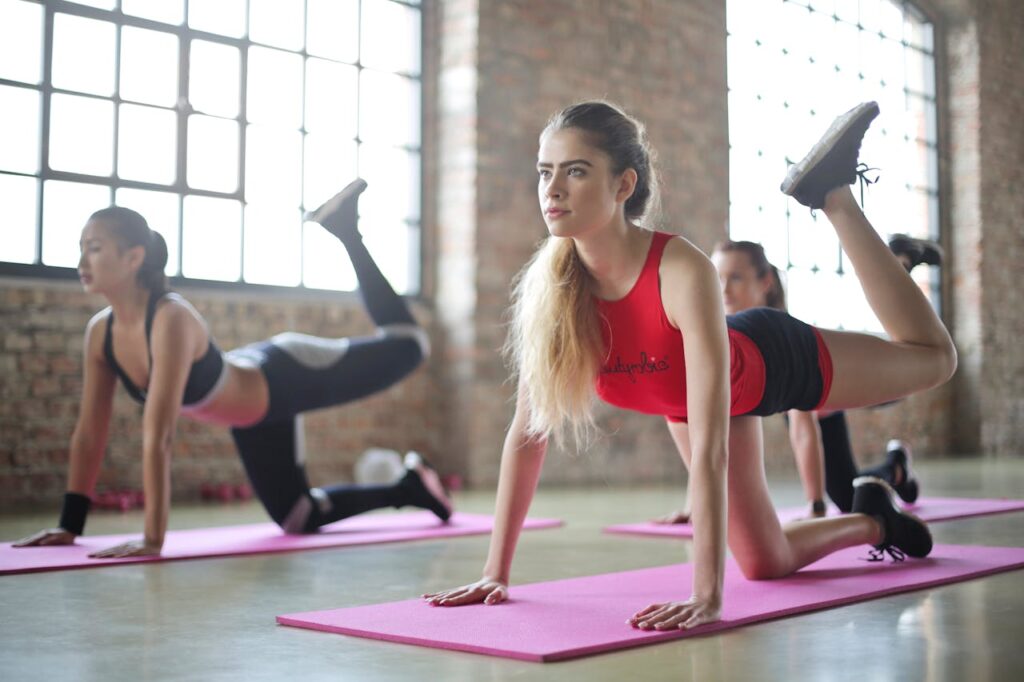
The stomach vacuum exercise has quietly become one of the most effective yet underutilized core strengthening techniques in modern fitness. Unlike traditional crunches or planks that target superficial abdominal muscles, the stomach vacuum specifically activates your transversus abdominis—the deepest layer of your core musculature. This isometric contraction exercise offers unique functional benefits that extend far beyond aesthetic improvements, making it an essential addition to any comprehensive fitness routine.
What Is the Stomach Vacuum Exercise?
The stomach vacuum, also known as abdominal hollowing or the abdominal drawing-in maneuver (ADIM), is an isometric exercise that involves contracting your deepest abdominal muscle while controlling your breathing. During this exercise, you draw your navel inward toward your spine while maintaining normal breathing patterns, creating a “vacuum” effect in your abdominal cavity.
This technique originated in yoga and Pilates practices but gained popularity in bodybuilding circles during the 1970s and 1980s, particularly among legends like Frank Zane and Arnold Schwarzenegger. Today, physical therapists and fitness professionals recognize it as one of the most functional core exercises for developing true core stability and spinal support.
The exercise differs significantly from simply “sucking in” your stomach. While sucking in involves holding your breath and creating superficial tension, the stomach vacuum requires controlled breathing while maintaining deep muscle activation—a skill that translates directly to improved functional movement patterns.
The Science Behind Transversus Abdominis Activation
Understanding Your Deep Core Anatomy
Your transversus abdominis (TVA) acts like a natural corset, wrapping horizontally around your torso beneath the rectus abdominis (six-pack muscles) and obliques. This muscle plays a crucial role in:
- Spinal stabilization: Providing internal pressure to support your spine during movement
- Postural control: Maintaining proper alignment throughout daily activities
- Breathing mechanics: Working synergistically with your diaphragm and pelvic floor
- Force transfer: Connecting upper and lower body movements efficiently
Research published in the Journal of Physical Therapy Science demonstrates that targeted TVA training significantly improves core stability and reduces chronic low back pain more effectively than traditional abdominal exercises.
Why Traditional Ab Exercises Fall Short
Most conventional core exercises primarily target the rectus abdominis and external obliques—the visible “show muscles” of your midsection. However, these superficial muscles don’t provide the deep stabilization necessary for optimal spinal health and functional movement. The stomach vacuum fills this critical gap by specifically targeting the foundational layer of core musculature.
How to Perform the Stomach Vacuum Exercise
Mastering the stomach vacuum requires patience and practice. Start with the easiest position and gradually progress to more challenging variations as your TVA strength improves.
Position 1: Supine (Lying Down)
Best for: Beginners and those learning proper technique
- Lie on your back with knees bent and feet flat on the floor
- Place one hand on your chest and another on your lower abdomen
- Exhale completely through your mouth, emptying your lungs
- Draw your navel inward toward your spine without holding your breath
- Breathe normally while maintaining the contraction
- Hold for 10-15 seconds initially, building up to 60 seconds
- Release slowly and rest for 30 seconds between repetitions
Position 2: Quadruped (Hands and Knees)
Best for: Intermediate practitioners ready to work against gravity
- Position yourself on hands and knees with a neutral spine
- Ensure your hands are directly under shoulders and knees under hips
- Exhale fully and draw your navel up toward your spine
- Maintain the contraction while breathing normally
- Keep your back flat—avoid arching or rounding
- Hold for 15-30 seconds, progressing to 60 seconds
Position 3: Kneeling
Best for: Building strength before progressing to standing
- Kneel upright with your torso vertical
- Place hands on your hips or let them hang naturally
- Exhale completely and draw your navel inward
- Focus on lifting your pelvic floor simultaneously
- Maintain normal breathing throughout the hold
- Progress from 20 seconds to 60 seconds
Position 4: Standing
Best for: Advanced practitioners and functional integration
- Stand with feet hip-width apart and arms at your sides
- Maintain a neutral spine with shoulders relaxed
- Exhale fully and engage your TVA by drawing navel to spine
- Continue breathing normally while holding the contraction
- This position most closely mimics real-world applications
- Work up to 60-90 second holds
Position 5: Prone (Face Down)
Best for: Maximum challenge and advanced core integration
- Lie face down with arms extended overhead or at your sides
- Rest your forehead on the ground or a small pillow
- Exhale and draw your navel away from the floor toward your spine
- Maintain the contraction while breathing steadily
- This position requires the highest level of TVA control
- Start with 10-15 seconds and progress gradually
Comprehensive Benefits of Stomach Vacuum Training
Enhanced Core Stability and Functional Strength
The stomach vacuum develops true core stability by training your TVA to activate automatically during movement. This improved stability translates to:
- Better performance in compound exercises like squats and deadlifts
- Reduced energy leakage during athletic movements
- Enhanced balance and proprioception
- Improved coordination between upper and lower body
Significant Back Pain Reduction
Multiple studies demonstrate the stomach vacuum’s effectiveness for chronic low back pain relief. A 2019 study in the International Journal of Environmental Research and Public Health found that participants who performed TVA-specific exercises experienced a 40% greater reduction in back pain compared to those doing traditional core exercises.
The mechanism involves:
- Increased intra-abdominal pressure supporting the spine
- Improved muscular endurance in deep stabilizing muscles
- Better load distribution during daily activities
- Enhanced spinal alignment and posture
Postural Improvements and Spinal Alignment
Regular stomach vacuum practice leads to measurable postural improvements by:
- Strengthening the muscles responsible for maintaining upright posture
- Reducing forward head posture and rounded shoulders
- Improving thoracic spine extension
- Creating better awareness of neutral spine positioning
Respiratory Function Enhancement
The stomach vacuum exercise improves breathing mechanics by training coordination between your diaphragm, pelvic floor, and TVA. This enhanced respiratory function benefits:
- Stress management and relaxation response
- Athletic performance and endurance
- Sleep quality and recovery
- Overall nervous system regulation
Aesthetic and Functional Waist Training
While not a fat-burning exercise, the stomach vacuum can improve waist appearance through:
- Better muscle tone and control in the deep abdominal layers
- Improved posture creating a taller, leaner silhouette
- Enhanced mind-muscle connection for better core engagement
- Reduced appearance of abdominal distension
Advanced Progression Protocols and Training Integration
Progressive Overload for Stomach Vacuum Training
Week 1-2: Focus on technique mastery
- 3 sets of 10-15 second holds
- Rest 30 seconds between sets
- Practice 3-4 times per week
Week 3-4: Increase duration
- 3 sets of 20-30 second holds
- Maintain 30-second rest periods
- Continue 3-4 sessions weekly
Week 5-8: Advanced progression
- 3 sets of 45-60 second holds
- Progress to more challenging positions
- Integrate with other exercises
Week 9+: Functional integration
- 60-90 second holds in standing position
- Combine with dynamic movements
- Use as activation before workouts
Integration with Comprehensive Core Training
The stomach vacuum works synergistically with other core exercises:
Pre-workout activation: Perform 2-3 sets before strength training to activate your TVA
Superset integration: Combine with planks or dead bugs for comprehensive core development
Recovery sessions: Use as active recovery between intense training days
Daily practice: Incorporate into morning routines or throughout the workday
Common Mistakes and Troubleshooting Techniques
Mistake 1: Holding Your Breath
Problem: Many beginners hold their breath during the contraction
Solution: Practice breathing normally while maintaining TVA engagement. Start with shorter holds and focus on steady, controlled breathing
Mistake 2: Sucking In Instead of Drawing In
Problem: Creating superficial tension rather than deep muscle activation
Solution: Focus on drawing your navel toward your spine rather than up toward your ribs. The movement should feel internal and controlled
Mistake 3: Excessive Spinal Flexion
Problem: Rounding the back or tucking the pelvis excessively
Solution: Maintain neutral spine alignment throughout the exercise. Use a mirror or work with a qualified trainer initially
Mistake 4: Inconsistent Practice
Problem: Sporadic training leading to minimal progress
Solution: Establish a consistent routine, even if it’s just 5 minutes daily. Consistency trumps intensity for TVA development
Safety Considerations and Contraindications
Who Should Avoid Stomach Vacuum Exercises
- Individuals with uncontrolled high blood pressure
- People with recent abdominal surgery (consult physician first)
- Those with active hernias or diastasis recti (seek professional guidance)
- Pregnant women (especially after first trimester)
- Anyone experiencing dizziness or lightheadedness during the exercise
Proper Safety Protocols
- Start slowly and progress gradually
- Stop immediately if you experience pain or discomfort
- Avoid performing on a full stomach
- Stay hydrated and practice in a well-ventilated area
- Consider working with a qualified fitness professional initially
Frequency Recommendations and Long-Term Periodization
Optimal Training Frequency
Beginners: 3-4 sessions per week, focusing on technique
Intermediate: 4-5 sessions per week with varied positions
Advanced: Daily practice with functional integration
Long-Term Periodization Strategy
Phase 1 (Weeks 1-4): Foundation building with basic positions
Phase 2 (Weeks 5-8): Progression to challenging positions and longer holds
Phase 3 (Weeks 9-12): Integration with dynamic movements and sport-specific applications
Phase 4 (Ongoing): Maintenance and continued functional application
Comparing Stomach Vacuum to Other Core Exercises
Stomach Vacuum vs. Planks
While planks excel at building endurance in superficial core muscles, the stomach vacuum specifically targets deep stabilizers. Combining both exercises provides comprehensive core development.
Stomach Vacuum vs. Crunches
Crunches primarily work the rectus abdominis and can actually inhibit TVA activation. The stomach vacuum offers superior functional benefits for real-world movement patterns.
Stomach Vacuum vs. Dead Bugs
Dead bugs provide excellent anti-extension training, while stomach vacuum focuses on isometric stabilization. Both exercises complement each other perfectly in a well-rounded program.
Frequently Asked Questions
How long does it take to see results from stomach vacuum exercises?
Most people notice improved core awareness within 1-2 weeks of consistent practice. Significant strength gains and postural improvements typically occur within 4-6 weeks, while maximum benefits may take 8-12 weeks of regular training.
Can I do stomach vacuum exercises every day?
Yes, the stomach vacuum can be performed daily since it’s a low-intensity isometric exercise. However, beginners should start with 3-4 sessions per week to allow proper recovery and technique development.
Will stomach vacuum exercises give me visible abs?
The stomach vacuum primarily targets deep core muscles rather than the superficial “six-pack” muscles. While it can improve core definition and posture, visible abs require low body fat percentage achieved through proper nutrition and comprehensive training.
Is it normal to feel lightheaded during stomach vacuum exercises?
Mild lightheadedness can occur if you’re holding your breath or over-exerting. Focus on maintaining normal breathing patterns and reduce hold times if necessary. Persistent dizziness warrants medical consultation.
Can stomach vacuum exercises help with back pain?
Research strongly supports the stomach vacuum’s effectiveness for chronic low back pain relief. However, acute back pain or serious spinal conditions require professional medical evaluation before beginning any exercise program.
Conclusion: Integrating the Stomach Vacuum into Your Fitness Journey
The stomach vacuum stands out as one of the most functional core exercises available, offering unique benefits that traditional abdominal training simply cannot match. By specifically targeting your transversus abdominis, this exercise provides the foundation for improved posture, reduced back pain, enhanced athletic performance, and better overall core stability.
Success with the stomach vacuum requires patience, consistency, and proper technique. Start with the supine position, focus on quality over quantity, and gradually progress to more challenging variations as your deep core strength improves. Remember that this exercise complements rather than replaces other core training methods—integrate it into a comprehensive fitness routine for optimal results.
Whether you’re a fitness enthusiast looking to enhance your training, an athlete seeking improved performance, or someone dealing with chronic back pain, the stomach vacuum offers a scientifically-backed solution that delivers real, functional benefits. Begin incorporating this powerful exercise into your routine today, and experience the transformative effects of true core stability training.
Ready to start your stomach vacuum journey? Begin with just 5 minutes of daily practice using the supine position, and gradually progress as your strength and technique improve. Your core—and your entire body—will thank you for making this investment in functional fitness.