
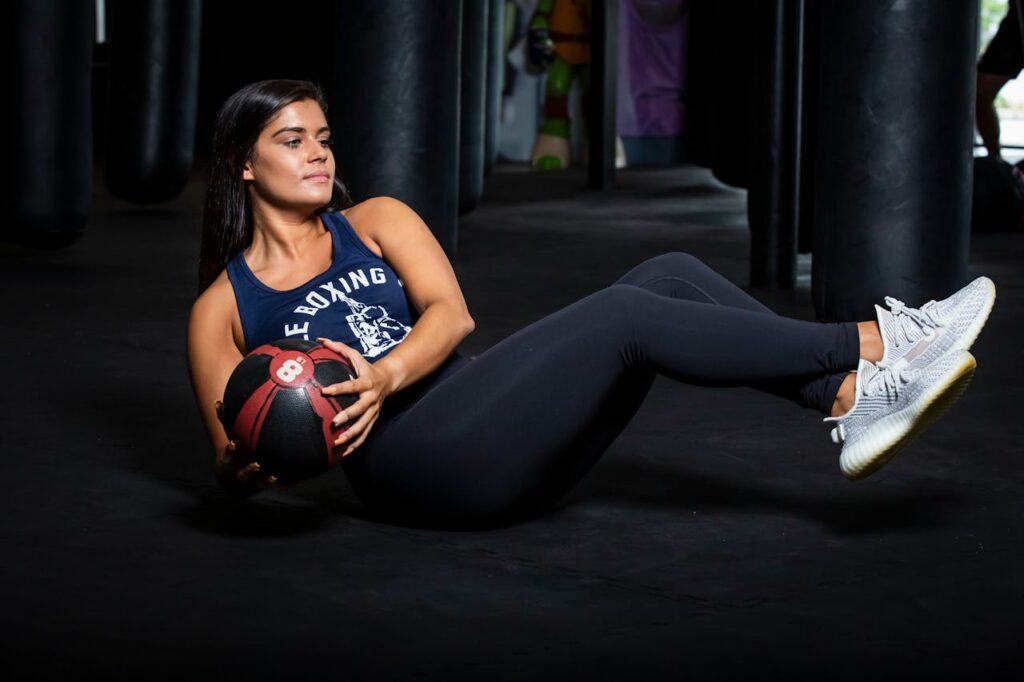
The Russian twist stands as one of the most effective core exercises for building rotational strength and targeting multiple muscle groups simultaneously. This dynamic movement not only sculpts your obliques but also engages your shoulders, creating a comprehensive upper body workout that translates directly to improved athletic performance and functional movement patterns.
Whether you’re a fitness beginner looking to strengthen your core or an experienced athlete seeking to enhance rotational power, mastering the Russian twist will revolutionize your training routine. This comprehensive guide covers everything from proper form and breathing techniques to advanced variations and sport-specific applications.
What Makes the Russian Twist So Effective?
The Russian twist is a compound exercise that works in the transverse plane of movement—the rotational plane that’s often neglected in traditional core training. Unlike standard crunches that only work in one direction, Russian twists challenge your core stability while simultaneously engaging your shoulders, making it a true functional movement.
This exercise mimics real-world movements and athletic actions like swinging a golf club, throwing a punch, or rotating during a tennis serve. The rotational component activates deep stabilizing muscles that are crucial for spinal health and injury prevention.
What Muscles Do Russian Twists Target?
Understanding the muscle groups involved helps you maximize the exercise’s effectiveness and maintain proper form throughout the movement.
Primary Muscles Worked
Obliques (Internal and External)
The star players of the Russian twist, your obliques are responsible for the rotational movement. These muscles run along the sides of your torso and are essential for spinal rotation, lateral flexion, and core stability.
Rectus Abdominis
Your “six-pack” muscles work isometrically to maintain spinal position and prevent excessive extension during the twisting motion.
Transverse Abdominis
This deep core muscle acts like a natural weight belt, providing internal pressure and stability throughout the movement.
Secondary Muscles Engaged
Hip Flexors
When performed with feet elevated, the hip flexors work to maintain leg position and contribute to overall core stability.
Erector Spinae
These back muscles help maintain proper spinal alignment and prevent excessive flexion during the exercise.
Shoulder Stabilizers
The deltoids, rhomboids, and serratus anterior work to maintain arm position and control any added weight during variations.
Latissimus Dorsi
These large back muscles assist in maintaining torso position and contribute to the rotational movement pattern.
How to Perform the Perfect Russian Twist
Mastering proper form is crucial for maximizing benefits and preventing injury. Follow this step-by-step guide to execute the Russian twist with precision.
Basic Russian Twist Technique
- Starting Position: Sit on the floor with your knees bent at approximately 90 degrees and feet flat on the ground
- Torso Positioning: Lean back slightly, creating a 45-degree angle between your torso and the floor
- Core Engagement: Tighten your abdominal muscles and maintain a straight spine—avoid rounding your back
- Arm Position: Clasp your hands together in front of your chest or hold them in a prayer position
- The Twist: Rotate your torso to the right, bringing your hands toward the floor beside your hip
- Return and Repeat: Rotate back through center and continue to the left side
- Breathing Pattern: Exhale during the rotation, inhale as you return to center
Critical Form Cues for Success
Keep Your Torso Long
Maintain length through your spine by imagining a string pulling you up from the crown of your head. This prevents the common mistake of hunching forward.
Control the Movement
Resist the urge to rush through repetitions. The eccentric (returning) portion of the movement is just as important as the concentric (twisting) phase.
Eyes on the Prize
Keep your gaze focused straight ahead or slightly upward to maintain proper neck alignment and prevent strain.
Feet Positioning Options
- Beginner: Keep feet flat on the floor for stability
- Intermediate: Lift feet slightly off the ground
- Advanced: Elevate feet completely, creating a V-shape with your body
Breathing Techniques for Maximum Effectiveness
Proper breathing during Russian twists enhances core activation and maintains intra-abdominal pressure for spinal stability.
The Optimal Breathing Pattern:
- Inhale deeply before beginning the movement
- Exhale forcefully as you rotate to each side
- Maintain steady breathing rhythm throughout the set
- Never hold your breath during the exercise
This breathing pattern helps maintain core pressure while ensuring adequate oxygen delivery to working muscles.
Russian Twist Variations for Progressive Overload
Once you’ve mastered the basic movement, these variations will challenge your core in new ways and prevent training plateaus.
Weighted Russian Twist Variations
Dumbbell Russian Twist
Hold a dumbbell with both hands at chest level. Start with 5-10 pounds and progress gradually. The added weight increases resistance and challenges your grip strength.
Medicine Ball Russian Twist
Using a medicine ball adds an unstable element that requires greater core control. The ball’s size also increases the range of motion.
Kettlebell Russian Twist
Hold a kettlebell by the handle or horns. The kettlebell’s unique shape provides a different grip challenge and weight distribution.
Plate Russian Twist
Hold a weight plate against your chest. This variation allows for easy weight progression and comfortable grip positioning.
Advanced Bodyweight Variations
Feet-Elevated Russian Twist
Lift your feet completely off the ground, balancing on your glutes. This dramatically increases core engagement and challenges your balance.
Decline Russian Twist
Perform the exercise on a decline bench with your feet secured. The angle increases the difficulty and range of motion.
Russian Twist with Leg Extension
Extend your legs straight out as you twist, creating additional challenge for your hip flexors and core stability.
Punch Russian Twist
Instead of touching the ground, throw alternating punches as you rotate. This variation adds a cardiovascular component and mimics boxing movements.
Equipment-Based Variations
Cable Russian Twist
Using a cable machine provides constant tension throughout the movement and allows for precise resistance adjustment.
Resistance Band Russian Twist
Anchor a resistance band and hold the handles while performing the twist. This provides variable resistance that increases as you stretch the band.
Suspension Trainer Russian Twist
Using TRX straps or similar equipment adds instability and requires greater core control throughout the movement.
Sport-Specific Applications and Athletic Performance Benefits
The Russian twist’s rotational movement pattern directly translates to numerous sports and athletic activities.
Baseball and Softball
The twisting motion mimics the hip and torso rotation essential for powerful batting and throwing. Regular Russian twist training can improve bat speed and throwing velocity.
Golf
The exercise develops the core rotation necessary for a powerful golf swing while building the stability needed for consistent ball striking.
Tennis and Racquet Sports
Russian twists enhance the rotational power required for serves, forehands, and backhands while building the core endurance needed for long matches.
Martial Arts and Boxing
The exercise develops the core strength and rotational power essential for punching, kicking, and defensive movements.
Swimming
The rotational component helps swimmers develop the core strength needed for efficient stroke mechanics and body rotation.
Programming Russian Twists: Sets, Reps, and Frequency
Proper programming ensures continued progress while preventing overuse injuries.
Beginner Programming
- Frequency: 2-3 times per week
- Sets: 2-3 sets
- Reps: 10-15 per side (20-30 total)
- Rest: 30-60 seconds between sets
- Progression: Focus on form before adding difficulty
Intermediate Programming
- Frequency: 3-4 times per week
- Sets: 3-4 sets
- Reps: 15-20 per side (30-40 total)
- Rest: 45-90 seconds between sets
- Progression: Add light weight or elevate feet
Advanced Programming
- Frequency: 4-5 times per week
- Sets: 4-5 sets
- Reps: 20-25 per side (40-50 total)
- Rest: 60-120 seconds between sets
- Progression: Heavy weights, complex variations, or circuit integration
Safety Considerations and Injury Prevention
While Russian twists are generally safe when performed correctly, certain precautions help prevent injury and ensure long-term training success.
Common Mistakes to Avoid
Rounding the Back
Maintaining a straight spine is crucial. Rounding your back places excessive stress on spinal discs and reduces exercise effectiveness.
Moving Too Quickly
Rapid, uncontrolled movements reduce muscle activation and increase injury risk. Focus on controlled, deliberate motions.
Excessive Range of Motion
Don’t force the rotation beyond your natural range of motion. This can strain the spine and surrounding muscles.
Holding Your Breath
Proper breathing maintains intra-abdominal pressure and prevents dizziness or lightheadedness.
Who Should Avoid Russian Twists?
Pregnant Women
Especially after the first trimester, rotational exercises may not be appropriate. Consult with a healthcare provider before continuing.
Recent Back Injury
Those with acute back injuries should avoid rotational movements until cleared by a medical professional.
Severe Osteoporosis
The rotational forces may be inappropriate for those with severe bone density issues.
Modifications for Physical Limitations
Limited Mobility
Perform seated Russian twists in a chair, focusing on upper body rotation while maintaining good posture.
Back Sensitivity
Keep feet on the ground and reduce the range of motion. Focus on quality over quantity.
Neck Issues
Keep your head in a neutral position and avoid following your hands with your eyes during the rotation.
Alternative Exercises for Similar Benefits
If Russian twists don’t suit your needs or you want to add variety, these exercises target similar muscle groups.
Rotational Alternatives
Wood Chops
Using a cable machine or medicine ball, perform diagonal chopping motions that target the same rotational movement pattern.
Bicycle Crunches
This exercise combines rotation with flexion, targeting the obliques while adding a dynamic leg component.
Side Planks with Rotation
Hold a side plank position while rotating your top arm under your body, combining stability with rotational movement.
Core Stability Alternatives
Dead Bug
This exercise challenges core stability while teaching proper breathing patterns and opposite arm/leg coordination.
Bird Dog
Combining balance and stability, bird dogs strengthen the entire core while improving hip and shoulder stability.
Pallof Press
Using a cable or resistance band, this anti-rotation exercise builds core strength by resisting rotational forces.
Integrating Russian Twists into Your Workout Routine
Strategic placement of Russian twists in your workout maximizes their effectiveness and prevents fatigue from compromising form.
Pre-Workout Activation
Use light Russian twists as part of your warm-up to activate core muscles and prepare for rotational movements.
Circuit Training Integration
Include Russian twists in metabolic circuits for cardiovascular benefits while maintaining strength training stimulus.
Strength Training Complement
Perform Russian twists after compound movements when your core is pre-fatigued but you can still maintain proper form.
Standalone Core Sessions
Dedicate specific sessions to core training, using Russian twists as a primary movement alongside complementary exercises.
Frequently Asked Questions
Q: How often should I do Russian twists?
A: For most people, 2-4 times per week is optimal. Allow at least one day of rest between sessions to permit recovery and adaptation.
Q: Should I feel Russian twists in my back?
A: You should feel the exercise primarily in your obliques and core. If you experience back pain, check your form and consider reducing the range of motion.
Q: Can Russian twists help me lose belly fat?
A: While Russian twists strengthen core muscles, spot reduction isn’t possible. Combine core exercises with cardiovascular training and proper nutrition for fat loss.
Q: What’s the difference between Russian twists and bicycle crunches?
A: Russian twists focus on rotational movement while seated, while bicycle crunches combine rotation with alternating leg movements in a supine position.
Q: How do I know if I’m doing Russian twists correctly?
A: You should feel the exercise primarily in your obliques, maintain a straight spine throughout, and be able to control the movement in both directions.
Take Your Core Training to the Next Level
The Russian twist is more than just another core exercise—it’s a gateway to improved functional strength, athletic performance, and injury prevention. By mastering proper form, progressing through variations, and integrating the movement strategically into your routine, you’ll develop the rotational strength and core stability that translates to better performance in sports and daily activities.
Start with the basic version, focus on quality over quantity, and gradually progress to more challenging variations as your strength and control improve. Remember that consistency trumps intensity, and proper form always takes precedence over heavy weights or high repetitions.
Ready to transform your core training? Begin incorporating Russian twists into your routine today, and experience the difference that true rotational strength can make in your fitness journey. Your core—and your athletic performance—will thank you for it.