
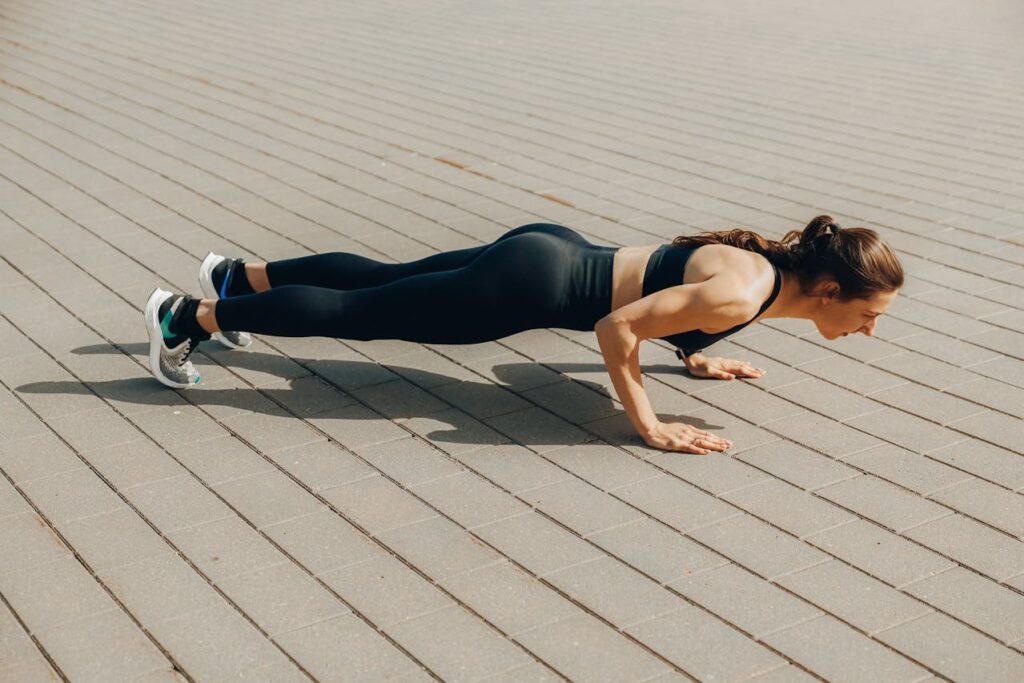
The plank exercise has earned its reputation as one of the most effective full-body workouts you can do without any equipment. But what muscles do planks work exactly? While many people think of planks as purely a core exercise, the reality is far more impressive. This isometric exercise engages nearly every muscle group in your body, making it a powerhouse movement for building strength, stability, and endurance.
Understanding which muscles planks target can help you maximize your workout effectiveness and appreciate why fitness professionals consistently recommend this exercise. Whether you’re a beginner looking to build foundational strength or an experienced athlete seeking to enhance performance, knowing the science behind plank muscle activation will transform how you approach this fundamental movement.
What Muscles Do Planks Work?
Planks are true full-body exercises that create a chain of muscle activation from your head to your toes. The beauty of this isometric exercise lies in its ability to simultaneously engage multiple muscle groups while teaching them to work together as a cohesive unit.
Core Muscles: The Primary Powerhouse
The core muscles serve as the primary target of plank exercises, forming the foundation of your body’s stability system. These deep-lying muscles work together to maintain proper spinal alignment and transfer force throughout your body.
Transversus Abdominis
Often called the “deep core,” the transversus abdominis acts like a natural corset around your midsection. During planks, this muscle contracts to create intra-abdominal pressure, stabilizing your spine and pelvis. This deep muscle activation is crucial for preventing lower back pain and improving overall core stability.
Rectus Abdominis
The rectus abdominis, commonly known as the “six-pack” muscles, runs vertically along the front of your abdomen. In a plank position, these muscles work to prevent your lower back from sagging and maintain the straight-line position from head to heels.
Internal and External Obliques
Your oblique muscles, located on the sides of your torso, play a vital role in rotational stability during planks. The internal obliques lie beneath the external obliques, and together they prevent unwanted rotation and lateral flexion of your spine while holding the plank position.
Spinal Erectors
Running along your spine, the erector spinae muscles work to maintain the neutral spine position during planks. These muscles counteract the tendency for your back to round or arch excessively, ensuring proper spinal alignment throughout the exercise.
Upper Body Muscle Engagement
While the core takes center stage, planks significantly engage your upper body muscles, creating a comprehensive strength-building exercise for your arms, shoulders, and back.
Shoulders and Deltoids
Your deltoid muscles work overtime during planks to stabilize your shoulder joints and maintain proper arm positioning. The anterior (front) deltoids bear the primary load, while the medial and posterior deltoids provide stability and support.
Chest Muscles (Pectorals)
The pectoral muscles, particularly the pectoralis major, engage to help support your body weight and maintain proper arm positioning. This activation contributes to improved chest strength and definition over time.
Arms: Triceps and Biceps
Your triceps work to keep your arms extended and stable, while your biceps provide additional support and stability. This constant muscle activation helps build functional arm strength that translates to other exercises and daily activities.
Upper Back Muscles
The rhomboids, middle trapezius, and latissimus dorsi all engage during planks to maintain proper shoulder blade positioning and prevent your upper back from rounding. This activation helps counteract the effects of poor posture from prolonged sitting.
Serratus Anterior
Often overlooked, the serratus anterior muscles help stabilize your shoulder blades against your rib cage, preventing “winging” and ensuring optimal shoulder mechanics during the exercise.
Lower Body Activation
Don’t underestimate the lower body’s role in plank exercises. Your legs and glutes work continuously to maintain proper alignment and stability.
Glutes
Your gluteal muscles, particularly the gluteus maximus, engage to maintain hip extension and prevent your hips from sagging. Strong glute activation during planks helps improve hip stability and can contribute to better performance in other exercises.
Quadriceps
The quadriceps muscles on the front of your thighs work to keep your legs straight and engaged. This activation helps maintain the rigid body position essential for effective plank performance.
Hamstrings
Working in conjunction with your glutes, the hamstrings help maintain hip stability and contribute to the overall tension needed to hold the plank position effectively.
Calves
Even your calf muscles contribute to plank stability, helping to maintain proper foot positioning and contributing to the full-body tension that makes planks so effective.
The Science-Backed Benefits of Planks
Understanding the muscle activation patterns of planks helps explain why this exercise delivers such impressive benefits for overall health and fitness.
Enhanced Core Stability and Strength
Regular plank training significantly improves core stability, which serves as the foundation for virtually all movement patterns. Research shows that improved core stability can enhance performance in sports, reduce injury risk, and improve quality of life in daily activities.
Reduced Lower Back Pain Risk
The deep core muscle activation achieved through planks can help alleviate and prevent lower back pain. By strengthening the muscles that support your spine and improving your ability to maintain neutral spinal alignment, planks address one of the root causes of back pain.
Improved Posture and Body Awareness
Planks teach your body to maintain proper alignment, which translates to better posture throughout the day. The exercise enhances proprioception—your body’s awareness of its position in space—leading to more conscious posture habits.
Enhanced Athletic Performance
The full-body muscle coordination developed through plank training improves power transfer and stability in athletic movements. Whether you’re running, jumping, or lifting, the strength and stability gained from planks will enhance your performance.
Metabolic Benefits
While planks may appear static, they actually require significant energy expenditure due to the high level of muscle activation. This makes them an efficient exercise for improving metabolic health and supporting weight management goals.
How to Perform the Perfect Plank
Proper form is crucial for maximizing the muscle activation benefits of planks while minimizing injury risk.
Standard Forearm Plank Technique
- Starting Position: Begin in a push-up position, then lower onto your forearms with elbows directly under your shoulders
- Body Alignment: Create a straight line from the top of your head to your heels
- Core Engagement: Draw your navel toward your spine and squeeze your glutes
- Breathing: Maintain steady, controlled breathing throughout the hold
- Duration: Start with 20-30 seconds and gradually increase as strength improves
Straight-Arm Plank Variation
For those who prefer or need a straight-arm position:
- Hand Placement: Position hands directly under shoulders with fingers spread wide
- Arm Position: Keep arms straight but not locked out
- Core Activation: Maintain the same core engagement as the forearm version
- Wrist Considerations: This variation places more stress on wrists, so modify if needed
Advanced Plank Progressions and Variations
Once you’ve mastered the basic plank, these progressions will continue challenging your muscles and preventing plateaus.
Dynamic Plank Variations
Plank with Leg Lifts
Alternate lifting each leg while maintaining plank position to increase glute activation and challenge stability.
Plank with Arm Reaches
Extend one arm forward while holding the plank to increase core stability demands and shoulder strength.
Plank Up-Downs
Transition between forearm and straight-arm plank positions to add dynamic movement and increase difficulty.
Unilateral Challenges
Single-Arm Plank
Remove one arm from the equation to dramatically increase core stability requirements and challenge rotational control.
Single-Leg Plank
Lift one leg while maintaining plank position to increase glute activation and challenge hip stability.
Equipment-Based Progressions
Stability Ball Planks
Place feet or forearms on a stability ball to increase instability and muscle activation.
TRX Plank Variations
Use suspension trainers to add instability and increase the challenge to your stabilizing muscles.
Common Plank Mistakes and How to Fix Them
Avoiding these common errors will ensure you’re getting maximum muscle activation and staying safe.
Hip Position Errors
Sagging Hips: This reduces core activation and places stress on the lower back. Focus on engaging your glutes and drawing your navel toward your spine.
Raised Hips: While safer than sagging, this position reduces the exercise’s effectiveness. Aim for a straight line from head to heels.
Breathing and Tension Issues
Holding Your Breath: This reduces oxygen delivery to working muscles and can cause dizziness. Maintain steady, controlled breathing throughout the exercise.
Insufficient Muscle Activation: Simply holding the position isn’t enough. Actively engage your core, glutes, and other muscle groups for maximum benefit.
Duration vs. Quality
Prioritizing Time Over Form: It’s better to hold a perfect plank for 30 seconds than a poor plank for 2 minutes. Focus on quality first, then gradually increase duration.
Programming Planks for Optimal Results
Beginner Protocol
- Frequency: 3-4 times per week
- Duration: Start with 20-30 seconds
- Sets: 2-3 sets with 30-60 seconds rest between sets
- Progression: Increase duration by 5-10 seconds weekly
Intermediate Protocol
- Frequency: 4-5 times per week
- Duration: 45-90 seconds
- Sets: 3-4 sets
- Variations: Introduce basic variations like leg lifts or arm reaches
Advanced Protocol
- Frequency: 5-6 times per week
- Duration: 90+ seconds or focus on challenging variations
- Sets: 4-5 sets
- Progressions: Incorporate unilateral challenges and equipment-based variations
Breathing Techniques for Enhanced Performance
Proper breathing during planks is often overlooked but crucial for optimal muscle activation and endurance.
Diaphragmatic Breathing Pattern
- Inhale: Breathe in through your nose, allowing your ribcage to expand laterally
- Exhale: Breathe out through pursed lips while maintaining core tension
- Rhythm: Aim for a 3:2 or 4:3 inhale-to-exhale ratio
- Consistency: Maintain this pattern throughout the entire plank hold
Breathing for Core Activation
The coordination between breathing and core muscle activation enhances the effectiveness of planks. As you exhale, focus on drawing your deep abdominal muscles inward while maintaining the plank position.
When to Avoid Planks: Important Considerations
While planks are generally safe for most people, certain conditions warrant caution or modification.
Medical Contraindications
- Recent abdominal surgery: Wait for medical clearance before resuming plank exercises
- Severe lower back pain: Consult a healthcare provider before beginning plank training
- Pregnancy: Modify to incline planks or avoid after the first trimester
- Wrist injuries: Use forearm variations or push-up handles to reduce wrist stress
Signs to Stop or Modify
- Sharp pain in any area
- Inability to maintain proper form
- Dizziness or lightheadedness
- Excessive muscle trembling that compromises form
Frequently Asked Questions
How long should I hold a plank?
Beginners should start with 20-30 seconds and focus on perfect form. Advanced practitioners can hold planks for 2+ minutes, but quality always trumps quantity. If your form breaks down, it’s time to rest.
How often should I do planks?
Planks can be performed daily due to their low impact nature, but 3-5 times per week is sufficient for most people. Allow at least one rest day per week for muscle recovery.
Are planks better than crunches for core strength?
Yes, planks are generally superior to crunches because they engage the entire core system, including deep stabilizing muscles, while also working other muscle groups. Planks also promote better spinal health and functional strength.
Can planks help me lose belly fat?
While planks strengthen and tone your core muscles, they don’t specifically burn belly fat. Fat loss requires a combination of proper nutrition, cardiovascular exercise, and strength training. However, planks can help create a stronger, more defined midsection as overall body fat decreases.
What’s the difference between forearm and straight-arm planks?
Forearm planks are generally easier on the wrists and allow for longer holds, making them ideal for building endurance. Straight-arm planks place more emphasis on the shoulders and arms while being more challenging for the wrists.
The Bottom Line: Maximizing Your Plank Potential
Planks work virtually every muscle in your body, making them one of the most efficient exercises you can perform. From the deep core muscles that stabilize your spine to the shoulders, arms, and legs that maintain proper positioning, planks create a comprehensive strength-building experience that translates to improved performance in all areas of life.
The key to maximizing plank benefits lies in understanding proper form, progressive overload, and consistent practice. Start with basic variations, focus on quality over quantity, and gradually progress to more challenging versions as your strength improves.
Remember that planks are just one component of a well-rounded fitness program. Combine them with cardiovascular exercise, other strength training movements, and proper nutrition for optimal health and fitness results.
Ready to transform your core strength and overall fitness? Start incorporating planks into your routine today, beginning with just 20-30 seconds of perfect form. Your entire body will thank you for the comprehensive strength and stability benefits that only planks can provide.