
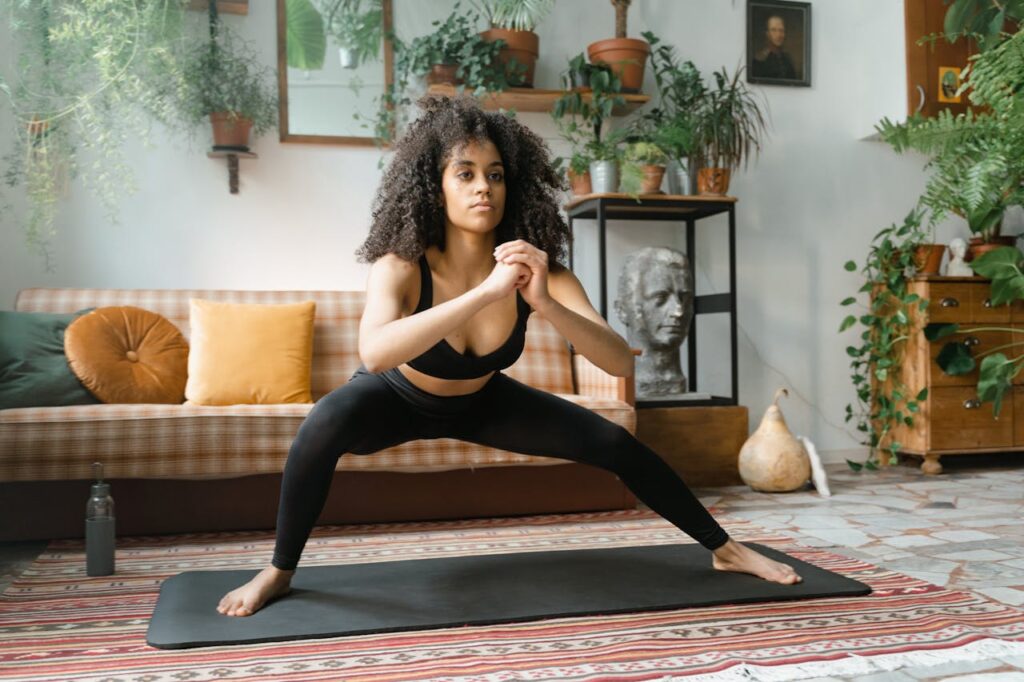
Staying fit doesn’t require a gym membership or expensive equipment. Whether you’re dealing with harsh weather, a busy schedule, or simply prefer the comfort of your own space, indoor workouts can be just as effective as traditional gym routines. This comprehensive guide will show you how to create a sustainable home fitness routine that delivers real results.
The Complete Indoor Fitness Framework
The Four Pillars of Home Fitness
A well-rounded indoor fitness routine should incorporate four essential components:
1. Cardiovascular Exercise
- Elevates heart rate and improves endurance
- Can be achieved through bodyweight movements, dancing, or stair climbing
- Recommended: 150 minutes of moderate-intensity cardio per week
2. Strength Training
- Builds muscle mass and increases metabolism
- Utilizes bodyweight exercises or minimal equipment
- Focus on major muscle groups 2-3 times per week
3. Flexibility and Mobility
- Maintains joint health and prevents injury
- Includes stretching, yoga, and mobility work
- Should be incorporated daily, even if just 10-15 minutes
4. Balance and Coordination
- Improves functional movement and reduces fall risk
- Can be integrated into other exercises or practiced separately
- Particularly important as we age
Beginner-Friendly Indoor Workout Routines
Getting Started: Your First Week
If you’re new to home fitness, start with this simple routine that requires no equipment:
Day 1 & 3: Full Body Basics
- Warm-up: 5 minutes of marching in place
- 10 bodyweight squats
- 5 modified push-ups (on knees)
- 15 arm circles (forward and backward)
- 30-second wall sit
- 10 standing calf raises
- Cool-down: 5 minutes of gentle stretching
Day 2: Active Recovery
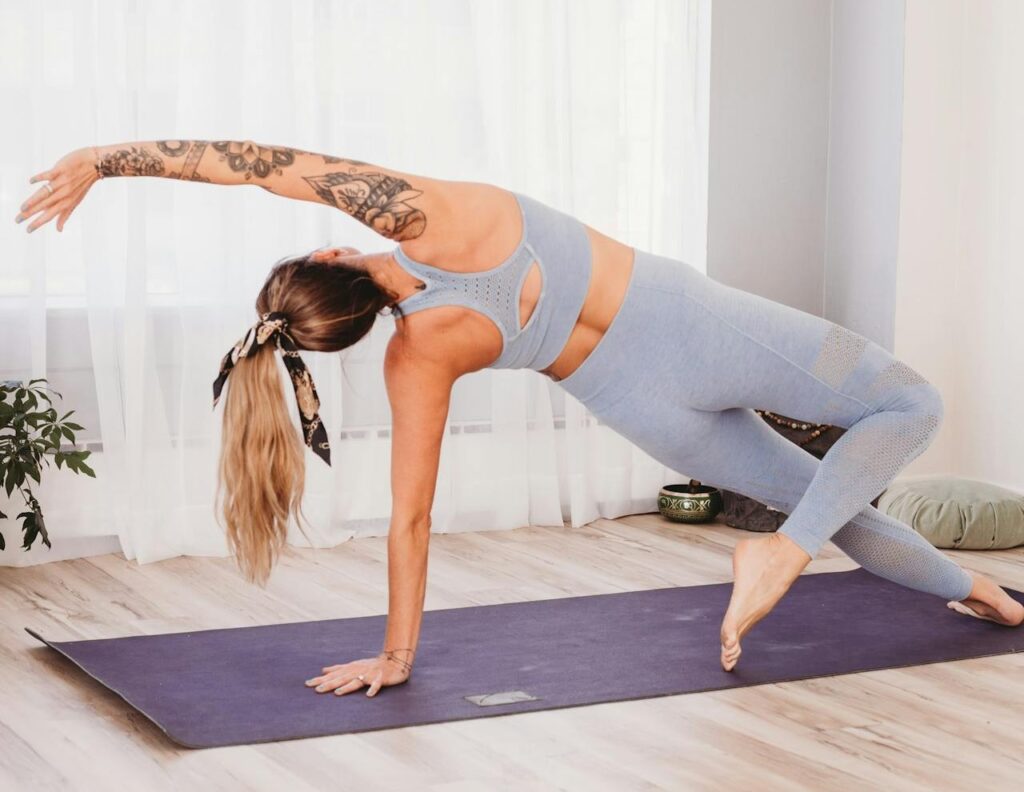
- 15-20 minutes of gentle yoga or stretching
- Focus on major muscle groups worked the previous day
Progressive Bodyweight Circuit Training
Once you’ve mastered the basics, advance to this circuit training routine:
Circuit A: Upper Body Focus
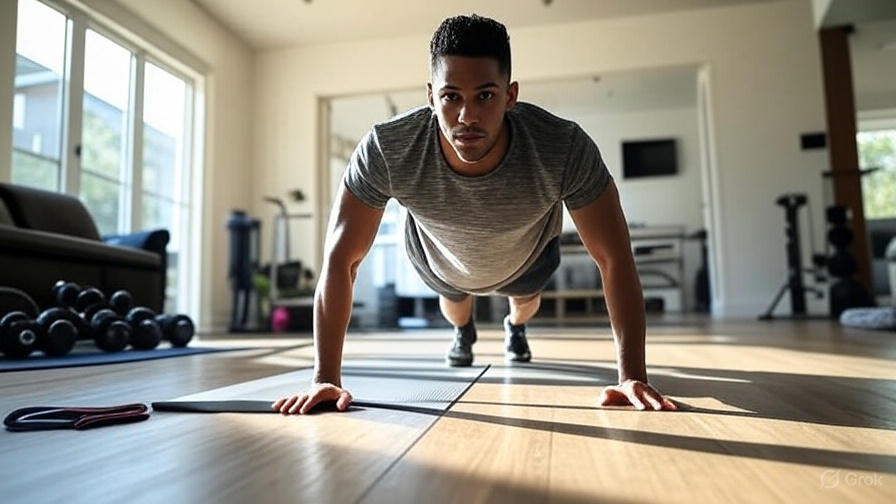
- Standard push-ups (8-12 reps)
- Pike push-ups for shoulders (6-10 reps)
- Tricep dips using a chair (8-12 reps)
- Plank hold (30-60 seconds)
- Mountain climbers (20 total)
Circuit B: Lower Body Power
- Jump squats (10-15 reps)
- Reverse lunges (10 per leg)
- Single-leg glute bridges (8 per leg)
- Wall sit (45-60 seconds)
- Calf raise pulses (15-20 reps)
Circuit C: Core and Cardio
- Burpees (5-10 reps)
- Russian twists (20 total)
- High knees (30 seconds)
- Dead bug (10 per side)
- Jumping jacks (30 seconds)
Perform each circuit 2-3 times with 1-2 minutes rest between rounds.
Advanced Indoor Training Methods
High-Intensity Interval Training (HIIT)
HIIT workouts maximize calorie burn and improve cardiovascular fitness in minimal time:
20-Minute HIIT Routine:
- 4 minutes warm-up
- 8 rounds of: 20 seconds all-out effort, 40 seconds rest
- 4 minutes cool-down
HIIT Exercise Options:
- Burpees
- Jump squats
- Mountain climbers
- High knees
- Plank jacks
Strength Training Without Weights
Build serious muscle using advanced bodyweight techniques:
Progressive Overload Strategies:
- Increase repetitions gradually
- Slow down the tempo (3 seconds down, 1 second up)
- Add isometric holds
- Progress to single-limb variations
- Incorporate plyometric movements
Advanced Exercise Progressions:
- Push-ups → Diamond push-ups → One-arm push-ups
- Squats → Pistol squats → Jump squats
- Planks → Side planks → Plank variations with movement
Space-Specific Workout Solutions
Small Apartment Workouts
Limited space doesn’t mean limited results. These exercises require minimal floor space:
Standing Workout Series:
- Standing marches
- Arm circles and shoulder rolls
- Standing side crunches
- Calf raises
- Standing figure-4 stretch
Chair-Based Exercises:
- Seated leg extensions
- Chair-supported squats
- Tricep dips
- Seated spinal twists
- Chair-assisted stretches
Living Room Fitness
Transform your living room into a fitness studio:
Furniture-Free Zone Setup:
- Clear a 6×6 foot area
- Use a yoga mat or towel for floor exercises
- Ensure adequate ventilation
- Keep water nearby for hydration
Nutrition and Recovery for Indoor Fitness
Pre and Post-Workout Nutrition
Pre-Workout (30-60 minutes before):
- Light snack combining carbs and protein
- Examples: banana with almond butter, Greek yogurt with berries
- Stay hydrated throughout the day
Post-Workout (within 30 minutes):
- Protein to support muscle recovery
- Carbohydrates to replenish energy stores
- Examples: protein smoothie, chocolate milk, lean protein with vegetables
Recovery Strategies
Active Recovery Days:
- Gentle yoga or stretching
- Light walking (even indoors)
- Foam rolling or self-massage
- Deep breathing exercises
Sleep and Stress Management:
- Aim for 7-9 hours of quality sleep
- Create a consistent bedtime routine
- Practice stress-reduction techniques
- Limit screen time before bed
Tracking Progress and Setting Goals

Measurable Fitness Metrics
Track your progress with these simple assessments:
Strength Benchmarks:
- Maximum push-ups in one set
- Plank hold duration
- Number of squats in 60 seconds
- Single-leg balance time
Cardiovascular Improvements:
- Resting heart rate
- Recovery heart rate after exercise
- Perceived exertion during workouts
- Ability to hold conversations during moderate exercise
Goal-Setting Framework
SMART Goals for Indoor Fitness:
- Specific: “Complete 3 full-body workouts per week”
- Measurable: “Increase push-ups from 5 to 15”
- Achievable: Start with realistic expectations
- Relevant: Choose goals that matter to you
- Time-bound: Set 4-6 week milestones
Seasonal Motivation and Habit Formation
Winter Workout Strategies
Combat seasonal challenges with these approaches:
Creating Consistency:
- Schedule workouts like appointments
- Prepare workout clothes the night before
- Use natural light when possible
- Vary routines to prevent boredom
Motivation Techniques:
- Create energizing playlists
- Set up a dedicated workout space
- Find an accountability partner
- Reward yourself for consistency
Building Long-Term Habits
The 21-Day Challenge:
- Commit to 21 consecutive days of movement
- Start with just 10-15 minutes daily
- Focus on consistency over intensity
- Track your progress visually
Equipment-Free vs. Minimal Equipment Options
No-Equipment Essentials
Master these fundamental movements that require nothing but your body:
- Squats and squat variations
- Push-ups and modifications
- Lunges in all directions
- Planks and core exercises
- Jumping movements for cardio
Smart Equipment Investments
If you’re ready to invest in home fitness equipment, prioritize these versatile options:
Under $50:
- Resistance bands set
- Jump rope
- Yoga mat
- Stability ball
$50-$150:
- Adjustable dumbbells
- Kettlebell
- Pull-up bar
- Foam roller
Exercise Frequency and Safety Guidelines
Weekly Workout Schedule
Beginner Schedule:
- 3 days strength training
- 2 days cardio
- 1 day flexibility/yoga
- 1 rest day
Intermediate/Advanced Schedule:
- 4-5 days combined strength and cardio
- Daily flexibility work
- 1-2 complete rest days
Safety Considerations
When to Stop Exercising:
- Sharp or sudden pain
- Dizziness or lightheadedness
- Chest pain or difficulty breathing
- Excessive fatigue that doesn’t improve with rest
Proper Form Guidelines:
- Quality over quantity always
- Start with bodyweight before adding resistance
- Maintain neutral spine alignment
- Breathe consistently throughout movements
Frequently Asked Questions
Q: How effective are indoor workouts compared to gym workouts?
A: Indoor workouts can be just as effective as gym workouts when properly structured. Bodyweight exercises and minimal equipment routines can build strength, improve cardiovascular health, and enhance flexibility. The key is consistency and progressive overload.
Q: Can I lose weight with indoor workouts alone?
A: Yes, you can lose weight with indoor workouts, but diet plays a crucial role. Combine regular indoor exercise with a balanced, calorie-controlled diet for optimal weight loss results. HIIT and circuit training are particularly effective for burning calories.
Q: How much space do I need for indoor workouts?
A: You can get an effective workout in as little as 6×6 feet of space. Many exercises can be performed in place, and modifications exist for even smaller spaces. Chair-based and standing exercises work well in very limited areas.
Q: What’s the best time of day to work out at home?
A: The best time is whenever you can be most consistent. Morning workouts can boost energy for the day, while evening sessions can help relieve stress. Choose a time that fits your schedule and stick with it.
Q: How do I stay motivated to work out at home?
A: Set specific goals, create a dedicated workout space, use energizing music, track your progress, and consider virtual workout classes or apps for guidance and community support.
Your Path to Indoor Fitness Success
Staying fit indoors is not only possible but can be incredibly rewarding. By following the structured approach outlined in this guide, you’ll build strength, improve cardiovascular health, and develop lasting fitness habits—all from the comfort of your home.
Remember, the best workout routine is the one you’ll actually do consistently. Start with the beginner routines, progress at your own pace, and don’t be afraid to modify exercises to suit your current fitness level and available space.
Ready to start your indoor fitness journey? Begin with just 15 minutes today. Choose three exercises from the beginner routine, perform them with proper form, and celebrate this first step toward a healthier, fitter you. Your future self will thank you for starting today.
Consistency beats perfection every time. Your home is your gym, and your commitment is your greatest equipment.