
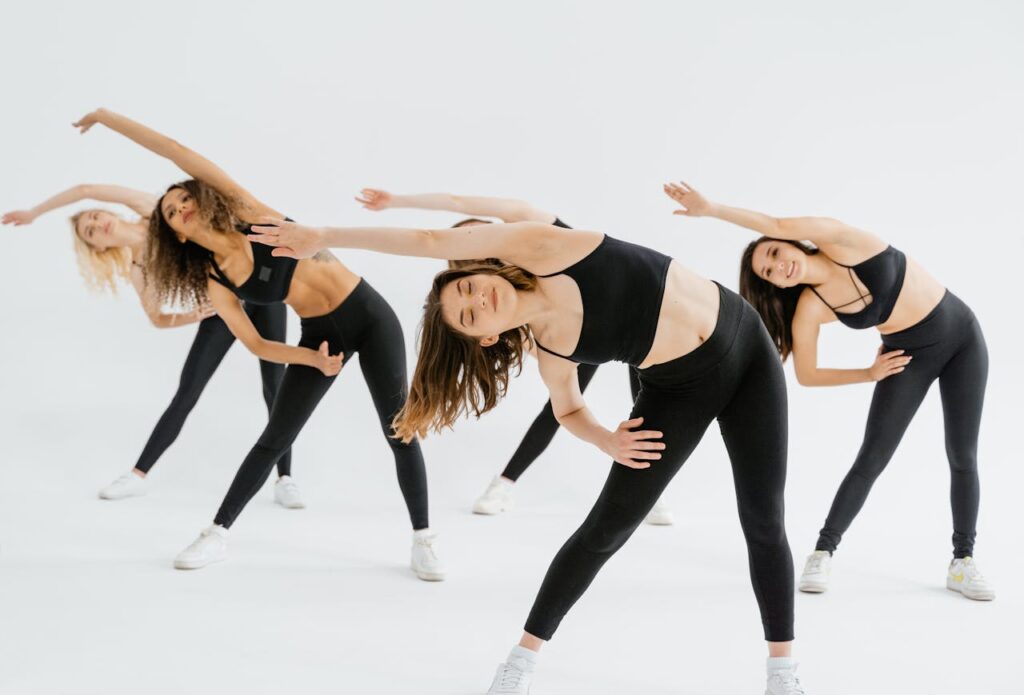
Starting a new year often brings ambitious fitness goals, but here’s the truth: sustainable health isn’t about punishing workout routines or extreme diets. The real game-changer lies in building two fundamental pillars of fitness—strength and flexibility. These aren’t just buzzwords thrown around by fitness influencers; they’re the foundation of a body that moves well, feels good, and ages gracefully.
Whether you’re a complete beginner or someone looking to refocus your fitness approach, this comprehensive guide will show you exactly how to build strength and flexibility that lasts. Let’s dive into creating a healthier, more resilient you.
Why Strength and Flexibility Are Your Health Game-Changers
The Science Behind Strength Training
Strength training isn’t just about building impressive muscles—it’s about creating a body that functions optimally. Research consistently shows that resistance training delivers remarkable benefits:
- Muscle preservation: After age 30, we lose approximately 3-8% of muscle mass per decade, accelerating to 1% per year after 50
- Bone density improvement: Weight-bearing exercises stimulate bone formation, reducing osteoporosis risk by up to 15%
- Metabolic boost: Muscle tissue burns more calories at rest than fat tissue, increasing your metabolic rate
- Chronic disease management: Regular strength training helps manage diabetes, heart disease, and arthritis
- Mental health enhancement: Resistance training reduces anxiety and depression symptoms while boosting cognitive function
The Flexibility Factor
Flexibility often gets overlooked, but it’s equally crucial for long-term health. Here’s why maintaining and improving your range of motion matters:
- Joint health preservation: Regular stretching maintains synovial fluid production, keeping joints lubricated
- Injury prevention: Flexible muscles and tendons are less prone to strains and tears
- Posture improvement: Addressing tight hip flexors and rounded shoulders from desk work
- Pain reduction: Improved flexibility can alleviate chronic back, neck, and shoulder pain
- Enhanced performance: Better range of motion translates to more efficient movement patterns
Getting Started: Your Foundation for Success
Assessing Your Current Fitness Level
Before jumping into any program, take an honest assessment of where you stand:
Strength Assessment:
- Can you perform 10 bodyweight squats with proper form?
- How many push-ups (modified or full) can you complete?
- Can you hold a plank for 30 seconds?
Flexibility Assessment:
- Can you touch your toes without bending your knees?
- Can you reach both arms behind your back and clasp your hands?
- Can you sit cross-legged comfortably for 5 minutes?
Don’t worry if you struggle with these—everyone starts somewhere, and improvement comes quickly with consistency.
Essential Equipment for Home Training
You don’t need a gym membership or expensive equipment to build strength and flexibility. Here’s what actually works:
For Strength Training:
- Resistance bands: Versatile, portable, and perfect for beginners ($10-30)
- Adjustable dumbbells: Space-efficient and scalable (optional upgrade)
- Your body weight: The most accessible and effective tool you already own
For Flexibility Training:
- Yoga mat: Provides cushioning and grip for floor exercises ($15-40)
- Foam roller: Excellent for muscle recovery and myofascial release ($20-50)
- Resistance bands: Double-duty for both strength and assisted stretching
Your Complete Strength Training Blueprint
Beginner-Friendly Strength Exercises
Start with these foundational movements that target all major muscle groups:
Upper Body:
- Modified Push-ups: Start on knees or against a wall, progress to full push-ups
- Resistance Band Rows: Targets back muscles often neglected by desk workers
- Wall Elbow Pushes: Gentle chest and shoulder strengthener
Lower Body:
- Bodyweight Squats: Master the movement pattern before adding weight
- Lunges: Alternate legs, focus on controlled movement
- Calf Raises: Simple but effective for lower leg strength
Core:
- Plank Hold: Start with 15-30 seconds, gradually increase
- Dead Bug: Excellent for core stability and coordination
- Bird Dog: Combines core strength with balance
Progressive Training Schedule
Week 1-2: Foundation Building
- 2 sessions per week
- 1 set of 8-12 repetitions per exercise
- Focus on form over intensity
Week 3-4: Building Consistency
- 3 sessions per week
- 2 sets of 10-15 repetitions
- Introduce slight variations
Week 5+: Steady Progression
- 3-4 sessions per week
- 2-3 sets of 12-20 repetitions
- Add resistance or progress to harder variations
Your Complete Flexibility Training System
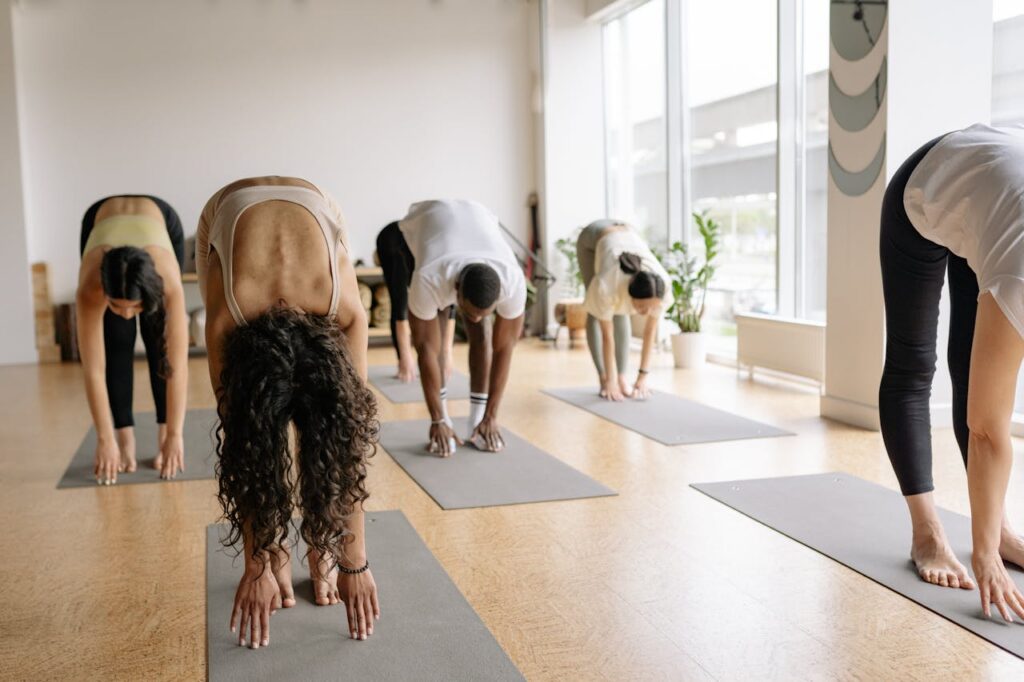
Dynamic Warm-Up Routine (5-10 minutes)
Always start with dynamic stretches to prepare your body:
- Arm circles: 10 forward, 10 backward
- Leg swings: 10 per leg, front-to-back and side-to-side
- Hip circles: 10 each direction
- Torso twists: 10 gentle rotations each way
Essential Flexibility Exercises
For Desk Workers:
- Chest doorway stretch: Counter rounded shoulders (hold 30-60 seconds)
- Hip flexor stretch: Address tight hips from sitting (30 seconds each leg)
- Neck rolls: Gentle relief for tech neck (5-10 slow rotations)
For Overall Mobility:
- Cat-cow stretch: Spinal mobility and core activation
- Child’s pose: Hip and back relaxation
- Seated spinal twist: Improves rotation and digestion
For Athletic Performance:
- Hamstring stretch: Crucial for lower back health
- Shoulder blade squeezes: Improves posture and upper back strength
- Ankle circles: Often overlooked but essential for balance
Static Stretching Protocol
Perform static stretches after your workout or as a separate session:
- Hold each stretch for 30-60 seconds
- Breathe deeply and relax into the stretch
- Never force or bounce—gentle, sustained pressure works best
- Aim for 2-3 rounds of each stretch
Nutrition’s Role in Strength and Flexibility

Fueling Your Muscles
Proper nutrition accelerates your progress and supports recovery:
Protein Requirements:
- Aim for 0.8-1.2 grams per kilogram of body weight
- Include protein within 2 hours post-workout
- Quality sources: lean meats, fish, eggs, legumes, dairy
Hydration for Flexibility:
- Dehydrated muscles are tight muscles
- Aim for 8-10 glasses of water daily
- Increase intake on workout days
Anti-Inflammatory Foods:
- Berries, leafy greens, fatty fish, nuts
- Help reduce exercise-induced inflammation
- Support faster recovery between sessions
Recovery and Rest: The Missing Piece
The Importance of Rest Days
Your body doesn’t get stronger during workouts—it gets stronger during recovery. Here’s how to optimize your rest:
Active Recovery Options:
- Gentle walking or swimming
- Light yoga or stretching
- Foam rolling sessions
Sleep Optimization:
- Aim for 7-9 hours of quality sleep
- Muscle repair and growth hormone release peak during deep sleep
- Consistent sleep schedule supports hormonal balance
Stress Management:
- Chronic stress elevates cortisol, hindering muscle growth
- Practice meditation, deep breathing, or other stress-reduction techniques
- Consider yoga as a dual-purpose strength and stress-relief activity
Creating Your Year-Long Progression Plan
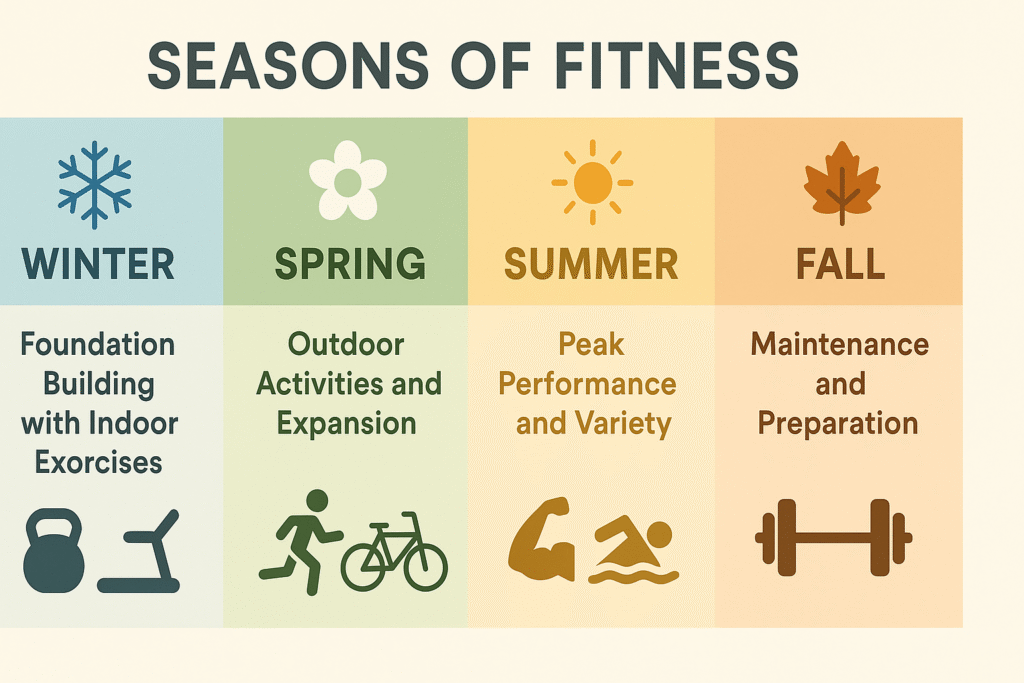
Seasonal Training Variations
Winter (January-March): Foundation Building
- Focus on establishing consistent habits
- Indoor bodyweight and resistance band workouts
- Emphasis on flexibility to counter winter stiffness
Spring (April-June): Expansion Phase
- Add outdoor activities like hiking or cycling
- Increase training frequency and intensity
- Introduce new exercises and challenges
Summer (July-September): Peak Performance
- Take advantage of longer days and better weather
- Incorporate swimming or outdoor sports
- Focus on maintaining gains while staying active
Fall (October-December): Maintenance and Preparation
- Prepare for winter with consistent indoor routines
- Assess yearly progress and set new goals
- Focus on injury prevention and mobility
Technology Integration and Progress Tracking
Useful Apps and Tools
For Strength Training:
- Fitness apps with bodyweight routines
- Progress tracking spreadsheets or apps
- Video form checks using phone camera
For Flexibility:
- Yoga apps with guided sessions
- Stretching routine timers
- Mobility assessment tools
For Overall Health:
- Step counters and activity trackers
- Sleep monitoring devices
- Nutrition tracking apps
Safety Considerations and Injury Prevention
When to Seek Professional Guidance
Consider consulting professionals in these situations:
- Medical clearance: If you’re over 40 or have chronic conditions
- Form concerns: A few sessions with a trainer can prevent injuries
- Persistent pain: Distinguish between muscle fatigue and potential injury
- Plateau breaking: Professional guidance can help overcome sticking points
Common Mistakes to Avoid
Strength Training Errors:
- Progressing too quickly in weight or intensity
- Neglecting proper warm-up and cool-down
- Focusing only on “mirror muscles” (chest, biceps) while ignoring back and legs
- Training the same muscles daily without adequate recovery
Flexibility Training Errors:
- Stretching cold muscles
- Forcing stretches beyond comfortable limits
- Inconsistent stretching routine
- Ignoring breathing during stretches
Mental Health Benefits: The Hidden Advantage
Psychological Improvements
Regular strength and flexibility training provides remarkable mental health benefits:
Confidence Building:
- Achieving physical goals translates to increased self-efficacy
- Improved body image and self-perception
- Greater resilience in facing life challenges
Stress Relief:
- Physical activity reduces cortisol levels
- Endorphin release improves mood
- Mindful movement practices enhance emotional regulation
Cognitive Enhancement:
- Improved blood flow to the brain
- Better sleep quality supports cognitive function
- Reduced risk of age-related cognitive decline
Your Action Plan: Making It Happen
Week 1-2: Habit Formation
- Choose 2-3 days per week for combined strength and flexibility sessions
- Start with 20-30 minute sessions
- Focus on consistency over intensity
Month 1: Building Momentum
- Gradually increase session duration to 30-45 minutes
- Add one additional exercise per week
- Track your progress in a journal or app
Month 2-3: Expanding Your Routine
- Introduce new exercises and variations
- Consider joining online communities for motivation
- Assess and adjust your program based on progress
Month 4+: Long-term Success
- Regularly reassess and update your goals
- Experiment with new activities to prevent boredom
- Celebrate milestones and progress achievements
Frequently Asked Questions
Q: How long before I see results from strength and flexibility training?
A: You’ll notice improvements in energy and mood within 1-2 weeks. Visible strength gains typically appear within 4-6 weeks, while significant flexibility improvements may take 6-8 weeks of consistent practice.
Q: Can I do strength and flexibility training on the same day?
A: Absolutely! In fact, it’s recommended. Perform strength training first when your energy is highest, then follow with flexibility work when your muscles are warm and more pliable.
Q: What if I can’t commit to long workout sessions?
A: Short, consistent sessions are more effective than sporadic long workouts. Even 15-20 minutes of focused training 3-4 times per week will yield significant results.
Q: Is it normal to feel sore after starting a new routine?
A: Mild muscle soreness 24-48 hours after exercise is normal and indicates your muscles are adapting. However, sharp pain or soreness that worsens over time may indicate injury and should be evaluated.
Q: How do I stay motivated throughout the year?
A: Set small, achievable goals, track your progress, find an accountability partner, and remember that consistency matters more than perfection. Celebrate small wins along the way.
Your Journey to a Healthier Year Starts Now
Building strength and flexibility isn’t about dramatic transformations or extreme measures—it’s about consistent, sustainable practices that compound over time. The beauty of this approach lies in its accessibility: you can start today, right where you are, with what you have.
Remember, every expert was once a beginner. Every strong, flexible person started with their first workout, their first stretch, their first commitment to showing up for themselves. Your body is incredibly adaptable and wants to move well, feel strong, and remain flexible throughout your life.
The year ahead holds incredible potential for your health and well-being. By focusing on these two fundamental pillars—strength and flexibility—you’re not just working toward a fitter body; you’re investing in a higher quality of life, better aging, and the confidence that comes from feeling strong and capable in your own skin.
Start small, stay consistent, and trust the process. Your future self will thank you for the commitment you make today. Here’s to building a stronger, more flexible, and healthier you—one workout, one stretch, and one day at a time.